



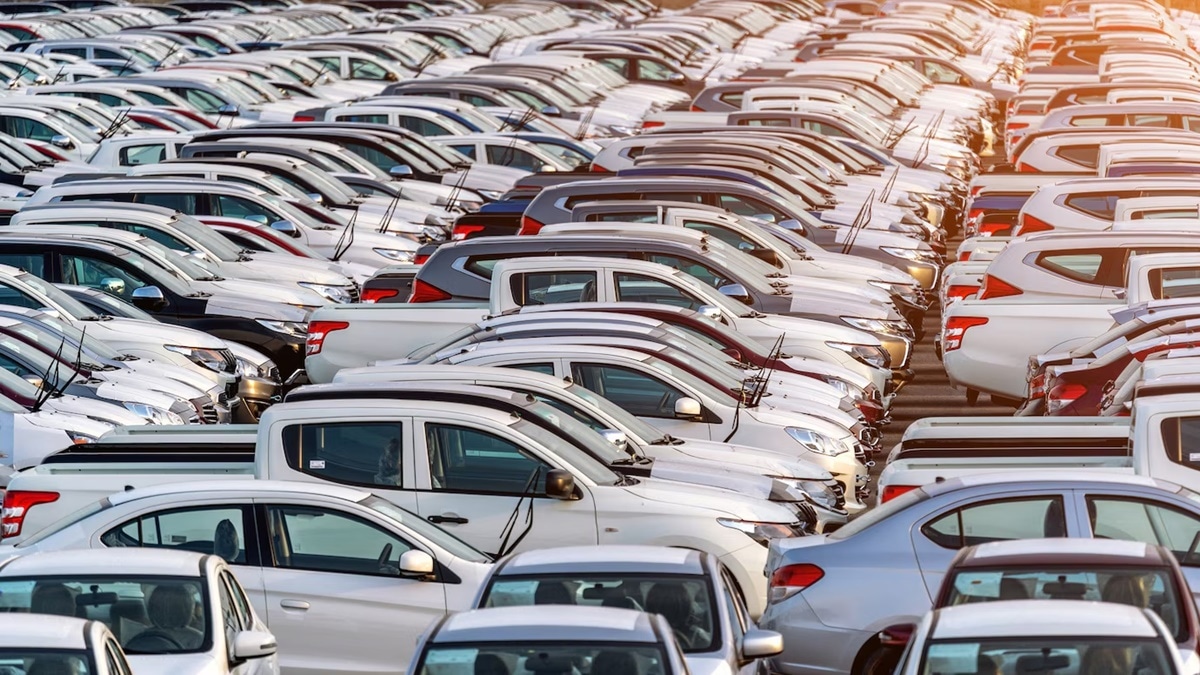
The automobile industry posted its highest-ever annual sales in FY26, with volumes rising 10.4% year-on-year to 28.27 million units, driven by a strong recovery in the second half and improved consumer sentiment, according to data released by Society of Indian Automobile Manufacturers (Siam) on Tuesday.
Passenger vehicle sales crossed the 4.6 million mark for the first time, growing 7.9% to 4.64 million units in FY26, significantly exceeding Siam’s earlier forecast of 1–2% growth. The performance was led by a sharp rebound in the latter half of the fiscal year after a muted first six months.
Growth momentum to continue in FY27
Looking ahead, Siam expects growth momentum to continue in FY27 across segments, supported by domestic demand and favourable macroeconomic conditions. However, it flagged risks from global geopolitical developments, including volatility in crude oil and commodity prices as well as potential supply chain disruptions.
Monthly data for March reflected the year-end momentum. Passenger vehicle sales rose 16% year-on-year to 442,460 units, while two-wheeler sales increased 19.3% to 1.98 million units. Three-wheeler dispatches grew 21.4% to 76,273 units compared with the same period last year.
Siam attributed the annual growth to improved affordability following GST rate reductions, higher disposable incomes aided by personal income tax relief, and lower financing costs amid successive repo rate cuts by the Reserve Bank of India.
In passenger vehicles, the year was marked by a divergence in performance between the two halves. The first half of FY26 saw a marginal decline of 1.4% compared with the year-ago period, while the second half recorded a strong 16.7% growth, reflecting improved demand conditions.
A sharp increase in electric mobility also supported volumes, with electric passenger vehicle registrations rising more than 80% during the year.
“Though FY26 started modestly, the auto industry has closed the year on a high note, with all segments – passenger vehicles, commercial vehicles, three-wheelers and two-wheelers – posting their highest-ever annual sales after seven years,” Shailesh Chandra, president Siam said. He added that positive sentiment from GST 2.0 reforms and multiple repo rate cuts played a key role in supporting demand.
Among other segments, two-wheeler sales rose 10.7% to 21.71 million units, while three-wheeler sales increased 12.8% to 836,231 units. Commercial vehicle sales grew 12.6% to 1.08 million units.
Exports also recorded broad-based growth. Passenger vehicle exports rose 17.5% to 905,200 units, while two-wheeler shipments increased 23.4% to 5.18 million units. Three-wheeler exports saw the sharpest increase, rising 50.1% to 460,567 units.
On regulatory developments, Chandra said the industry has received the revised draft of CAFE 3 norms and is reviewing it, with a meeting with the government expected shortly. “Most OEMs are broadly aligned, but a consolidated industry view will be shared after internal discussions and the upcoming meeting,” he said, adding that discussions on timelines and readiness are likely to be constructive.
On Delhi’s draft EV policy, he said while governments are taking an enabling approach, the industry would prefer adoption to be driven by incentives and infrastructure rather than mandates. The draft proposes that from January 1, 2027, only electric three-wheelers will be eligible for new registrations in Delhi, followed by a similar requirement for two-wheelers from April 1, 2028.