



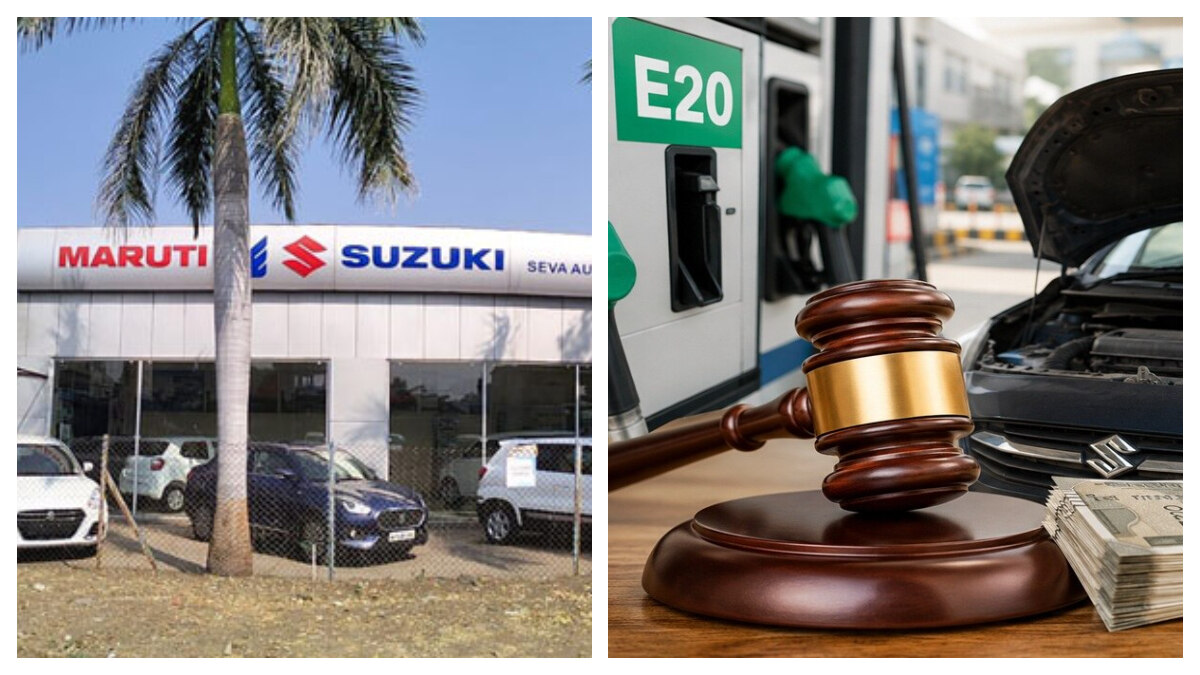
Maruti Suzuki will legally contest an order issued by the District Consumer Disputes Redressal Commission in Chhattisgarh’s Raipur that directed the company to replace a customer’s vehicle due to E-20 fuel concerns.
“The car in this case was an E20-compatible car, fully equipped to handle E20 fuel and so disclosed in the owner’s manual. There is evidence of contamination in the fuel collected from the customer’s vehicle. Several other relevant facts have also not been reflected in the order,” the company stated.
The automaker said it will pursue remedies before an appropriate higher forum.
The case centres on a complaint filed by Dr Premraj Devta, the owner of a Grand Vitara who experienced repeated and serious engine problems, which the complainant attributed to ethanol‑blended petrol containing 20% ethanol (E20).
The Raipur District Consumer Disputes Redressal Commission found in the consumer’s favour, holding both the vehicle manufacturer and the dealer liable for deficiency in service.
The commission ordered Maruti Suzuki to replace the affected vehicle with a brand‑new E20‑compatible model; alternatively, if replacement is not provided, the company must refund the full purchase price of Rs 20.50 lakh, along with Rs 1 lakh as compensation for mental harassment and Rs 10,000 toward litigation expenses.
Older vehicles at risk as ethanol separation, fuel‑quality issues raise concerns
Auto and fuel expert KK Gandhi told The Financial Express Digital that older vehicles, especially two‑wheelers, which account for about two‑thirds of E20 ethanol consumption are likely to face problems with the higher ethanol blend.
He warned that “older car models may not be compatible and will eventually develop issues,” and noted a practical risk when vehicles sit unused for a week or more then petrol and ethanol can separate, with ethanol settling and causing damage when the vehicle is next run.
Executive Director of the Society of Indian Automobile Manufacturers (SIAM), Gandhi also pointed out, “Maruti Suzuki has publicly stated many of its models are E20‑compatible, but he argued the government must now focus on the existing on‑road fleet.”
In his view, policymakers should address compatibility and fuel‑quality issues affecting older vehicles already in circulation to prevent widespread mechanical problems.
Raipur consumer court’s key findings
The Raipur commission, in its order, concluded that the vehicle’s engine was not compatible with E20 petrol, a determination that, if sustained, has far‑reaching implications given the central government’s policy to promote ethanol blending in petrol.
The commission’s directive indicates it found sufficient evidence to hold the manufacturer and dealer accountable for the engine damage and to treat the failure as a deficiency in service.
By attaching compensation for mental harassment and litigation costs, the commission signalled the seriousness with which it viewed the customer’s distress and the financial and emotional toll of repeated breakdowns. The expedited timeline for compliance — 45 days — underscores the panel’s intent to provide prompt relief to the consumer.
Until a higher forum rules, the Raipur order stands as a notable judicial finding in the contentious intersection of automotive engineering, fuel policy and consumer protection, spotlighting the practical challenges that accompany India’s push toward higher ethanol blending in petrol.
The E20 rollout debate
The case unfolds against a wider national debate over the rollout of E20 petrol. The Centre has maintained that the transition to 20 per cent ethanol‑blended petrol followed extensive consultations with automobile manufacturers, testing agencies and stakeholders. Policymakers argue that ethanol blending supports energy security, reduces crude oil dependence and benefits farmers by creating a stable demand for ethanol feedstocks.
However, concerns have surfaced from some consumers, vehicle owners and political figures about vehicle compatibility, durability impacts, and the availability of fuel choice at retail outlets. Instances of engine malfunction attributed by owners to ethanol blends have intensified public scrutiny, prompting consumer complaints and regulatory attention.