



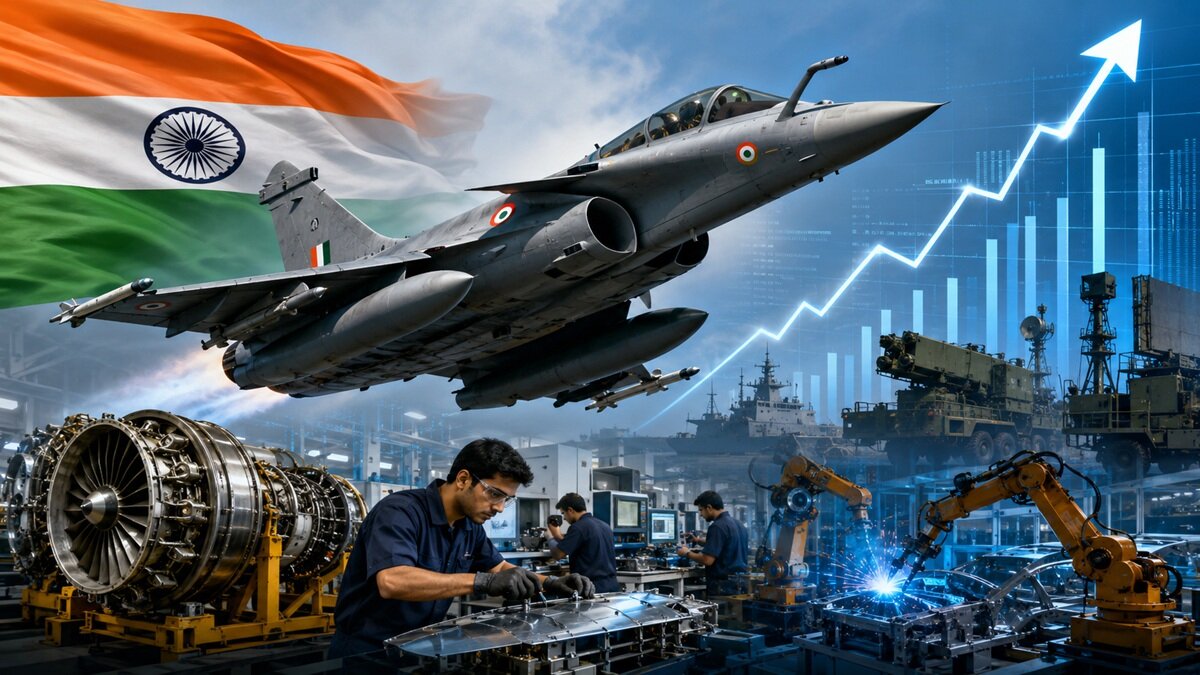
India’s proposed 114-Rafale acquisition is more than just a fighter-jet buy; it is a defence-business event that could reshape aerospace manufacturing, supplier ecosystems and long-term capital spending across the sector. With the deal valued at about Rs 3.25 lakh crore and the total fleet potentially rising to 176 aircraft, the programme sits at the intersection of operational need, industrial policy and private-sector opportunity.
India is preparing for its biggest-ever Rafale expansion.
A proposal worth nearly ₹3.25 lakh crore has been finalised for 114 additional Rafale fighter jets. If approved and executed, India’s Rafale fleet could grow to 176 aircraft.
From 36 Rafales for the Indian Air Force to… pic.twitter.com/zd3VVew9zF
\\\\\\\— DD News (@DDNewslive) July 14, 2026
The Rafale is important for India because it gives the Indian Air Force (IAF) a proven 4.5-generation combat platform that can be inducted quickly, strengthens air superiority and long-range strike capability. It also helps fill the fighter squadron gap while India’s own next-generation programmes mature.
As per a PIB report, Rafale is also strategically important because the aircraft already in Indian service create commonality in training, maintenance, logistics and operations, which lowers the integration burden and improves readiness across the Air Force and Navy.
Why does the ‘Rafale deal’ matter for India?
The immediate driver is the Indian Air Force’s squadron shortfall and the need to replace ageing fleets with a proven 4.5-generation platform.
But the wider significance lies in how the programme is being structured:
- As a government-to-government procurement with substantial domestic manufacturing and technology integration
- A strong “Make in India” element
That combination matters because it turns a single platform purchase into a longer industrial programme that can support production lines, maintenance capability and domestic vendor growth for years. The reported structure of the deal suggests a split between fly-away aircraft and domestic production, with most of the jets to be built in India.
Earlier reporting indicated 18 jets could be imported directly, while the rest would be manufactured locally, with the final mix and localisation content still subject to negotiation. That is important for industry because it creates work not only for the prime contractor but also for a chain of suppliers in avionics, structures, wiring, machining, composites, software and ground-support systems.
Dassault’s local manufacturing model could also become a benchmark for future high-end aerospace programmes in India, said a report of Reuters. If the industrial arrangement is deep enough, it could help India move beyond assembly toward more meaningful value capture in systems integration, testing, sustainment, and upgrades. For domestic firms, the real opportunity often lies not only in initial production but also in long-term maintenance, repair and overhaul, training, spares, and lifecycle support.
India’s 114-Rafale Deal: Rs 3.25 Lakh Crore Industry Tracker
| # | Metric | Category | Value | Key Detail |
|---|---|---|---|---|
| 1 | Deal Value | Deal Terms | ₹3.25 lakh crore | Government-to-government procurement |
| 2 | Aircraft Under Proposal | Deal Terms | 114 jets | 4.5-generation combat platform |
| 3 | Total Potential Fleet | Deal Terms | Up to 176 aircraft | Including existing Rafale fleet |
| 4 | Import vs Local Split | Deal Terms | ~20 imported; rest local | Final mix & localisation still under negotiation |
| 5 | Defence Capex CAGR (FY26-30) | Capex Outlook | 11% annually | Kotak defence outlook projection |
| 6 | Projected Annual Capex by FY30 | Capex Outlook | ₹2.8 lakh crore | Compounded annual growth basis |
| 7 | Cumulative Domestic Opportunity | Capex Outlook | ₹11.9 lakh crore | Pool for domestic manufacturers, FY26-FY30 |
| 8 | Fiscal Enabler | Capex Outlook | Pension growth moderation | Freeing fiscal room for procurement/modernisation |
| 9 | HAL | Industry Impact | Major beneficiary (expected) | But Tejas delays pushing IAF to diversify sourcing |
| 10 | Private Aerospace Players | Industry Impact | Growing competition room | Medium-term opportunity in future fighter programmes |
| 11 | Supplier Chain Segments | Industry Impact | Multi-segment | Avionics, structures, wiring, machining, composites, software, ground-support |
| 12 | Spillover Programmes | Industry Impact | AMCA, Tejas, MRO | Advanced Medium Combat Aircraft, engine ecosystems, avionics upgrades |
| 13 | Offsets Framework | Industry Impact | Multiple JVs catalysed | Bridge between foreign platforms & domestic capability |
| 14 | Wider Modernisation Basket | Industry Impact | Air, maritime, unmanned | 114 Rafales + Tejas pipeline + submarine programmes |
Capital spending boom to unlock a Rs 11.9 trillion domestic defence opportunity
Kotak’s defence outlook places this Rafale move inside a broader capex super-cycle. The firm projects India’s defence capital expenditure to grow at 11% annually on a compounded basis between FY26-FY30 to Rs 2.8 trillion, creating a cumulative Rs 11.9 trillion opportunity pool for domestic manufacturers.
In other words, the Rafale programme is not an isolated procurement; it is part of a larger shift where capital spending is increasingly being used to rebuild combat capability and create industrial capacity at the same time.
The report also pointed out that pensions and revenue expenditure had crowded out capital spending for years, but moderation in pension growth is now freeing fiscal room for procurement and modernisation. That matters for businesses because sustained defence capex tends to be more valuable than one-off orders as it provides visibility, vendor qualification opportunities and a better case for expanding capacity in anticipation of repeat demand.
HAL, private players and massive competition
One of the biggest questions is how the Rafale expansion affects Hindustan Aeronautics Limited (HAL) and private-sector aerospace players. Kotak expects HAL to remain a major beneficiary of rising aircraft spending, but it also notes that delays in Tejas deliveries and supply-chain issues have pushed the Air Force to diversify its sourcing.
That opens room for imports in the near- term but also for private-sector competition in the medium term, especially in future fighter and advanced aircraft programmes. This is where the Rafale programme may have a second-order effect: by creating a large, high-complexity production and sustainment workload, it can help India develop more mature aerospace suppliers.
Companies that enter the supply chain through the Rafale line could later compete for work on:
- Advanced Medium Combat Aircraft (AMCA)
- Tejas derivatives
- Engine ecosystems
- Avionics upgrades
- Maintenance, Repair, and Operations (MRO) contracts
For the sector, that means a potential widening of the vendor base beyond the traditional public-sector anchor model.
Rafale offsets could unlock new growth for Indian defence companies
Offsets remain relevant even if the policy has become more selective. Kotak report notes that India’s offset framework has already catalysed multiple joint ventures and local manufacturing arrangements and the Rafale ecosystem has involved a large network of Indian partners. The business significance is that offsets can act as a bridge between foreign platforms and domestic production capability, especially in complex sectors where India still depends on imported know-how.
The proposed Rafale deal appears to push further in that direction by allowing Indian weapons and systems integration. That enhances local content and can create recurring opportunities for Indian electronics, missiles, software, mission computers, and engineering firms. If the localisation level eventually rises beyond the initially reported range, the domestic value chain will become even more important than the aircraft count itself.
Technology transfer and localisation hold the key to long-term gains
The Rafale expansion also reflects a broader procurement pattern in which India is balancing imported capability with domestic development. Kotak identifies the 114 Rafales, the Tejas induction pipeline, and submarine programmes as central to the current modernisation cycle. For industry, this means the market is not being driven by a single platform but by a diversified order book across air, maritime, and unmanned systems.
That diversification is good for the business cycle because it reduces dependence on one-off platform orders and spreads opportunity across more suppliers. It also increases the premium on execution: firms that can deliver on time, meet quality standards, and integrate with Indian and foreign primes are likely to gain longer-term relevance.
The next phase will be critical as pricing, delivery timelines, localisation commitments, technology transfer terms and the final industrial partnership structure. Those details will determine whether the Rafale deal becomes only a large procurement headline or a genuine industrial inflection point. If the contract structure preserves strong domestic manufacturing content and sustainment work, it could become one of the most consequential aerospace programmes India has ever executed.