



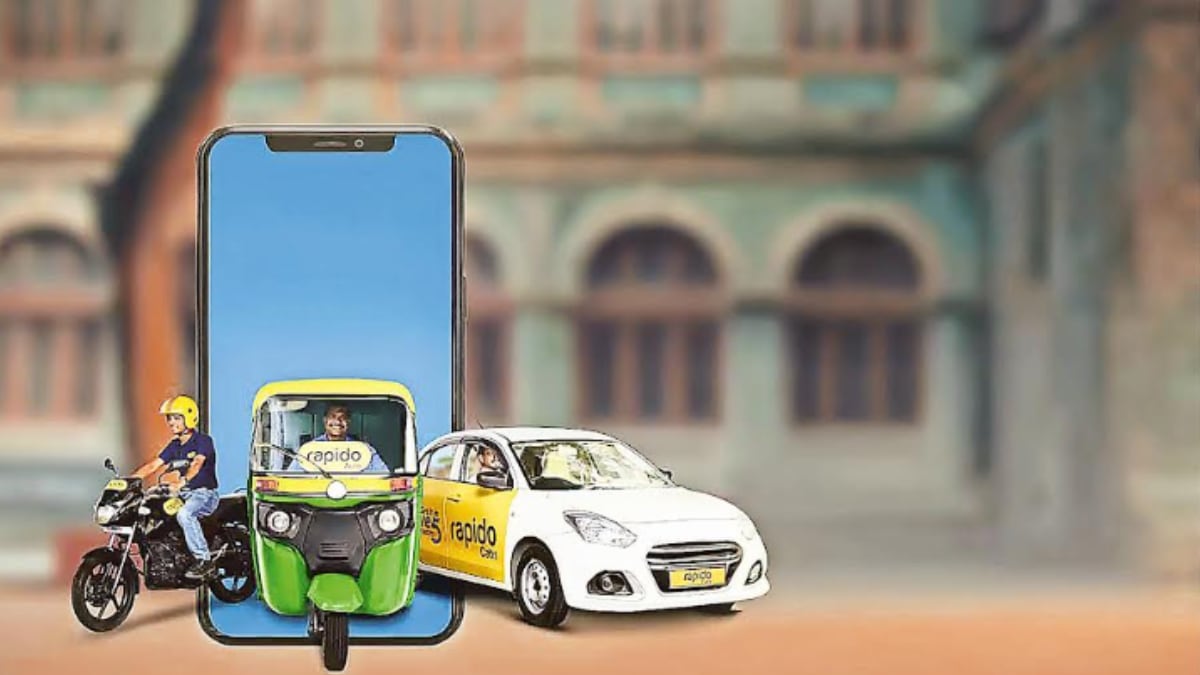
When ride-hailing platform Rapido refurbished its brand identity by doing away with its bike-centric logo, it made a statement. The new logo represents Rapido’s evolution from a bike-taxi platform into a comprehensive, multi-modal mobility ecosystem, says the company. “The refreshed identity moves away from bike-centric visual elements to a wordmark-led design that reflects this broader vision,” says Pawandip Singh, CMO, Rapido. It signals maturity and scale, he adds, plus Rapido’s ambition to be seen not just as a category creator, but as a mobility platform serving India’s growing transportation landscape.
Rapido already offers bike-taxi (Lite and Metro), auto-rickshaw (including share and pet options), cabs, and parcel delivery. Last year, it launched its food delivery app Ownly with a zero commission model in parts of Bengaluru and is working to move beyond its comfort zone.
Can Rapido replicate its ride-hailing success in food delivery?
With fewer restaurant options on the platform, giving listed giants like Swiggy and Eternal-owned Zomato a run for their money would be easier said than done.
First, Rapido’s much-vaunted zero-commission model is inconsequential in food delivery because restaurants have the flexibility to adjust menu prices and absorb high commissions through markups. “This dynamic makes ride-hailing style disruption harder to replicate in food delivery,” says Karan Taurani, EVP, media & entertainment, alcobev, QSR, internet, Elara Capital.
Rapido’s Ownly app has also faced some teething issues such as OTP delays, occasional location-related glitches, and a less seamless post-login experience, especially for Android devices. “Restaurant coverage is limited, with large QSR chains yet to be integrated,” writes Taurani in an analyst note.
He adds that while Ownly is able to offer food items from standalone restaurants at rates that are almost 28% cheaper than incumbents, in case of larger QSR chains, things appear different. “For QSR chains, Swiggy and Zomato’s median realized prices tend to be lower due to platform-driven promotional offers (often co-funded with restaurants), which Ownly currently does not replicate given its limited scale,” Taurani adds.
What might work in Rapido’s favour is its experience of working with Swiggy and providing its fleet for the food tech giant’s delivery operations. “The food delivery segment is going through a turmoil with both restaurants and delivery partners somewhat unhappy with the way things are. In other words, the segment is ready for disruption,” says an analyst.
Rushing for a bigger bite
The mobility startup has good reason to feel ambitious. As per a recent report by Sensor Tower, Rapido ranked third (above heavyweights Uber and Ola) with the highest monthly active users (MAU) in 2025 in the travel and navigation segment in India across Android and IOS devices. Indeed, data from Sensor Tower shows that the Bengaluru startup had overtaken Uber in terms of user engagement in January 2024. In July of the same year, Rapido’s MAU stood at 50 million while Uber recorded an MAU of 30 million. From there on, Rapido has maintained its lead in India’s Rs 60,000 crore ride-hailing sector.
Rapido’s steady acceleration in ride hail reflects in its financial performance. In the financial year 2024-25 (FY25), the startup’s operating revenue jumped 44% to Rs 934 crore. Adding other income of69 crore from investments, the total revenue surpassed the Rs 1,000 crore mark. It also managed to shrink its losses by more than 30% to Rs 258 crore in the year under review.
The lynchpin of its success was the zero-commission model. When Pavan Guntupalli, Rishikesh SR, and Aravind Sanka founded Rapido in 2015, it followed a commission-led model like other ride hailing service providers. According to industry estimates, such platforms charged between 30-40% commission on every ride. With time, drivers operating on these platforms began to show their resistance to the commission-led model as they were operating on thin margins.
Rapido took a leaf out of Namma Yatri’s playbook and launched its cab service with a subscription-based model, pricing a daily subscription for drivers at Rs 9-29 depending on the city. In 2024, the startup moved to a lifetime zero commission model across its ride-hailing services. “The zero commission model helped Rapido woo drivers to its platform and beef up the supply side of the business,” says Saurav Chachan, associate partner, Redseer Strategy Consultants.
The incumbents probably underestimated the threat, say experts. “The two category leaders were distracted over the last few years,” says Satish Meena, founder, Datum Intelligence. “While Uber was busy focusing on scaling in other businesses and global markets, Ola was busy scaling Ola Electric.” Agrees Harish Bijoor, brand strategy expert & founder, Harish Bijoor Consults. “Rapido has been able to provide much better customer service, competitive prices and emerged as the top choice for drivers,” says Bijoor.
The very same attributes that can make or break a food tech foray…