



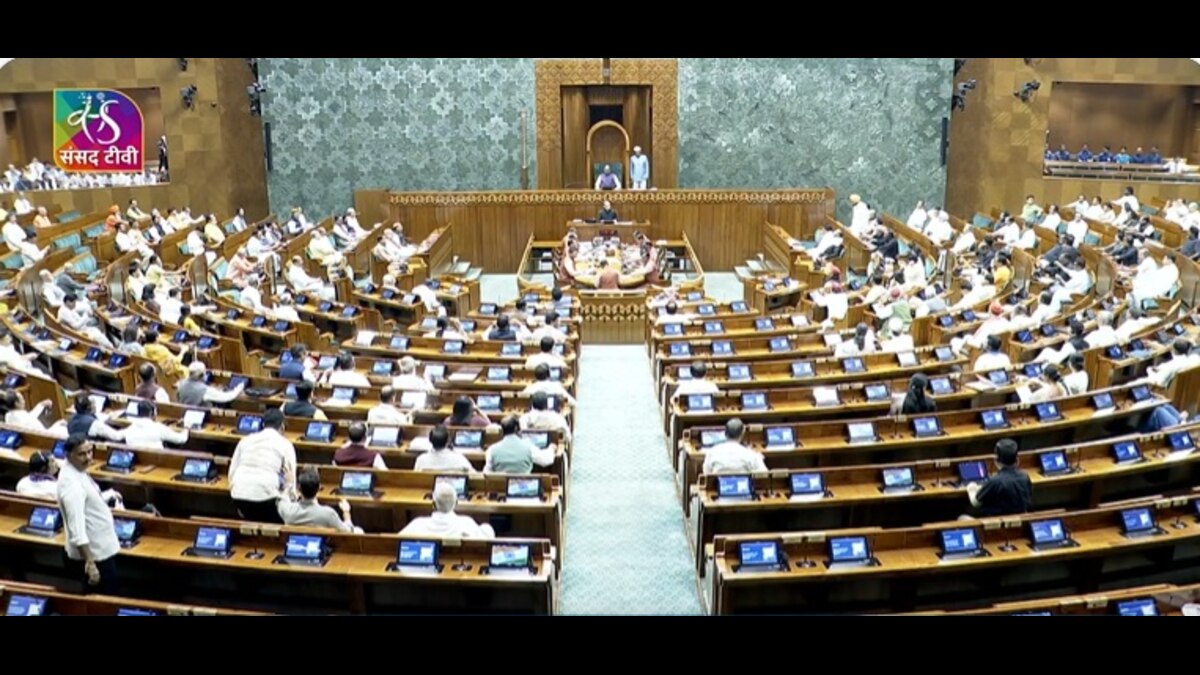
The Narendra Modi government is expected to push five new bills as the Monsoon Session of Parliament begins next week. NDA Ministers also convened a high-level meeting to finalise their strategy on Friday — with the Delimitation Bill conspicuously absent from the tentative agenda. Opposition leaders from both Houses will meet on July 20 to chalk out a joint strategy and finalise the issues it plans to raise.
The Monsoon Session is scheduled to commence on July 20 and conclude on August 13. The government is slated to meet with leaders across party lines on Sunday to discuss various issues that will be taken up during the session. A PTI report adds that the Opposition is also gearing up to take on the government on crucial issues, including the NEET paper leak case and the alleged embezzlement of donations at the Ram temple in Ayodhya. Geopolitical developments such as rising oil prices and the Indo-US trade deal are also expected to be in focus.
7 Bills likely to be introduced during Monsoon Session
Legislative proceedings are also likely to prioritise the resolution of two legacy bills, including the contentious Foreign Contribution (Regulation) Amendment. A bill to give national song Vande Mataram additional statutory protections and another law to crack down on “delayed registration” of birth and death have been listed for introduction in the Lok Sabha. A bulletin issued by the Lok Sabha Secretariat also outlined plans for legislation to overhaul the higher education sector.
According to an Indian Express report, the agenda for the session does not include the delimitation rules. This includes the Nari Shakti Adhiniyam that was defeated in the Lok Sabha earlier this year after the NDA failed to secure a two-thirds majority. Sources also told the publication that this “delimitation package” would need to be tabled and ratified by the Union Cabinet to be put into motion yet again.
FCRA Amendment Bill – Seeks to amend the Act governing acceptance and use of foreign contribution and foreign hospitality to “ensure that such inflows do not adversely affect national interest, public order or national security”. It has been listed for “consideration and passing” after being tabled during the previous Session on March 25. It had faced opposition from election-bound Kerala during the Budget Session. The bill seeks to vest the government with authority to strip the NGOs of their assets if they fail to comply with FCRA registration requirements. The 2020 amendment to the law imposed a fixed 25% on the use of foreign contributions for administrative expenses, down from the earlier 50%. A delegation of Christian leaders had recently met with Union Home Minister Amit Shah to convey their apprehensions about the bill.
Registration of Births and Deaths (Amendment) Bill — Seeks to further amend section 13(3) of the Registration of Births and Deaths Act of 1969 (as amended in 2023) “in order to make provisions of delayed registration more stringent”. Sources told PTI that people who fail to report births and deaths to authorities within two years may face a stricter registration process.
Supreme Court (Number of Judges) Amendment Bill — Intended to replace an existing ordinance in this regard.
Prevention of Insults to National Honour (Amendment) Bill – Seeks to give the national song Vande Mataram the same statutory protection as the national anthem Jana Gana Mana and make any insult or obstruction to the singing of the national song Vande Mataram a punishable offence.
Viksit Bharat Shiksha Adhishthan Bill — It was first introduced in December 2025 but later referred to a Joint Committee of both Houses. The 31-member committee’s report is scheduled to be presented and considered during the session. The Bill seeks to dissolve the University Grants Commission, the All India Council for Technical Education and the National Council for Teacher Education in favour of a single, unified regulatory commission. It also aims to implement the National Education Policy by dividing higher education oversight into three specialised councils for regulation, accreditation and standards.
Income-tax (Amendment) Bill — To replace an Ordinance effected last month to exempt foreign investors from income tax on interest earnings and capital gains from investment in government securities (G-secs). This was promulgated to attract foreign capital and ease pressure on the depreciating rupee amid the West Asia crisis. The Income-tax (Amendment) Bill, 2026, will replace the Income Tax (Amendment) Ordinance, 2026.
Micro, Small and Medium Enterprises Development (Amendment) Bill — Seeks to align the MSME Development act of 2006 with the changing scenario to ensure ‘ease of doing business’ and bring trust-based regulations in the MSME ecosystem.