




India’s clean energy shift is gathering pace, and electric mobility is at the centre of it. As per the India Energy Green Storage Alliance, Electric Vehicle sales crossed 2.3 million units in FY25, with penetration nearing 8% of total vehicle sales. Policy support remains firm, backed by a 5% GST rate, production-linked incentives, and a clear target of 30% EV penetration in passenger vehicles by FY30.
This acceleration in adoption is steadily lifting demand for lithium-ion batteries. A joint report by the India Cellular & Electronics Association and Accenture forecasts that India’s annual lithium-ion battery demand could reach 115 gigawatt hour (GWh) by 2030, driven by strong EV adoption and growth in stationary and consumer electronics.
Supply Chain Shift: The ₹1.45 Lakh Crore Opportunity
According to Research and Markets, India’s lithium-ion battery market was estimated at US$5.8 billion in 2025 and is expected to grow to US$16.0 billion (₹1.45 lakh crore) by 2030. As cell manufacturing begins to localise, the opportunity is widening beyond battery assemblers.
Chemical intermediates, electrolytes, conductive materials, and specialty additives are emerging as critical pieces of the value chain. Let’s take a closer look at three companies that are positioning themselves to tap into this structural shift.
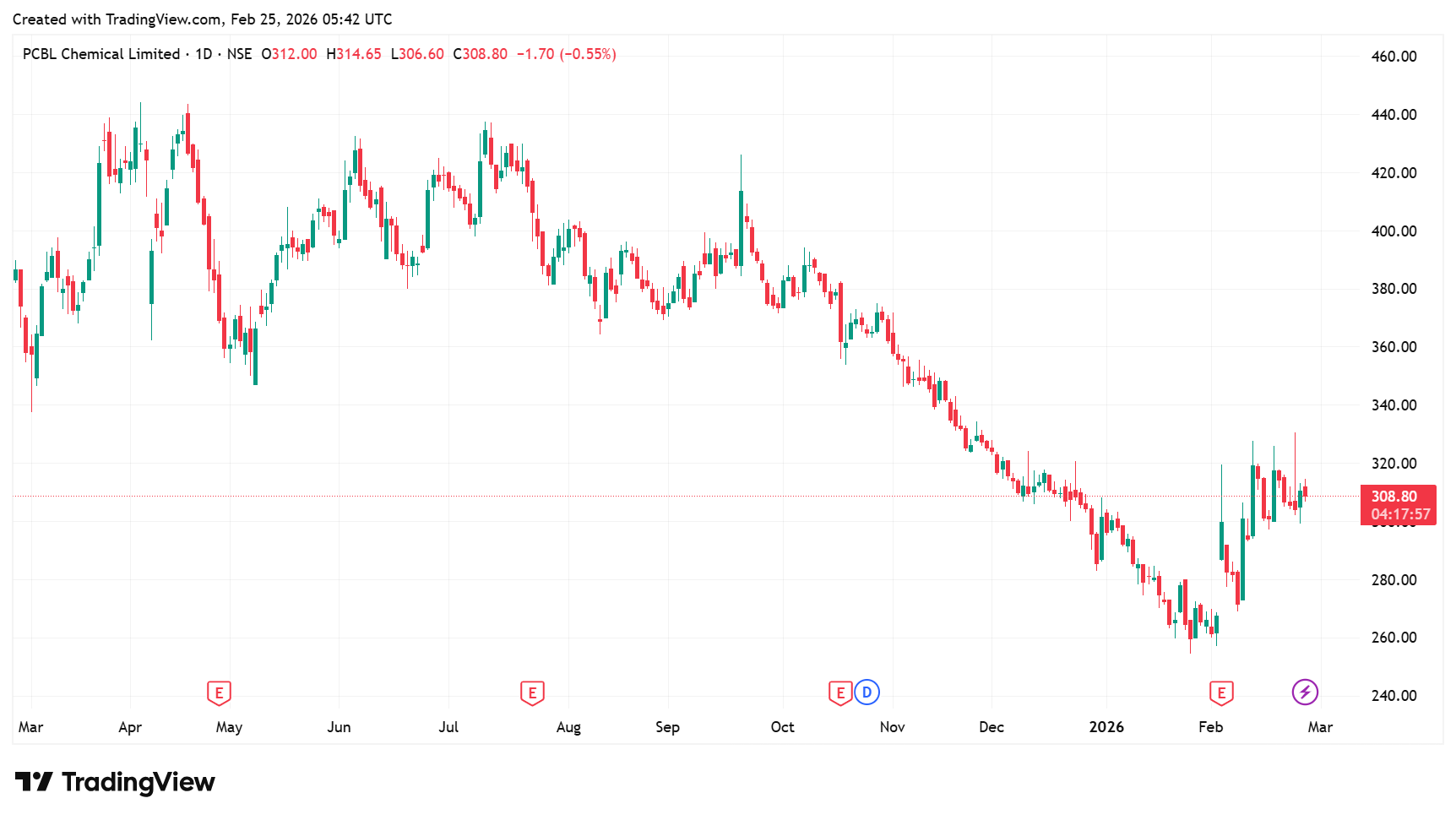
#1 The Nanovace Project: PCBL’s High-Stakes Bet on Nano-Silicon
PCBL Chemical Limited (PCBL), a part of the RP-Sanjiv Goenka Group, is a global specialty chemical company and India’s largest carbon black player. The company is currently the sixth-largest carbon black producer and the fourth-largest specialty black player globally.
PCBL operates primarily across three multi-chemistry segments: Rubber & Specialty Blacks, Specialty & Solutions, and Battery Chemicals (Next-Gen Tech). PCBL is positioning itself as a pioneer in the energy storage segment.
PCBL’s Three-Pronged Battery Tech Strategy
It is the first company globally to simultaneously develop three advanced technologies for next-generation batteries and conductive solutions: Super-Conductive Carbons, Nano-Silicon, and Acetylene Black. This project is named The Nanovace Project (Nano-Silicon).
Global Patents & Pilot Validation: Building a Moat Beyond India
The project is being developed in partnership with an Australian firm, introducing a new manufacturing method for the battery energy segment. An 80-ton pilot plant is currently under construction at Palej, Gujarat, and is expected to go live by the end of March 2026.
Transitioning from Pilot Plant to Commercial Output
Thereafter, a full-scale 2,000-ton commercial plant is planned for commissioning by the end of FY28, post successful pilot validation with customers. The estimated CAPEX for this commercial facility is between US$25 and US$30 million. The commercial potential for Nanovace is massive.
Margin Outlook: Can PCBL Sustain its 50% Bottom-Line Guidance?
At full utilization, which management expects to reach around the end of FY29 or the beginning of FY30, the product is projected to generate revenue of ₹1,700 crore. It also expects 50% of revenue to flow directly to the bottom line.
PCBL has also received a US patent for its proprietary nanomaterial process, and patents are expected soon in Japan, South Korea, and Europe. The company has also applied for patents covering carbon-silicon composites and bio-sourced battery-grade graphite.
To drive this expansion, PCBL has formed a US subsidiary and is growing its dedicated business development and application engineering teams. Additionally, trial runs for 1,000 metric tons per annum (MTPA) of super-conductive carbon have already begun. PCBL has commenced work on a 4,000 MTPA acetylene black plant, which is expected to be operational by the end of FY27.
These next-generation chemicals are engineered to serve high-growth, modern ecosystems. Key applications include lithium-ion batteries, energy storage systems, EV charging infrastructure, high-voltage power cables, and semiconductor packaging.
Financial Headwinds: Analyzing the 52% Net Profit Slump
Consolidated revenue declined by approximately 3% to ₹6,124 crore in 9MFY26 due to the difficult global environment. EBITDA declined from ₹1,067 crore to ₹834 crore, while margins contracted 300 bps to 14%. Net Profit, however, fell even harder by 52.7% to ₹158 crore due to lower pricing power and specific one-off expenses.
#2 Neogen Chemicals: The Electrolyte Specialist
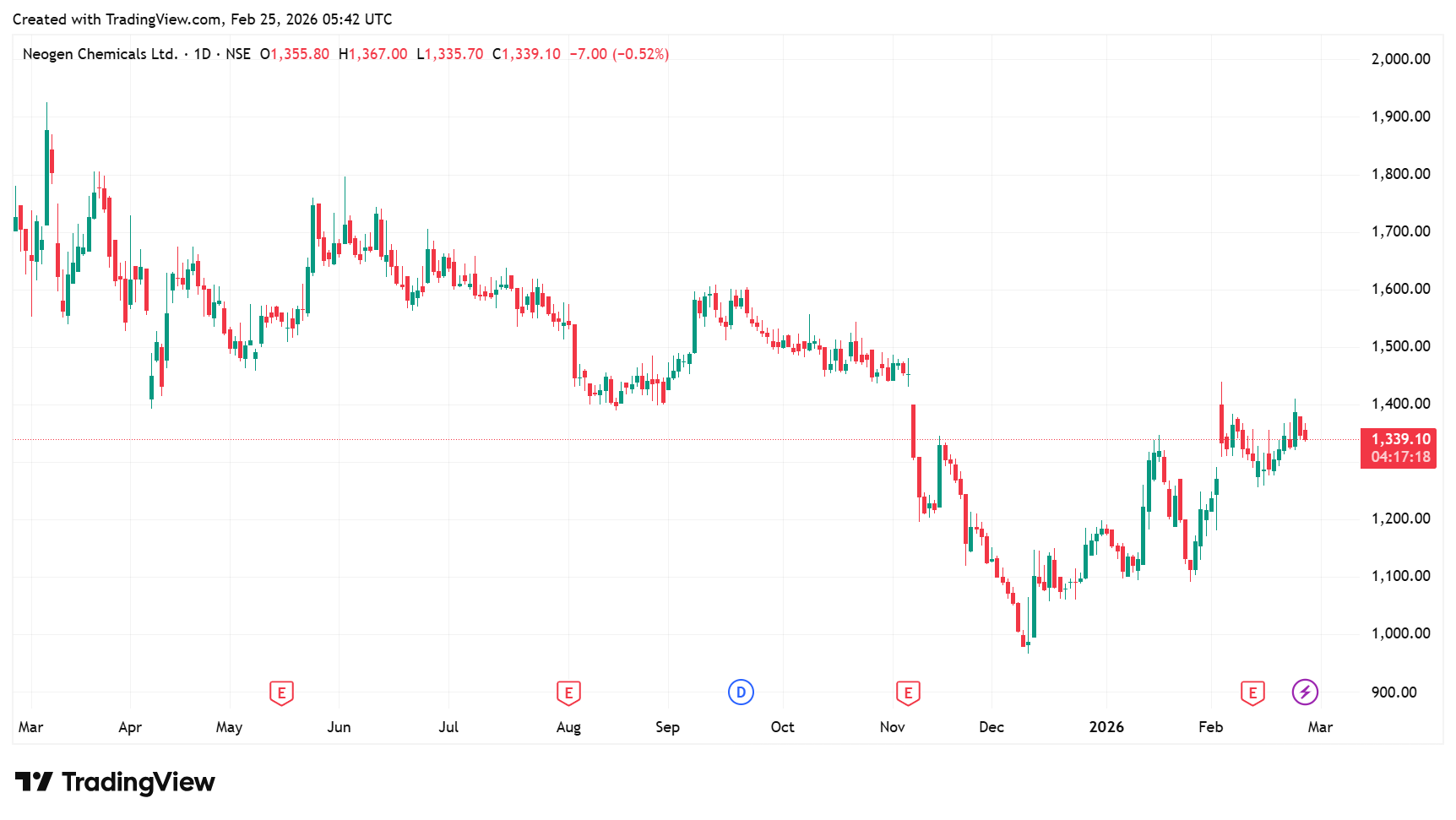
Neogen Chemicals manufactures specialty chemicals, primarily focusing on Bromine-based and Lithium-based chemistries. Neogen operates primarily across two chemical segments: Organic Chemicals and Inorganic Chemicals.
Strategic Pivot: Leveraging Lithium Expertise for the EV Boom
Neogen is aggressively pivoting toward a “future-ready portfolio” by leveraging its long-standing expertise in lithium chemistry to manufacture Lithium-Ion battery materials for electric vehicles and energy storage. The company is establishing large-scale manufacturing for electrolytes and lithium electrolyte salts.
Giga-Scale Approvals: Securing Long-Term Revenue for FY29
Total capital expenditure for this segment is estimated at ₹1,500 crore, with a revenue potential of ₹2,500-2,950 crore by FY29. Neogen has formed a Joint Venture (80:20) with Japan’s Morita Investment to globally produce and sell solid LiPF6 salt.
The Morita Advantage: A Non-FEOC Alternative to Chinese Dominance
This JV leverages proven Japanese technology, making Neogen the only non-FEOC (Foreign Entity of Concern) compliant electrolyte salt plant with established tech outside of China. Also, a new facility on 65 acres in Pakhajan is under construction.
Commercial production of 30,000 MT of Electrolytes is on track for H1FY27, while 3,000 MT of Lithium Electrolyte Salts is scheduled for H2FY27. Neogen has already secured long-term commercial supply approval from a giga-scale Indian customer for electrolytes and provisional approvals from multiple international clients for its lithium salts.
Final international site audits are expected by Q1FY27.
Consolidated revenue grew by approximately 7% to ₹615.4 crore in 9MFY26 due to increased volumes in both organic and inorganic chemicals. EBITDA declined from ₹99.9 crore to ₹93.4 crore, while margins contracted 222 bps to 15.2%. Net Profit, however, fell even harder by 47% to ₹17.3 crore due to higher finance costs, elevated insurance premiums, and other costs.
#3 Balaji Amines: The Solvent Monopoly
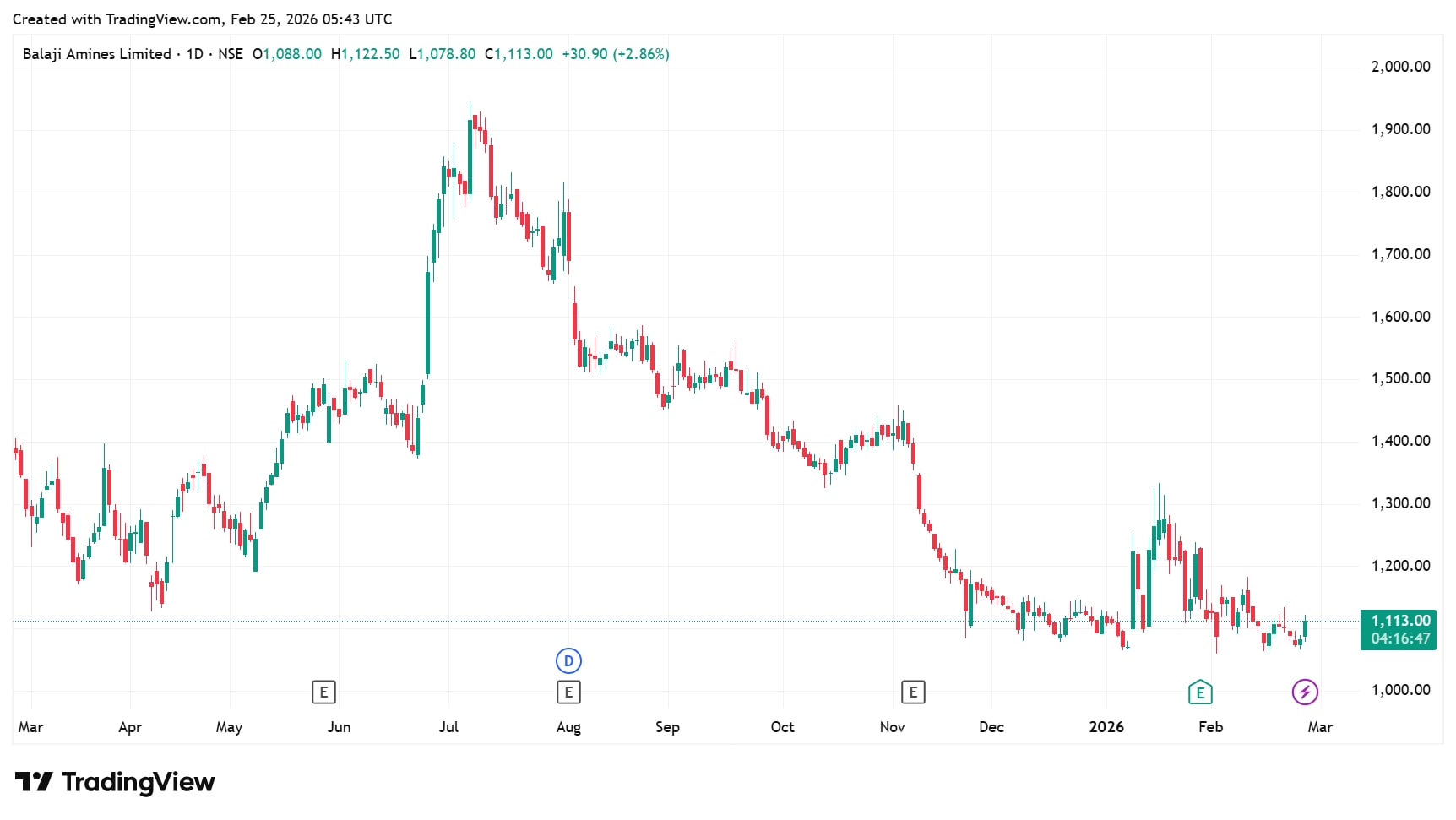
Balaji Amines is a specialty chemical company that manufactures amines, amine derivatives, and other specialty chemicals. It is the largest manufacturer of aliphatic amines and methylamines in India. Balaji is the only Indian company to have developed an indigenous technology for manufacturing amines.
Solvent Dominance: Maintaining the Lead in Aliphatic Amines
The chemicals produced by Balaji Amines are essential raw materials and solvents used across a wide variety of industries. Globally, the majority of aliphatic amines are consumed by the pharmaceutical (61%) and agrochemical (26%) sectors. It is also involved in the battery sector, specifically targeting the fast-growing electric vehicle battery industry.
Import Substitution: Balaji’s Monopoly in Electronic Grade DMC
The company produces specialty chemicals used as battery materials and fuel additives. To capitalize on the EV market, it added new equipment to its existing Di-methyl Carbonate (DMC) plant to manufacture Electronic Grade DMC. It is the only manufacturer of DMC in India.
Electronic Grade DMC has a strong demand for use in EV batteries. Notably, Balaji Amines is currently the only manufacturer of DMC in India, boasting an installed capacity of 15,000 MTPA. This plant was successfully commissioned on 28 May 2025.
Targeting ₹2,000 Crore Revenue
From a financial standpoint, consolidated revenue declined by around 1.71% to ₹1,051.26 crore in 9MFY26. EBITDA declined from ₹197.66 crore to ₹192.25 crore, while margins contracted 19 bps to 18.29%. Net Profit, however, fell by 11.65% to ₹104.39 crore. Balaji plans to achieve revenue of ₹2,000 crore over the next 2 years, up from ₹1,389 crore in FY25.
Execution vs. Valuation: The 2026-2030 Outlook
Return ratios, including Return on Capital Employed (ROCE) and Return on Equity (ROE), are not in line with the market mainly due to cyclicality. Valuation-wise, PCBL and Neogen are trading at a premium to both historical and industry median valuations, while Balaji Amines is trading at a discount to both.
| Valuation Comparison (X) | |||||
| Company | P/E | 5Y Median | Industry Median | ROCE (%) | ROE (%) |
| PCBL | 46.9 | 16.6 | 40.9 | 11.8 | 12.5 |
| Neogen | 134.0 | 87.7 | 28.3 | 8.8 | 5.6 |
| Balaji Amines | 24.3 | 29.8 | 11.0 | 8.8 | |
| source: screener.in | |||||
India’s battery ecosystem is moving from concept to capacity build-out, and specialty chemical players are stepping into that gap. The opportunity is real and measurable, but earnings have yet to reflect it. Execution, scale-up discipline, and margin delivery over the next three to four years will determine whether valuations sustain.
Disclaimer:
Note: Throughout this article, we have relied on data from http://www.Screener.in and the company’s investor presentation. Only in cases where the data were unavailable have we used an alternate, widely accepted, and widely used source of information.
The purpose of this article is only to share interesting charts, data points, and thought-provoking opinions. It is NOT a recommendation. If you wish to consider an investment, you are strongly advised to consult your advisor. This article is strictly for educational purposes only.
About the Author: Madhvendra has been deeply immersed in the equity markets for over seven years, combining his passion for investing with his expertise in financial writing. With a knack for simplifying complex concepts, he enjoys sharing his honest perspectives on startups, listed Indian companies, and macroeconomic trends.
A dedicated reader and storyteller, Madhvendra thrives on uncovering insights that inspire his audience to deepen their understanding of the financial world.
Disclosure: The writer and his dependents do not hold the stocks discussed in this article.
The website managers, its employee(s), and contributors/writers/authors of articles have or may have an outstanding buy or sell position or holding in the securities, options on securities, or other related investments of issuers and/or companies discussed therein. The articles’ content and data interpretation are solely the personal views of the contributors/ writers/authors. Investors must make their own investment decisions based on their specific objectives, resources, and only after consulting such independent advisors as may be necessary.