



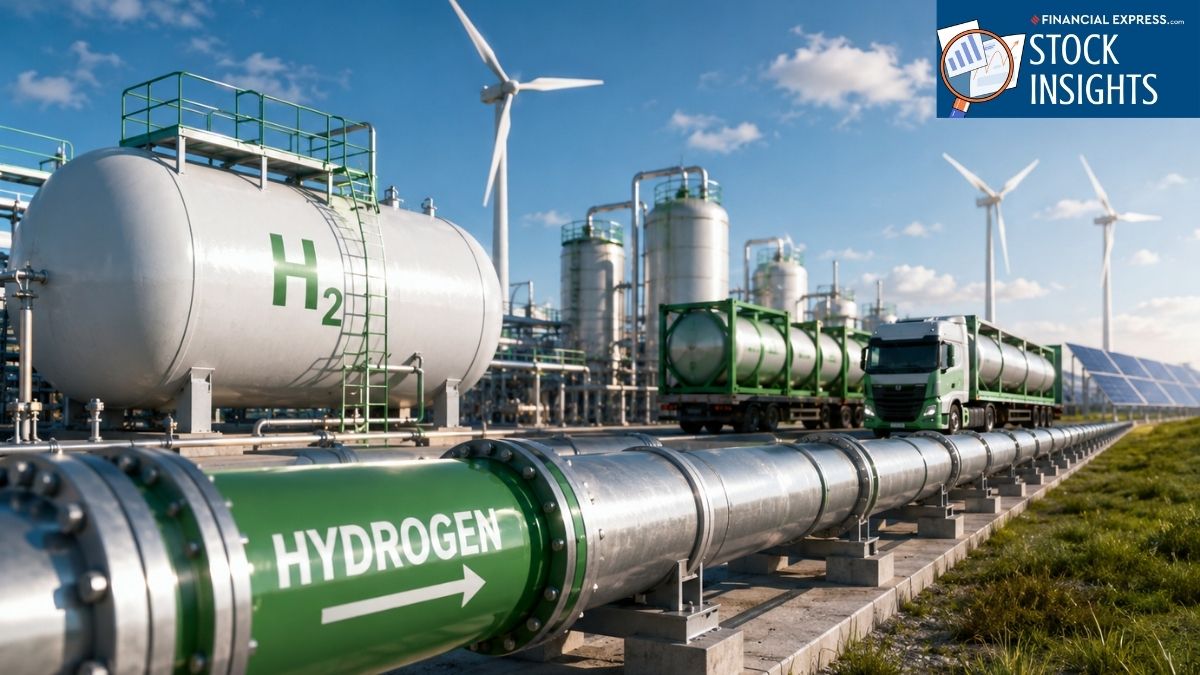
Green hydrogen cannot create a clean energy economy unless it can be moved. This implies that producing hydrogen is only the first step. The bigger challenge is transporting it safely and economically from production plants to end-users.
This is because, unlike natural gas, hydrogen requires specialised infrastructure such as dedicated pipelines, high-pressure cylinders, or cryogenic tanks that operate at -253°C. Without this transportation network, large-scale hydrogen adoption remains difficult.
Furthermore, India’s existing natural gas pipeline network (33,000 kilometers by 2027) can only support initial hydrogen blending. However, large-scale green hydrogen deployment will require the construction of entirely new, dedicated hydrogen pipeline corridors. These pipelines are the missing link and will be key to hydrogen adoption.
This is where the investment opportunity is emerging. Under the National Green Hydrogen Mission, India aims to produce 5 million metric tonnes (MMT) of green hydrogen annually by 2030. Welspun Corp estimates that achieving this target will require around ₹10 lakh crore of investment in hydrogen transportation infrastructure, including pipelines and storage systems.
The opportunity extends beyond India, with global hydrogen demand projected to continue expanding. As countries build hydrogen supply chains, companies enabling its transportation could become important beneficiaries of this long-term transition.
Against this backdrop, this article examines three companies that are positioning themselves to benefit from the growth of hydrogen transportation.
#1 INOX India: Monopolizing the Cryogenic Value Chain
INOX India is a global leader in vacuum-insulated cryogenic equipment. The company provides end-to-end solutions across the entire value chain, from concept development and design to engineering, manufacturing, delivery, and the execution of integrated turnkey projects.
Industrial Gas (45% of revenue) is the largest contributor. This segment manufactures industrial gas storage equipment, including standard storage tanks, transport tanks, and micro-bulk containers. It serves a diverse range of industries, including aviation, aerospace, electronics, healthcare, power, and chemicals.
Thereafter, LNG contributes 29% to revenue, followed by others (26%). INOX has a diversified domestic and international customer base. Export revenues account for roughly 59% of its total turnover. Its prominent clients span the globe, including Hyundai Engineering & Construction, Gulf Cryo, and IndianOil.
Why the -253°C Cryogenic Bottleneck Protects INOX’s Long-Term Order Book Margins
INOX sees the development of green hydrogen infrastructure not as a short-term trend, but as a long-term structural opportunity. Liquid hydrogen stores more energy in a smaller space, making it suitable for transporting hydrogen over long distances.
However, it must be stored and transported at an extremely low temperature of -253°C, which requires advanced cryogenic storage and transportation systems. This makes liquid hydrogen one of the most challenging industrial gases to handle. To this end, INOX India offers end-to-end solutions for liquid hydrogen storage and transportation.
The 63% Export Share Catalyst: Scaling Production Beyond Short-Term Domestic Trends
INOX India has a demonstrated track record of building its capabilities in hydrogen technology. In 2010, the company designed and supplied advanced liquid hydrogen tanks. It shipped the largest liquid hydrogen tank ever to Korea in 2021, and recently shipped four more large liquid hydrogen tanks to Korea.
Looking ahead, one of INOX’s strategic priorities in FY27 is what management calls “green hydrogen readiness.” To meet expected high demand, INOX is expanding its manufacturing footprint, integrating advanced automation and high-precision engineering.
The ₹1,514 Crore Order Book
The company currently has an order book of approximately ₹1,514 crore, of which it expects to close approximately ₹1,200 crore in FY27. The pipeline also remains strong, with INOX expecting order bookings of approximately ₹450 crore to ₹500 crore per quarter going forward. Export accounts for roughly 63% of its order book.
To fulfill its export order book, INOX has purchased 7 acres of land near Kandla Port. The plant will be operational in 10 months. Located 2.5 kilometers from the port, this plant will provide a logistical advantage and create a competitive export hub for complex, high-value equipment.
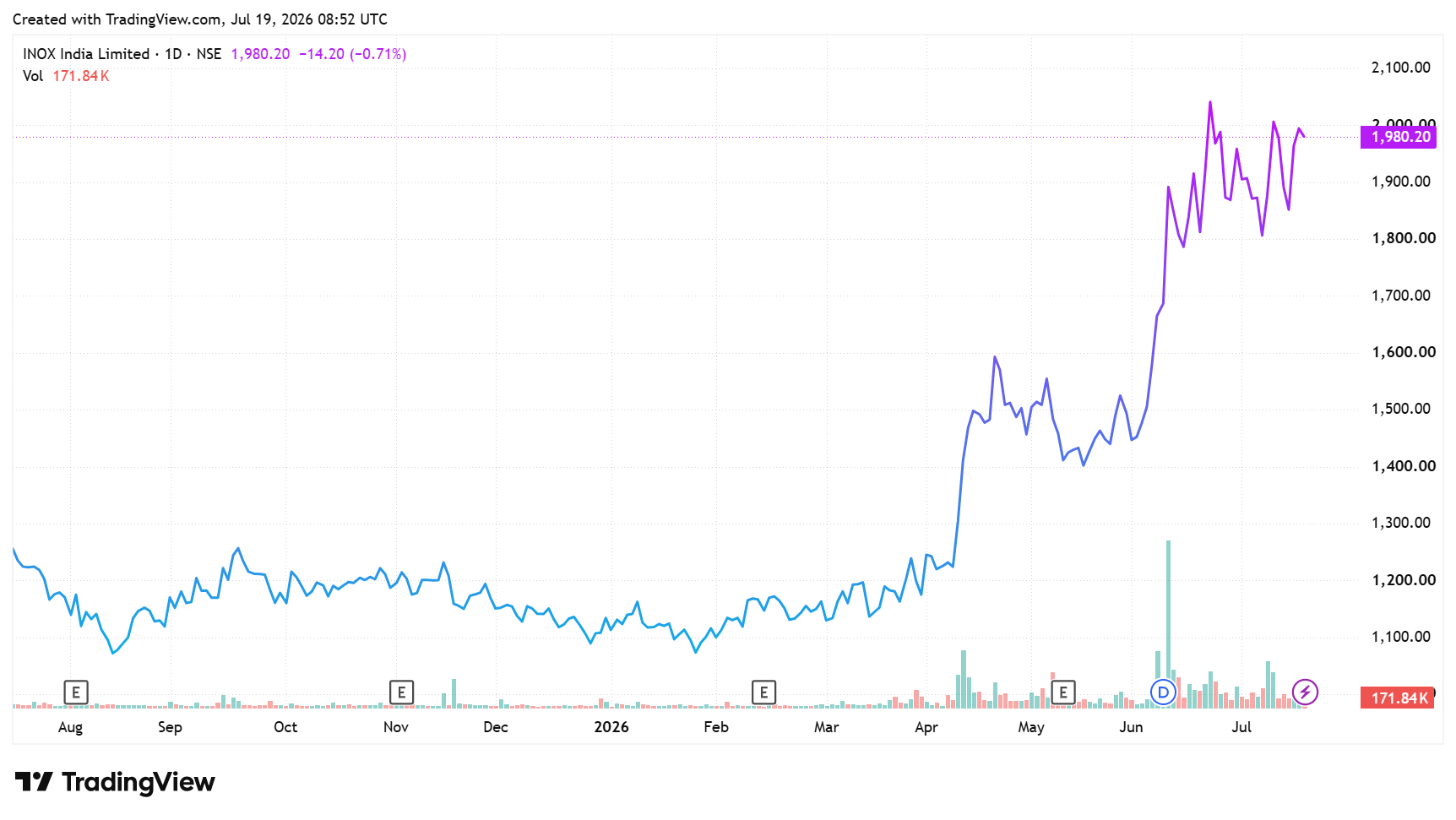
#2 Welspun Corp: High-Pressure Pipes for Global Corridors
Welspun Corp (WCL) manufactures steel pipes, pipe solutions, and building materials. It is a diversified player serving the Oil & Gas, Water Transmission, and Infrastructure Development sectors across more than 50 countries. The company is a niche premium-market player, serving leading global customers, particularly in the large-diameter pipe segment.
WCL is the world’s largest welded line pipe manufacturer. It manufactures large-diameter welded line pipes, including Longitudinal Submerged Arc Welded (LSAW), Helical Submerged Arc Welded (HSAW), and High-Frequency Induction Welded (HFIW) pipes. These pipes are key for the transport of natural gas, refined oil products, water, and pure hydrogen.
Leveraging the 30% US Market Share Stronghold in Large-Diameter Welded Line Pipes
WCL boasts a market share of over 30% in the US and has a localized manufacturing presence across India, the US, and the Kingdom of Saudi Arabia (KSA). The company offers an integrated business model with end-to-end capabilities, delivering pipes ranging from 1.25 inches to 144 inches in outer diameter, along with specialized coating solutions.
Leveraging its stronghold, WCL is actively positioning itself as an early mover and key partner in the global transition toward hydrogen energy. WCL’s product portfolio includes pipes specifically suitable for pure hydrogen transportation, such as their hydrogen-ready X65 ERW pipes. Both its
LSAW and HFIW pipes are designed for hydrogen pipelines and related hydrogen applications.
The Technical Qualification Edge Over Traditional Pipeline Competitors
To meet the stringent global standards for hydrogen transportation, WCL has invested heavily in testing infrastructure and partnerships. It has also established a dedicated infrastructure for hydrogen-related testing and qualification programs at its Anjar, Gujarat facility.
The company has established a dedicated hydrogen testing lab in collaboration with DNV (Det Norske Veritas, Norway). This allows WCL to design and qualify pipes specifically for hydrogen service, giving the company a clear advantage in early commissioning. WCL has also received recognition from the Bureau of Indian Standards for advancing hydrogen pipeline standards.
Backlogs Fully Booked Until FY28
WCL’s Little Rock facility in the US remains fully booked until FY28, supported in part by strong emerging demand for Hydrogen Transportation opportunities. Saudi Arabia is also aggressively advancing its hydrogen ambitions alongside natural gas and oil exports.
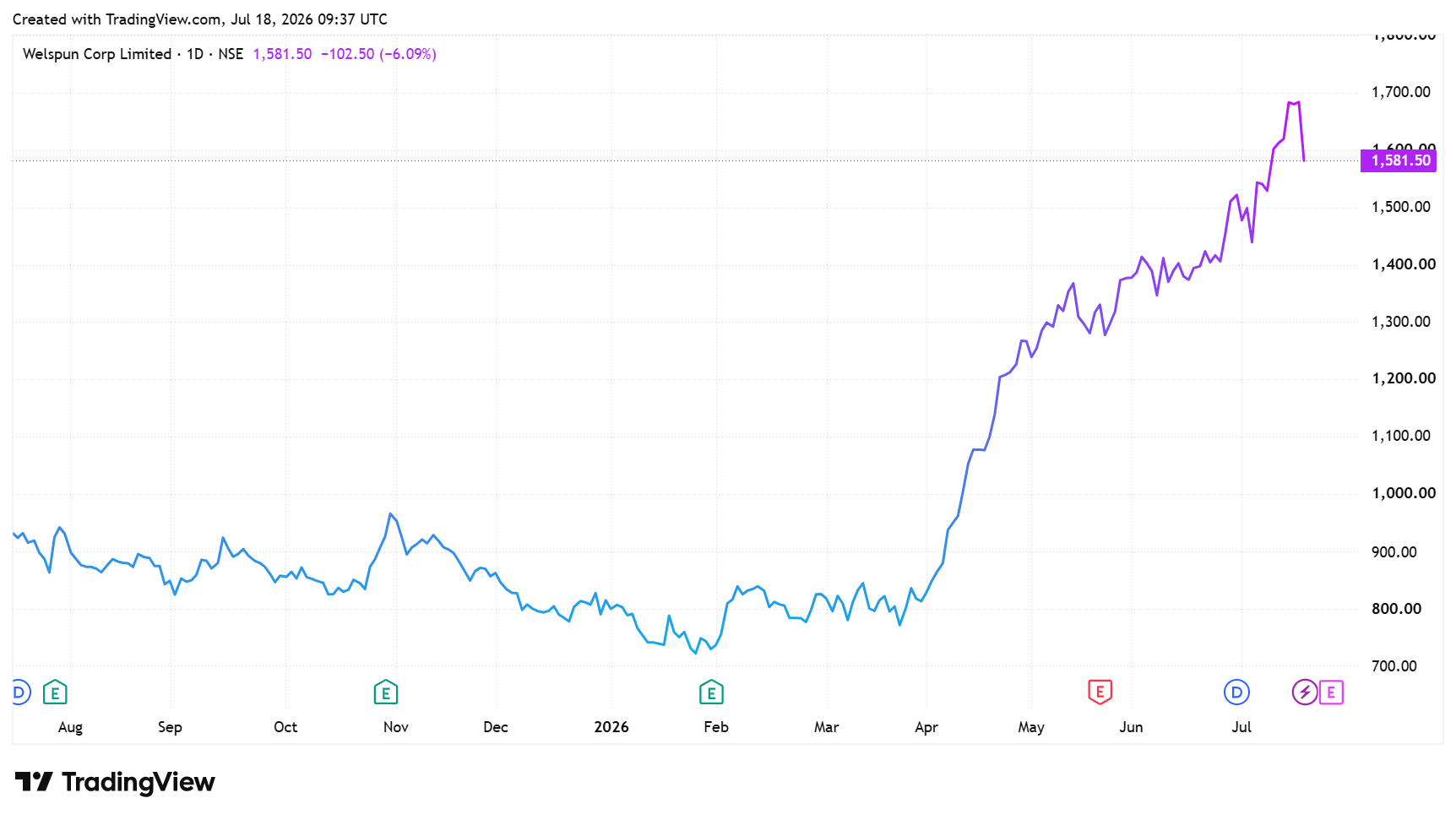
#3 Jindal Saw: Scaling Up the MENA Infrastructure Opportunity
Jindal Saw manufactures a diversified portfolio of iron and steel pipes and tubes. A substantial contribution to the company’s revenue comes from supplying pipes for drinking water supply and sanitation projects, both in India and globally. Domestic business accounts for 75% of the revenue, while export turnover accounts for 25%.
The 70,000 psi Material Advantage: Meeting the Strict API Blend Standards
To support the green hydrogen sector, Jindal Saw manufactures specialized, high-grade steel pipes for the safe and efficient transportation of hydrogen gas. The company has successfully developed and qualified pipes that meet strict American Petroleum Institute (API) standards, achieving a minimum leak strength of 70,000 psi in lab testing.
These highly durable pipes are certified to transport both pure hydrogen and hydrogen-natural gas blends. Further, the company also leverages its broader portfolio of tubular solutions. This includes high-strength Carbon Steel and Alloy Steel Seamless pipes, Stainless Steel pipes (seamless and welded), and Submerged Arc Welded (LSAW and HSAW) pipes.
Monitoring the 400-Kilometer Oman Pipeline
Jindal Saw considers the hydrogen sector a strategic growth driver for future expansion. The company anticipates that as the global economy accelerates its energy transition, the need for efficient, durable, and technologically advanced piping solutions will remain strong.
The company is closely monitoring major infrastructure developments in the Middle East and North Africa (MENA) region. Within this region, concrete hydrogen infrastructure projects are already taking shape. For example, Oman has announced plans to develop a 400-kilometer hydrogen pipeline network.
Projects of this scale offer high-volume demand for the advanced pipeline solutions that Jindal Saw produces. However, they also stated that the actual ground-level demand and large-scale order volumes have not yet materialized in a significant way. Nonetheless, Jindal Saw is actively expanding its manufacturing footprint in this market.
Capitalizing on the 300,000 MTPA Seamless Pipe Facility Expansion
Jindal is setting up a 300,000 MTPA seamless pipe manufacturing facility in Abu Dhabi. Through a joint venture, Jindal Saw is also setting up an advanced LSAW and HSAW pipe mill (300,000 MTPA each) and a ductile iron pipe facility. The plant aims to capitalize on local opportunities in regional water and energy projects.
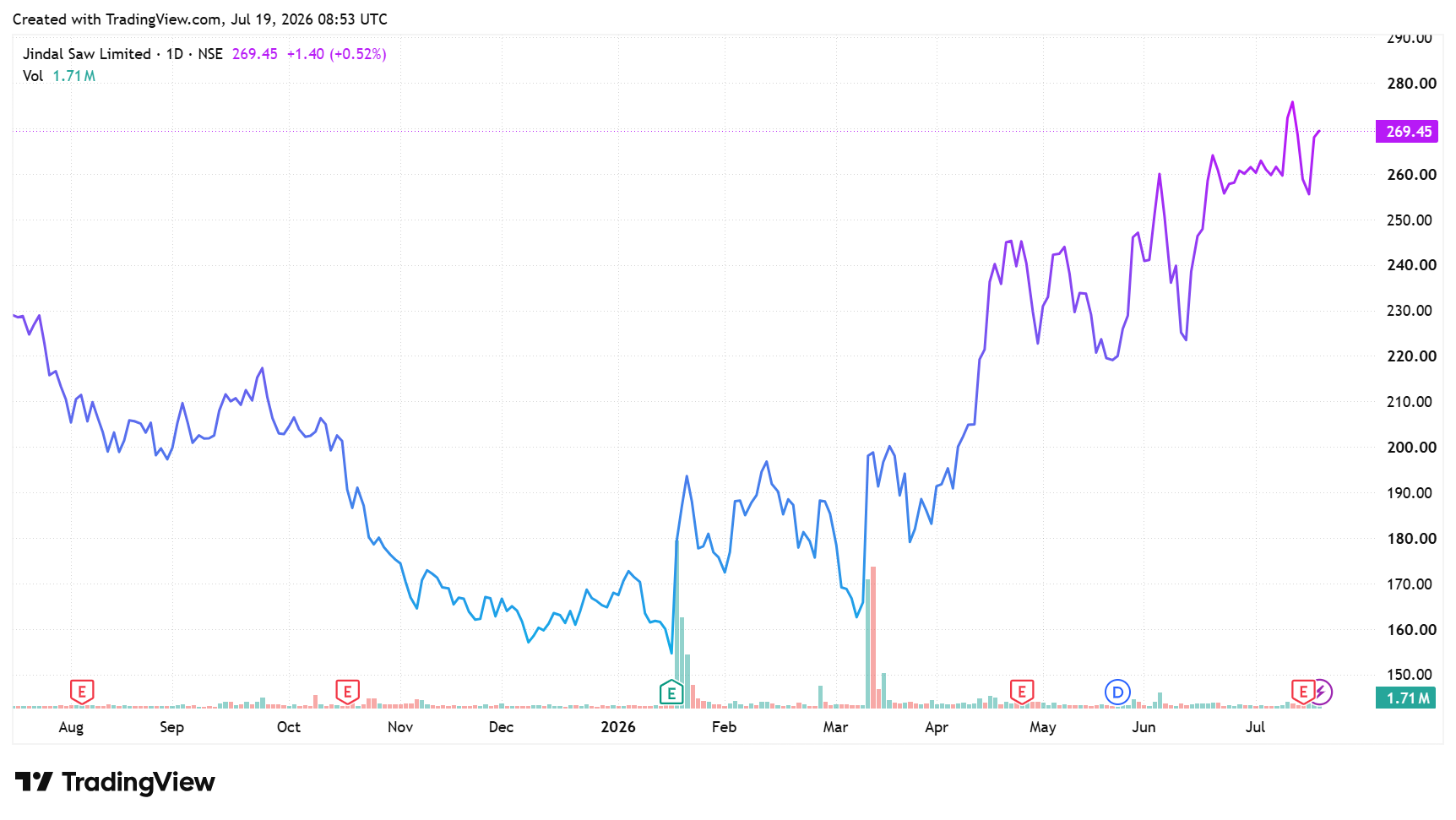
Final Verdict on Valuations
INOX India stands out for its strong Return on Capital Employed (ROCE) and Return on Equity (ROE), followed by Welspun Corp and Jindal Saw. Valuation-wise, all three companies are trading at a premium to both the industry median price-to-earnings (P/E) multiple and their historical 3-year median valuation.
Particulars | Price-to-Earnings Multiple (X) | Return Ratios | |||
| Company | 3Y Median | Industry | ROE (%) | ROCE (%) | |
| Jindal Saw | 26.4 | 10.0 | 23.1 | 8.2 | 10.4 |
| INOX India | 69.1 | ~50.8 | 26.8 | 26.1 | 33.5 |
| Welpsun Corp | 25.9 | 15.3 | 23.1 | 22.9 | 19.4 |
| Source: Screener.in (As of 17 July 2026) | |||||
To conclude, Hydrogen production alone is not enough. The real challenge lies in transporting it safely through pipelines and cryogenic tanks. As India marches towards 5 MMT of green hydrogen production by 2030, investments in hydrogen transportation infrastructure are expected to accelerate.
To this end, INOX India is positioning itself as a provider of end-to-end cryogenic storage and transportation solutions, while Welspun Corp and Jindal Saw are leveraging their expertise in pipeline solutions to cater to the emerging hydrogen transportation market. However, the opportunity depends on the actual adoption of hydrogen.
That said, these companies could be worth keeping on your watchlist.
Disclaimer:
Note: Throughout this article, we have relied on data from http://www.Screener.in and the company’s investor presentation. Only in cases where the data were unavailable have we used an alternative, widely accepted source of information.
The purpose of this article is only to share interesting charts, data points, and thought-provoking opinions. It is NOT a recommendation. If you wish to consider an investment, you are strongly advised to consult your advisor. This article is strictly for educational purposes only.
About the Author: Madhvendra has been deeply immersed in the equity markets for over seven years, combining his passion for investing with his expertise in financial writing. With a knack for simplifying complex concepts, he enjoys sharing his honest perspectives on startups, listed Indian companies, and macroeconomic trends.
A dedicated reader and storyteller, Madhvendra thrives on uncovering insights that inspire his audience to deepen their understanding of the financial world.
Disclosure: The writer and his dependents do not hold the stocks discussed in this article.
The website managers, their employees (s), and contributors/writers/authors of articles have or may have an outstanding buy or sell position or holding in the securities, options on securities, or other related investments of issuers and/or companies discussed therein. The articles’ content and data interpretation are solely the personal views of the contributors/ writers/authors. Investors must make their own investment decisions based on their specific objectives, resources, and only after consulting such independent advisors as may be necessary.