




For investors, dividend income often serves as a stable source of income. It indicates stability, potentially strong cash flows, and, in many cases, a sign of management’s confidence in the business. In uncertain markets, these regular payouts serve as a steady anchor, providing returns even when stock prices fluctuate.
But not all dividend-paying stocks are equal. Some companies sustain high yields at the expense of future growth, while others establish a track record of consistent distributions supported by improving earnings. Even with lower earnings, companies are generating substantial cash returns to shareholders.
For those seeking to balance income with reliability, a closer examination of select dividend-paying stocks is essential. In this context, we examine three small-cap stocks that have paid consistent dividends and are likely to continue doing so, based on their historical record.
#1 Nirlon: The Real Estate Pivot
Nirlon pioneered synthetic yarns and industrial rubber products. Since 2006, it pivoted to the development and management of commercial and IT/ITeS real estate. Nirlon Knowledge Park (NKP) is an IT park in Goregaon, covering 23 acres with a chargeable area of about 3.08 million square feet.
The 5% Dividend Play
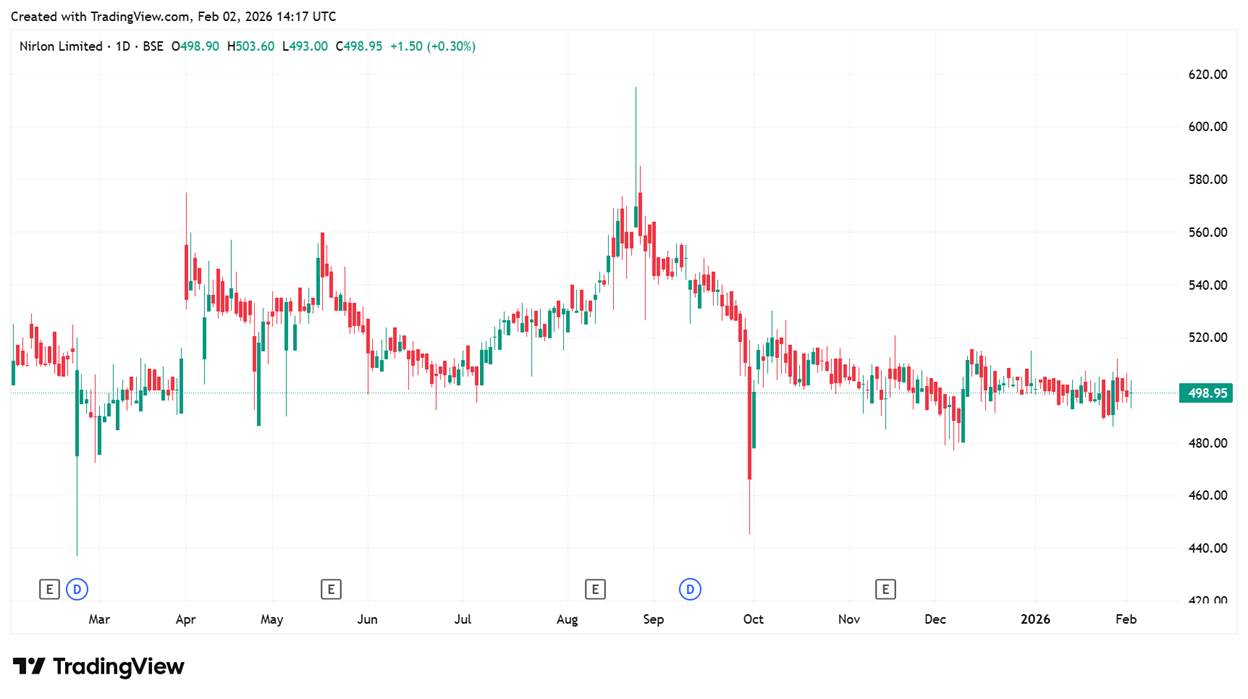
The company offers a high dividend yield to shareholders. It paid a ₹26 per share dividend in FY24 and ₹26 per share in FY25. At the current market price of ₹500 per share, this comes to a dividend yield of around 5%, which is very attractive. The company’s share price has been relatively stable, declining by 2.6% over the past year, outperforming the broader market.
The company’s financial performance has consistently improved. Revenue in FY25 increased by about 6% year-on-year to ₹636 crore, while net profit rose by 5.8% to ₹218 crore. In H1 FY26, revenue increased to ₹328 crore, while net profit surged 94% to ₹206 crore.
The transition to the new tax system has boosted profits since the second quarter of FY26. This trend could continue for the next three quarters until it establishes a new baseline for the subsequent year.
Occupancy Alpha
The overall average occupancy for NKP and Nirlon House was 98.6% as of Q2FY26. During the quarter, approximately 260,000 square feet were licensed to global financial institutions, including Deutsche Bank, Barclays, MUFG, Citi, and EY. The vacant space was low, at 20,000 square feet. Management indicated that the vacancy at NKP is practically finalized for licensing.
The Shift to Annual Rental Escalation Structures
The company is also successfully incorporating annual rental escalations into a majority of its new license agreements, a shift from previous structures. Going forward, the company aims to convert all licensees to an annual escalation structure where possible. This could help drive future revenue and profitability growth.
Nirlon’s Sustainable Payout Strategy
Regarding dividends, the company maintains a policy of maximizing distributions to shareholders using surplus cash flow after providing for contingencies. Management stated that they will focus on sustainable dividends going forward, given the new tax regime, though they declined to provide a specific figure.
#2 MSTC: The PSU Yield Play
MSTC is a Public Sector Undertaking (PSU) engaged in commodities trading and e-commerce services, e-auction, and e-procurement services. It conducts e-auctions of scrap, e-sales of mineral blocks, spectrum, FM channels, properties, and coal auctions on behalf of Coal India.
Navigating MSTC’s 9.1% Yield and PSU Policy
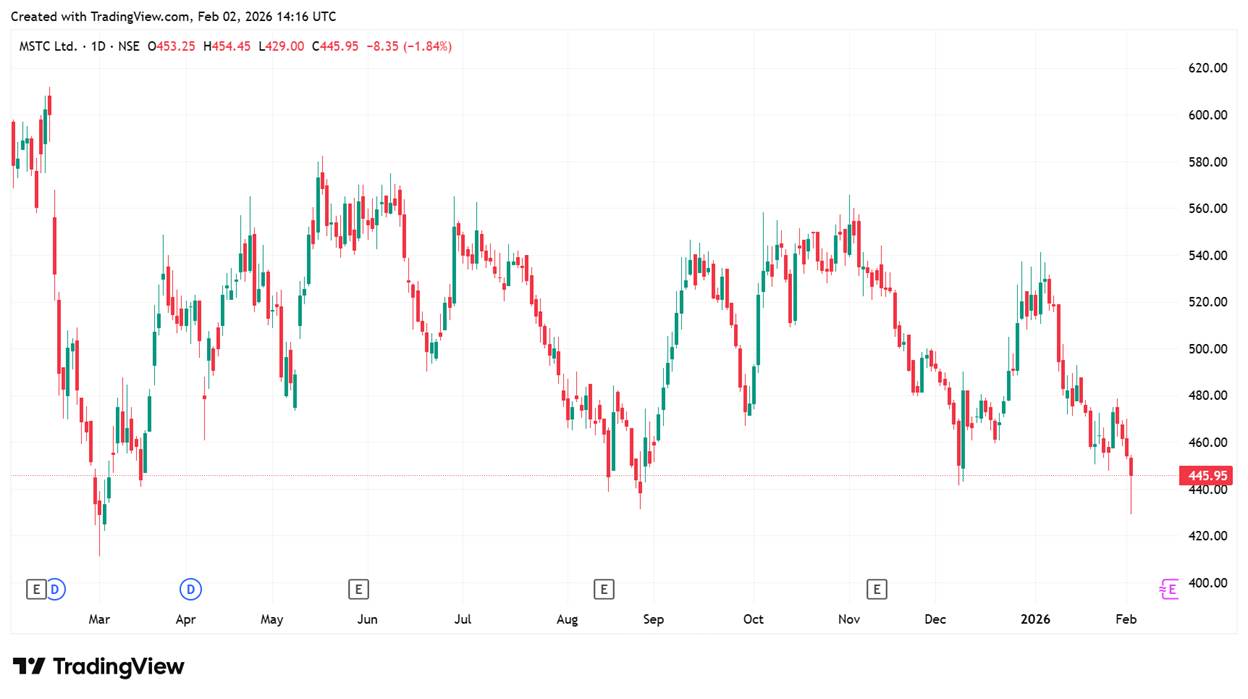
MSTC has paid a dividend of ₹40.5 in FY25 (including the ₹32 interim dividend paid in February 2025). This translates into a dividend yield of 9.1% at the current price of ₹443 per share. As a PSU, MSTC maintains a legacy of paying dividends to shareholders almost every year.
This is because MSTC adheres to the dividend policy set by the Government of India for PSUs. The policy states that the minimum dividend a PSU must declare is 30% of net profit or 4% of the net worth, whichever is higher. The company decided on the dividends in consultation with the Ministry of Finance.
The management has outlined a hierarchy of priorities. The priority begins with server maintenance and equipment, followed by investment in new business ventures, including the Central Pollution Control Board platform and a new travel portal. Once that is done, MSTC plans to utilise the remaining cash for dividends and potential acquisitions of office space.
Analyzing Operational Growth in H1 FY26
From a financial perspective, revenue was almost flat at ₹311 crore in FY25 compared with ₹316 crore in FY24. The remaining revenue came from marketing and other segments. Net profit rose by 146.6% to ₹407 crore.
The company recorded an exceptional income of ₹301.7 crore from the disposal of its investment in FSNL, which significantly boosted the net profit. Having said that, operating profit was still higher by 117% year-on-year to ₹178 crore in FY25. In H1 FY26, revenue increased by 9.3% year-on-year to ₹196 crore, while net profit increased by 12% to ₹93.5 crore.
This growth was driven by its core e-commerce vertical, which grew by 18.5% to ₹146.3 crore. However, there is a risk as MSTC continues to face headwinds in the scrap segment (core revenue driver) due to softening scrap prices. To offset the slowdown, it’s venturing into new businesses. In light of this, the predictability of its future dividends is very low.
E-Commerce and EPR Platforms as Core Margin Drivers
The company expects the e-commerce vertical to remain a key growth driver going forward as well. MSTC is also leveraging its core strength in software application development to create portals and dashboards for various government ministries. It views this as a promising area in which its expertise can be applied to rapidly develop customized solutions for multiple clients.
MSTC has been awarded the contract by the Central Pollution Control Board to develop a trading platform for Extended Producer Responsibility certificates. Management views this as a potential game-changer, similar to its success in hazardous waste disposal. However, significant revenue is expected only towards the end of FY27 or the beginning of FY28.
Strategic Government Mandates and New Platforms
The DGFT has nominated MSTC to establish an online platform for allocating tariff rate quotas for gold bullion imports. This is a new area for the company, with the potential to expand into other commodities.
The company is developing a B2B travel portal to manage official travel bookings for the government sector, leveraging its existing data center infrastructure. It is expected to be operational by Q1 FY27 and plans to open it to private-sector and B2C clients thereafter.
#3 PTC India: The Power Trading Giant
PTC India is promoted by Power Grid Corporation of India, National Thermal Power Corporation, Power Finance Corporation, and National Hydroelectric Power Corporation. The company was a co-promoter of India’s first electricity exchange, the Indian Energy Exchange, and is also the co-promoter of the Hindustan Power Exchange.
Leveraging a 33% Share in Indian Power Trading
PTC India is known for pioneering the power trading segment in India. The company is the largest player in the Indian power trading market, holding a 32% market share by volume traded. It also has an investment company, PTC India Financial Services, which offers financial solutions in the power sector.
PTC has more than 7,500 megawatts (MW) of operating long-term and medium-term contracts. Renewable energy projects (including Hydro) make up 58% of the company’s operating Power Purchase Agreement (PPA) portfolio. It currently services 800 clients across all segments.
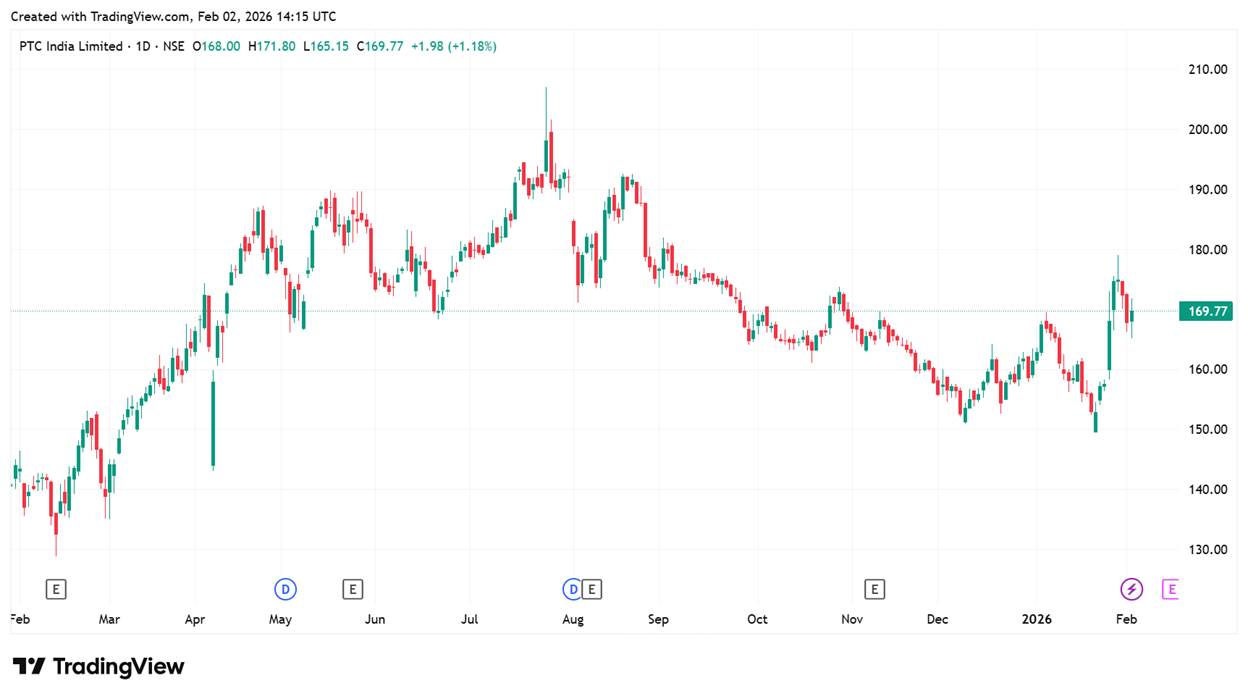
PTC paid a total dividend of ₹11.7 in FY25, up from ₹7.8 per share in the last three financial years. This translates into a dividend yield of 6.8% at its current price of ₹172 per share. The company intends to maintain its dividend payout trajectory in accordance with its dividend distribution policy. It plans to balance the need to reward shareholders with investment in future business ventures.
Capital Allocation and the Green Energy Pivot
The company holds approximately ₹3,000 Crore in cash. The allocation strategy includes ₹1,000 crore reserved for working capital to support high-volume trading operations, ₹1,500-2,000 crore for investments in business ventures that ensure long-term revenue visibility, such as renewable energy.
From a financial perspective, standalone total income decreased by 2.5% year-on-year to ₹15,611 crore in FY25. This performance was underpinned by trading volumes, which rose 10.6% to 82,751 MUs, with short-term trading volumes increasing 17.34%. Net profit increased significantly by 132% to ₹855 crore, boosted by an exceptional item of ₹522 crore.
In H1FY26, standalone operational income decreased slightly by 3.1% year-on-year to ₹9,194 crore, while net profit increased by 7.7% to ₹239 crore. This performance was supported by an 11% increase in trading volumes to 49.2 Billion Units (BUs), driven by growth across long-term, medium-term, cross-border, and exchange segments.
Transitioning Toward Green Hydrogen and Energy Storage
The company aims to transition into an integrated energy solutions provider. This involves consolidating the core trading business while expanding value-added services, including energy, portfolio management, advisory services for stressed assets, and operations and maintenance for SEZs and distribution utilities.
Quantitative Comparison: ROCE, ROE, and Valuations
PTC is venturing into emerging areas, including Green Hydrogen and Battery Energy Storage Systems, through strategic collaborations. The company plans to expand its technology vertical to develop advanced solutions for the evolving energy market, leveraging data analytics for better decision-making.
Nirlon’s return ratios, including Return on Capital Employed (ROCE) and Return on Equity (ROE), are the highest among the three companies, followed by MSTC and PTC India. From a valuation perspective, MSTC and Nirlon are trading at a discount not only to their historical median multiple but also to the industry median multiple.
| Peer Comparison (X) | |||||
| Company | P/E | 3Y Median P/E | Industry Median P/E | ROCE (%) | ROE (%) |
| MSTC | 14.2 | 17.7 | 31.8 | 29.3 | 28.4 |
| PTC India | 11.7 | 12.1 | 7.7 | 11.9 | 9.7 |
| Nirlon | 14.2 | 19.4 | 22.5 | 30.2 | 59.9 |
PTC India, however, continues to trade at a premium multiple. That said, Nirlon, MSTC, and PTC India stand out for their ability to return cash to shareholders without stretching balance sheets. Each follows a distinct dividend model, but all offer reasonable visibility on payouts. For investors seeking income with relative stability, these stocks merit closer attention.
Disclaimer
Note: Throughout this article, we have relied on data from http://www.Screener.in and the company’s investor presentation. Only in cases where the data were unavailable have we used an alternative, widely used, and accepted source of information.
The purpose of this article is only to share interesting charts, data points, and thought-provoking opinions. It is NOT a recommendation. If you wish to consider an investment, you are strongly advised to consult your advisor. This article is strictly for educational purposes only.
About the Author: Madhvendra has been deeply immersed in the equity markets for over seven years, combining his passion for investing with his expertise in financial writing. With a knack for simplifying complex concepts, he enjoys sharing his honest perspectives on startups, listed Indian companies, and macroeconomic trends.
A dedicated reader and storyteller, Madhvendra thrives on uncovering insights that inspire his audience to deepen their understanding of the financial world.
Disclosure: The writer and his dependents do not hold the stocks discussed in this article. The website managers, its employee(s), and contributors/writers/authors of articles have or may have an outstanding buy or sell position or holding in the securities, options on securities or other related investments of issuers and/or companies discussed therein. The articles’ content and data interpretation are solely the personal views of the contributors/ writers/authors. Investors must make their own investment decisions based on their specific objectives, resources, and only after consulting such independent advisors as may be necessary.