



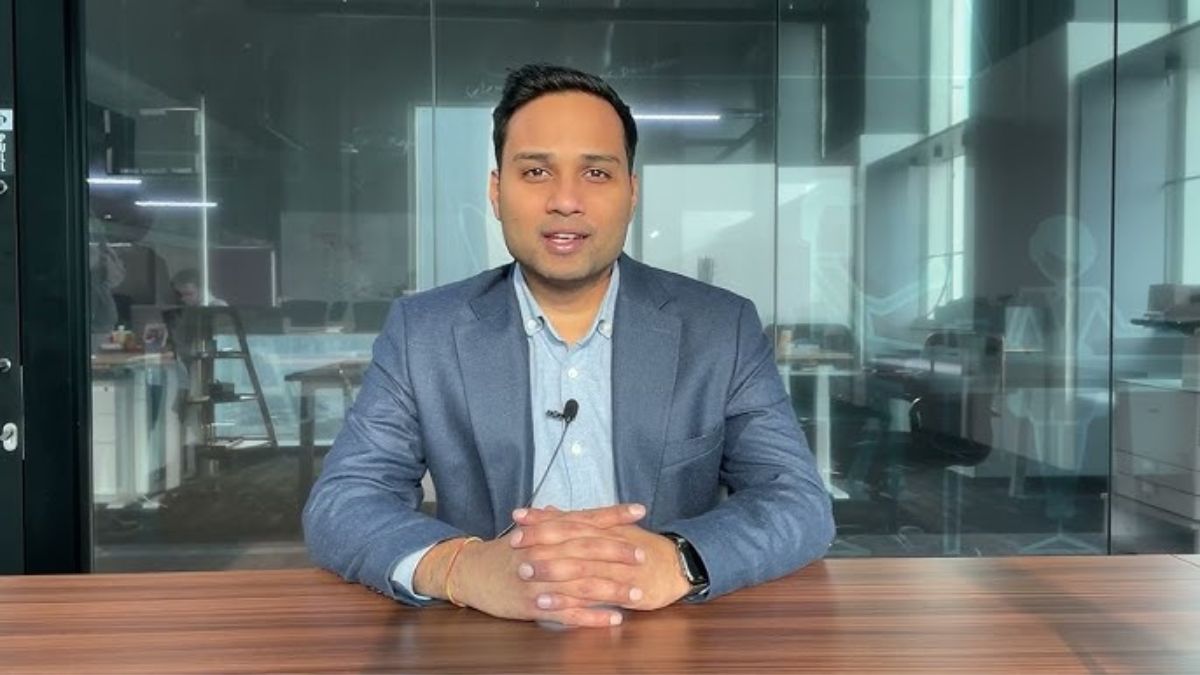
A walk down University Avenue in Palo Alto nearly a decade ago changed the course of Harsh Binani’s career. Then with McKinsey in Chicago, Binani was visiting the Bay Area when he stopped outside Accel’s office. Among the logos of companies the venture capital firm had backed was Flipkart, built in Bengaluru and backed by Accel with an $800,000 investment in 2009. For Binani, it was proof that an Indian company could be built to global scale. “You could leave the American dream and come build something in India which is world-class,” he recalls. Soon afterwards, he did exactly that.
The decision eventually led to the creation of Smartworks, a company that has quietly become India’s largest listed managed office campus operator. Unlike most co-working firms that targeted freelancers and startups, Smartworks built its business around leasing large office buildings, fitting them out, and operating them as fully managed campuses for large enterprises. Today, it manages more than 10 million sq ft across 66 centres, serving multinational corporations (MNCs), global capability centres (GCCs) and large Indian firms.
The idea itself did not emerge from the office real estate business. It came from what Binani and his brother-in-law, Neetish Sarda, had experienced while studying and working overseas. Both came from Marwari business families, but neither had worked in property. What stayed with them were the sprawling campuses of firms such as Google, Microsoft and Amazon. “In India there was nothing like it,” says Sarda. They believed large companies here would eventually want similar integrated workplaces without owning or managing them.
Sarda founded Smartworks in 2016 and Binani joined a year later. Convincing landlords, however, was harder than refining the idea. Two founders in their twenties with no real estate track record were asking building owners to hand over large commercial assets. “We first had to convince landlords that we were credible,” Sarda says. Instead of immediately chasing scale, they began with smaller centres of around 20,000 sq ft in Gurugram before adding a few more.
The objective was less about growth than demonstrating execution. The early projects helped establish credibility with landlords and customers alike, but the founders always believed the format had limitations. “We were trying to reimagine the future of work,” Binani says. Small centres, he adds, left little room to create the kind of integrated workplace experience they had envisioned. The inflection point came in late 2017 when Smartworks leased a 300,000 sq ft building on Bengaluru’s Outer Ring Road, committing to a monthly rent of around `2.5-3 crore. At the time, it was among the largest bets made by an Indian flexible workspace operator.
The move also marked a sharp departure from the industry’s prevailing playbook. While much of the sector focused on selling desks to startups, entrepreneurs and freelancers, Smartworks targeted enterprises looking for thousands of seats under long-term contracts. The founders believed that the biggest demand would ultimately come from large companies rather than the startup ecosystem that dominated the conversation around co-working.
That distinction would become more evident as the sector matured. While global player WeWork ran into financial distress and several smaller Indian operators struggled to survive, Smartworks stayed focused on large campuses, long-duration contracts and operational discipline. The same conservatism shaped the firm’s finances. Smartworks spent its early years bootstrapped before raising money from friends and family.
Its first institutional funding came in late 2019 when Singapore’s Keppel Land invested about $25 million. Between its seed round in 2017 and 2024, the firm raised only around $70 million across eight funding rounds. Expansion, too, remained measured. The firm stayed away from Mumbai for several years, believing the cost of a wrong decision in that market was disproportionately high, before entering the city only recently.
That measured approach has reflected in its financial trajectory. Smartworks listed in July 2025 through a Rs 583-crore IPO that was subscribed nearly 14 times, with the stock listing at a premium. In FY26, its first full year as a listed firm, revenue rose 31% to Rs 1,796 crore. It reported its first annual net profit of about Rs11 crore against a loss of Rs 63 crore a year earlier, while normalised Ebitda grew 75% and return on capital employed doubled to 16%. The firm also ended the year with contracted future rentals exceeding Rs 5,200 crore.
While the flexible workspace industry has become more segmented, Smartworks has stayed anchored to large-format campuses where enterprises lease significant capacities over longer periods. One Smartworks campus now spans about 500,000 sq ft and houses 14 firms. The economics, Binani says, work because large campuses allow operating costs to be spread across thousands of employees. “A fully serviced seat costs less per day than the `430 I spent on coffee this morning,” he says.
On July 17, Smartworks completed one year on the exchanges. Q4 FY26 was the company’s strongest quarter, with revenue of Rs 520 crore, up 45% year-on-year and 10% sequentially. Reported PAT was Rs 17 crore, the second consecutive quarter of reported profitability. Occupancy at mature centres stood at 89%. Enterprise clients now number 770-plus and contribute over 90% of rental revenue.
The balance sheet turned as well. Smartworks ended FY26 net-debt-negative, with gross debt down more than half since the IPO. Cost of borrowing fell below 9%, down about 180 basis points. Its footprint now extends beyond India to Singapore.