



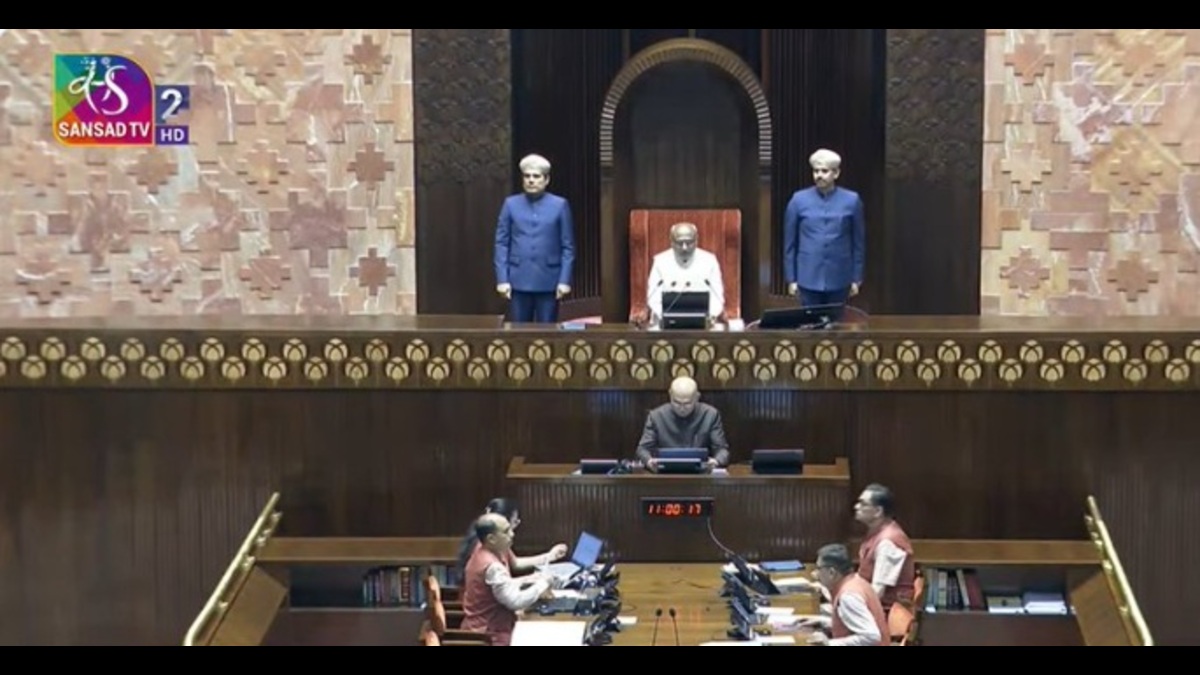
The Monsoon Session of Parliament is set to begin on July 20, but the political mood ahead of the opening day is already charged by shifting alliances, procedural disputes and a sharp Opposition protest over the seating and recognition of rebel lawmakers. Lok Sabha Speaker Om Birla greenlit the merger of six Shiv Sena (UBT) MPs with the Eknath Shinde-led Shiv Sena on Saturday and allocated separate seating for ‘rebel’ TMC leaders.
Opposition parties briefly walked out of the all-party meeting on Sunday after objecting to the government’s invitation to the little-known Nationalist Citizens Party of India. They opined that the NCPI was acting as a “parking place” for 20 rebel Trinamool Congress MPs, even as the Speaker’s decision on their merger remained pending. The official party position as released by Abhishek Banerjee remains that the TMC has 28 MPs in the House.
Congress leader Jairam Ramesh said the walkout was a symbolic protest against the Modi government’s decision to invite the NCPI while the matter was still under consideration by Lok Sabha Speaker Om Birla. Trinamool Congress MP Mahua Moitra said the Opposition, including Congress, Samajwadi Party, DMK, JMM, AAP, National Conference, Left parties and Shiv Sena (UBT), staged the walkout because the “so-called NCPI” had been given space despite the fact that the merger of the rebel MPs had not been approved.
“The 20 disqualification petitions are still pending,” Moitra reminded, adding that the Opposition had registered its “strong protest” against the move.
All Opposition parties staged a walkout from the All-Party meeting for a few minutes. This was a mark of protest against the decision of the Modi Govt to invite the NCPI that is a parking place for 20 so-called ‘rebel’ TMC MPs when a final decision is still pending with the…
— Jairam Ramesh (@Jairam_Ramesh) July 19, 2026
Government pushes for smooth Parliament session
Union Parliamentary Affairs Minister Kiren Rijiju said the government had called the meeting to ensure the smooth functioning of Parliament and urged all parties to cooperate during the session.
“We will listen to the Opposition, and we expect them to listen to us as well,” he said, stressing that Parliament belongs to everyone and that constructive participation would benefit the country.
Senior ministers including Defence Minister Rajnath Singh, Health Minister JP Nadda and Minister of State (MoS) for Law Arjun Ram Meghwal also attended the meeting at the Parliament Annexe.
Rebel alignments reshape lower house arithmetic
The political realignment among rebel MPs has already altered the balance inside Parliament. Lok Sabha Speaker Om Birla on Saturday approved the merger of six Shiv Sena (UBT) MPs with the Eknath Shinde-led Shiv Sena, raising the party’s strength in the Lok Sabha to 13 and reducing the UBT faction to three members. Shiv Sena MP Shrikant Shinde said the Speaker would deal with the “technical aspects” of the merger, while asserting that the expanded strength would help the party champion Maharashtra’s interests more effectively in Parliament.
The same session has also seen separate seating arrangements for 20 MPs who broke away from the Trinamool Congress (TMC) and aligned with the NCPI, though the Speaker has not yet formally approved that merger.
Suspended TMC leader Riju Dutta said this amounted to recognition of the group, while also noting that party leadership in the House still rests with Sudip Bandyopadhyay, Dr Kakoli Ghosh Dastidar and Shatabdi Roy. West Bengal BJP president Samik Bhattacharya described the development as procedural, while Opposition leader Ritabrata Banerjee said the Speaker’s ruling would stand as final.
The dispute over rebel MPs triggered strong criticism from Opposition leaders, who said the government had undermined parliamentary norms by inviting a group whose merger had not been decided by the Speaker. John Brittas of the CPI(M) said the Speaker’s office had ceased to function independently, alleging that it had become “an instrument for the acquisition, merger, takeover of the ruling party.” Aam Aadmi Party’s ND Gupta similarly argued that his party had faced a comparable situation, calling the developments a “hijack and murder of democracy.”
At the same time, the government and NDA leaders projected confidence, with Maharashtra Deputy Chief Minister Eknath Shinde saying the alliance was growing stronger because people trust Prime Minister Narendra Modi. The Monsoon Session, scheduled from July 20 to August 13, is now expected to open under a cloud of procedural controversy, shifting numbers and an Opposition keen to challenge what it sees as institutional overreach.
What’s on the agenda?
- Income-tax (Amendment) Bill, 2026 — Replaces the Income-tax (Amendment) Ordinance, 2026 and exempts certain foreign investors and the Bank for International Settlements from tax on income from government securities.
- Supreme Court (Number of Judges) Amendment Bill, 2026 — Seeks to raise the sanctioned strength of Supreme Court judges, excluding the Chief Justice, from 33 to 37.
- Registration of Births and Deaths (Amendment) Bill, 2026 — Makes delayed birth and death registration rules stricter.
- Prevention of Insults to National Honour (Amendment) Bill, 2026 — Amends the law dealing with insults to the national flag, Constitution and national anthem.
- Micro, Small and Medium Enterprises Development (Amendment) Bill, 2026 — Strengthens delayed payment recovery and enforcement of arbitral awards, while giving states more say in the composition of MSME Facilitation Councils.
- Foreign Contribution (Regulation) Amendment Bill, 2026 — Updates rules for supervising and disposing of foreign contributions and assets of organisations that lose FCRA certification, while lowering the maximum penalty for violations.
- Viksit Bharat Shiksha Adhishthan Bill, 2025 — Proposes a single higher-education regulator to replace the UGC, AICTE and NCTE.