



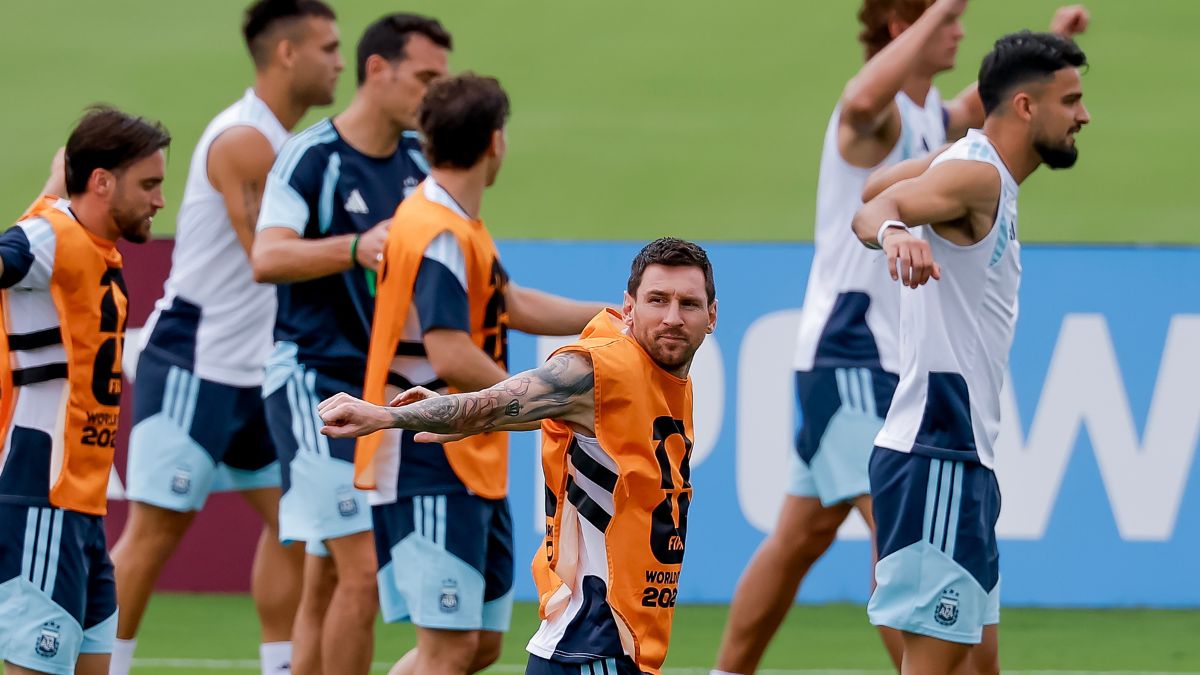
When England and Argentina meet in the FIFA World Cup 2026 semi-final in Atlanta on Wednesday, thousands of police officers, federal agents and tournament officials will already have spent days preparing for what authorities believe is the highest-risk fixture of the tournament.
The match itself is expected to attract a global television audience running into hundreds of millions. But away from the pitch, it has prompted one of the biggest security operations of the World Cup, with the FBI, FIFA and local law enforcement treating the fixture as one carrying unique political, historical and public safety challenges.
Why is this match being called ‘high risk’?
According to several reports including the one carried by The Mirror, representatives from the FBI, FIFA and the Atlanta Police Department met earlier this week to review security arrangements for the semi-final at Mercedes-Benz Stadium.
Unlike most international fixtures, England versus Argentina carries decades of political and historical baggage that stretches well beyond football.
Authorities are not suggesting there is any specific threat to the match. Instead, the concern is that emotions surrounding one of football’s most combustible rivalries could lead to isolated incidents among supporters. As a precaution, England and Argentina fans will enter the stadium through separate gates.
Once inside, however, there will be no formal segregation. Organisers have said that because many tickets have changed hands through resale platforms, separating supporters inside the stadium is no longer practical.
Atlanta Police have also increased deployments around the stadium, team hotels and key entertainment districts across the city.
“As Atlanta prepares to host an upcoming FIFA World Cup semi-final match… additional personnel and resources are already deployed to help ensure a safe and enjoyable experience for everyone,” the department said in a statement.
A rivalry shaped by more than football
England and Argentina have shared one of international football’s fiercest rivalries for generations.
While many remember Diego Maradona’s “Hand of God” goal at the 1986 World Cup, the relationship between the two nations extends far beyond that famous afternoon in Mexico City.
The rivalry remains closely linked to the 1982 Falklands War, which began when Argentina invaded the Falkland Islands before British forces regained control after a 74-day conflict that claimed more than 900 lives.
More than four decades later, the islands continue to be a source of political disagreement.
Earlier this week, Argentina’s foreign minister reiterated the country’s claim over the Falkland Islands, known in Argentina as Las Malvinas, a position immediately rejected by the British government led by Prime Minister Sir Keir Starmer.
The political backdrop has inevitably resurfaced during the World Cup.
Argentina’s players have celebrated several victories by singing songs referencing Las Malvinas, further highlighting how the issue continues to resonate with supporters.
Scaloni urges calm
Argentina coach Lionel Scaloni has attempted to distance his team from the political noise ahead of the semi-final. “The message to the Argentine people is that this is a football match,” Scaloni said.
“We’re going to face a great team with a great coach, but it is just a football match, nothing more than that.” His comments echoed FIFA’s long-standing position that politics should remain separate from the game.
The football rivalry has produced unforgettable moments
Few World Cup fixtures have generated as many iconic moments as England against Argentina. Their quarter-final meeting in 1986 produced perhaps the two most famous goals in World Cup history.
Maradona first punched the ball past Peter Shilton in what became known as the “Hand of God” before dribbling past almost the entire England team to score the “Goal of the Century” just minutes later.
Years afterwards, Maradona admitted handling the ball and famously described the incident as “a little with the head of Maradona and a little with the hand of God.”
He also later suggested the goal carried symbolic significance following the Falklands conflict.
The rivalry had already turned hostile two decades earlier.
During the 1966 World Cup quarter-final at Wembley, Argentina captain Antonio Rattín was sent off in controversial circumstances before England manager Sir Alf Ramsey refused to allow his players to swap shirts with the visitors, later referring to Argentina’s players as “animals”.
Another chapter arrived in France in 1998, when David Beckham was sent off after reacting to Diego Simeone’s challenge. England eventually lost on penalties, extending Argentina’s psychological hold over the fixture.
A semi-final unlike any other
Football remains the focus. Lionel Messi is attempting to guide Argentina into another World Cup final, while England are hoping to end a 60-year wait for the trophy.
But for tournament organisers, Wednesday’s match is about more than tactics and star players.
It is a fixture shaped by history, politics and decades of sporting rivalry, making it one of the most sensitive matches FIFA has staged in recent years.
For that reason, security planning began long before the first whistle—and will continue long after the final one.