



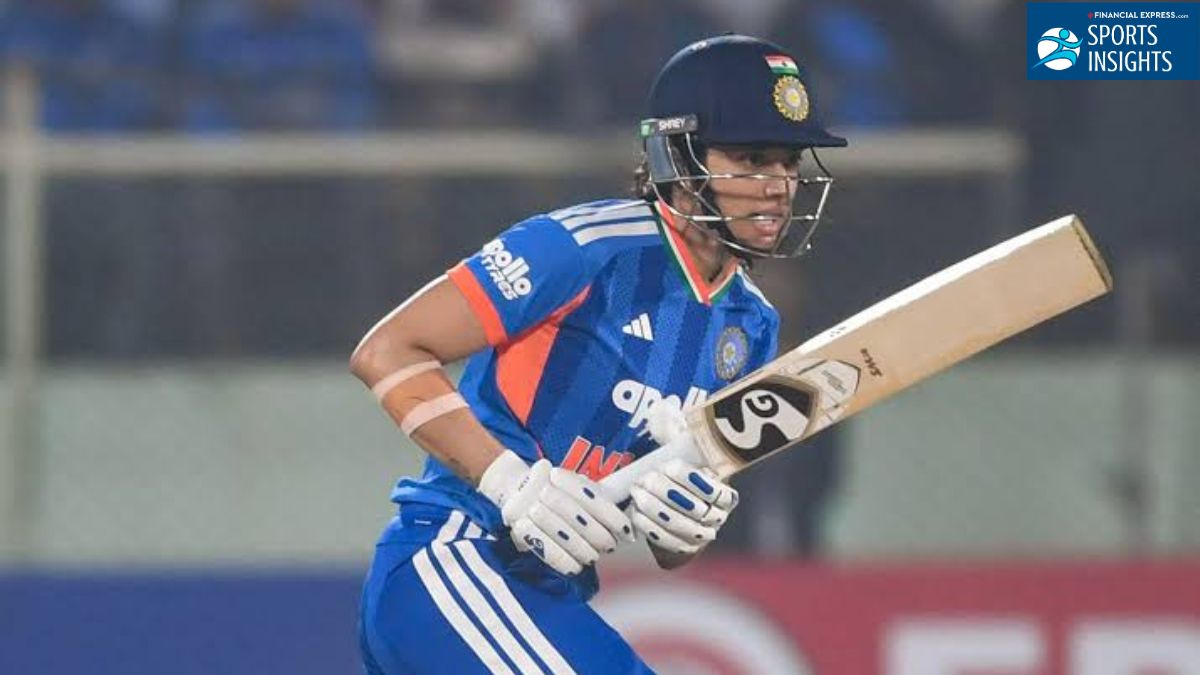
In backyard cricket games around Madhavnagar, a suburb of Sangli in Maharashtra, there used to be a position nobody wanted. Kids called it “limbu-timbu,” roughly the weakest link, the youngest one on the block.
Whoever got stuck with it was allowed to bat for either side but never got to bowl, and rarely got to field either. It was less a role than a way of keeping a smaller kid from being left out entirely.
For a few years, that kid was Smriti Mandhana.
She trailed her older brother Shravan everywhere, including to his own practice sessions once he made the Maharashtra Under-19 team. She was naturally right-handed. Somewhere along the way she decided to bat left, just so she could copy him.
It wasn’t a coaching decision or a talent scout’s idea. It was a younger sibling wanting to look like her brother. That small, almost accidental choice eventually became the starting point of one of the biggest success stories in Indian sport.
No cascading hair on this one
On March 5, Mattel announced Mandhana as part of its first global Barbie Dream Team, and with it came a first of its own: she is the only cricketer anywhere to get a one-of-a-kind Barbie made in her exact likeness. The timing, just before International Women’s Day, was deliberate.
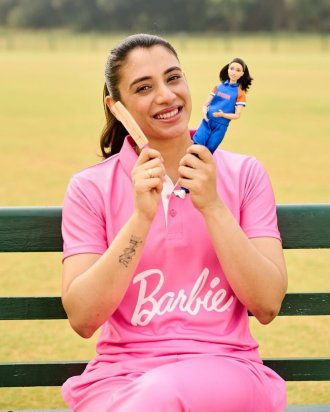
Anyone who remembers what Barbie dolls used to look like will notice the difference immediately. There is no flowing hair here, no runway pose. Mandhana’s doll stands in a batting stance, wears the blue India jersey, and holds a miniature bat.
Nathan Baynard, who runs the Barbie brand at Mattel, said the Dream Team exists to recognize women who achieved genuine breakthroughs in their fields, and the list she joined makes that plain enough. Serena Williams is on it, with her 23 Grand Slam titles.
So is Kellie Gerardi, the 90th woman to go to space. A Mexican racing driver. An English footballer who scored the winning goal in two major finals.
A cricketer from Sangli standing in that company is not a small thing. It says something changed, not just for Mandhana but for a sport that, until fairly recently, struggled to convince anyone it was worth paying attention to, let alone paying for.
From runway poses to batting stances
Mattel’s earlier choices in India make the shift obvious. In 2010 it was Katrina Kaif, dressed in high fashion, all flowing hair and film glamour.
In 2020, para-badminton player Manasi Joshi got a doll that showed her prosthetic leg and her racquet. Entrepreneur Deepica Mutyala followed in 2022, styled in a power suit with jhumka earrings. Fashion designer Anita Dongre came next in 2024, in a lehenga inspired by Pichwai art.
Then, six years after Manasi Joshi’s doll, came Mandhana’s. Athletic build. Practical stance. A bat instead of an accessory.
For over a decade, global toy brands packaged Indian womanhood around beauty and glamour. What changed is not really about dolls. It is about what audiences, and by extension advertisers, now think is worth celebrating.
A father who never got his turn
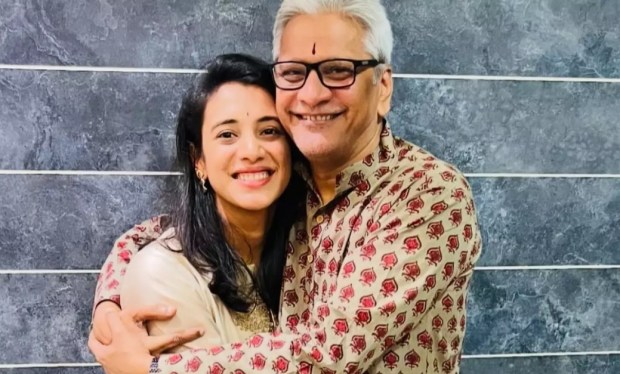
None of this happens without a chemical distributor named Shrinivas Mandhana, who played district-level cricket himself once, before life and a lack of support closed that door. He decided his children wouldn’t lose the same chance he did. Along with his wife Smita, he set up a strict, structured training routine at home for Shravan and Smriti.
The family made it work with what they had. Shravan handed over the cricket balls he won at his own tournaments so his sister would never run short. Mandhana, using money she’d earned early in her career, paid to have a concrete pitch built in their yard so the monsoon wouldn’t cost her practice time.
One object from those years is worth sitting with. Shravan picked up a practice bat signed by Rahul Dravid on a trip to Bangalore, meant purely as a souvenir. His sister liked how it felt in her hands and started using it in matches instead.
At seventeen, with that same bat, she scored an unbeaten 224 off 150 balls against Gujarat in a West Zone Under-19 game in October 2013, the first double-century by an Indian woman in a 50-over match at any level.
A keepsake turned into the innings that put selectors on notice. That is often how these careers get made in India, through improvisation and a family scraping together whatever it can.
The wedding that wasn’t
Fame in cricket doesn’t stay confined to the sport, and Mandhana learned that the hard way last year.
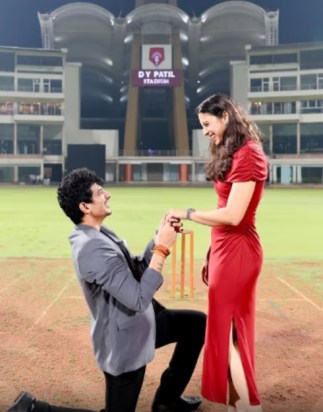
She was due to marry music composer Palash Muchhal on November 23, 2025, in Sangli, a relationship that had already played out publicly, from a proposal at DY Patil Stadium to videos shared with her teammates.
On the morning of the wedding, her father had a sudden cardiac emergency and had to be rushed to hospital. She postponed the ceremony without hesitation.
What came after was weeks of speculation online, much of it baseless. Rather than let it run, she put out a statement on December 7 confirming the wedding was off, asked for privacy for both families, and said her attention was back on playing for India.
A few weeks later she was leading Royal Challengers Bengaluru in the WPL. On February 5, in Vadodara, she captained the side to its second title in four years, steering a chase of 204 with a match-winning half-century.
Brands don’t sponsor runs alone. They sponsor the kind of composure that lets someone absorb a personal blow of that scale and still perform under lights a month later, because it reads as real, and it is.
What the WPL changed
To understand why a toy company, a hygiene brand and a Swiss watchmaker are all suddenly interested, you have to look at what the Women’s Premier League did to the arithmetic of the sport.
When the BCCI sold the media rights, Viacom18 paid ₹951 crore, about $117 million, for five years, which works out to roughly ₹7.09 crore, or $870,400, per match. Five franchises were auctioned off for a combined ₹4,670 crore, close to $572 million.
Numbers like that mean little on their own. What matters is what they replaced. Before the WPL, Indian women’s cricket ran mostly on goodwill and CSR line items, the kind of budget companies set aside to look responsible rather than to actually make money.
The league turned the sport into something a broadcaster would pay hard cash for, because it had convinced itself real audiences would show up.
Then, on November 2, 2025, India beat South Africa to win its first ICC Women’s Cricket World Cup, at DY Patil Stadium. Data from LS Digital showed digital viewership jumping fivefold around the tournament, and the final itself pulled in 185 million concurrent viewers on JioHotstar, close to what a Men’s T20 World Cup final draws.
That single result reset how brands valued the players who delivered it. Endorsement fees for the World Cup squad rose anywhere between 25 and 100 percent almost immediately. Sponsorship money in the WPL, which had been around ₹40 to 50 crore in its 2023 debut season, crossed ₹130 crore by 2026.
Somewhere behind each of those figures is a marketing head deciding a female cricketer’s face is now worth two or three times what it was 18 months earlier. That decision ripples outward, to agents negotiating new contracts, to franchises setting salary budgets, to a girl in some small town wondering if this sport might actually pay her bills one day.
Sixteen brands and a cafe back home
Mandhana’s own commercial career has been handled by Baseline Ventures since 2017. Over the years, she has become one of India’s most sought-after athletes for brand endorsements and now earns between ₹1.5 crore and ₹2 crore annually from each brand partnership, making her the highest-paid woman in a team sport in the country.
The income comes from several directions. There’s her BCCI Grade A retainer of ₹50 lakh a year. Match fees of ₹15 lakh for a Test, ₹6 lakh for an ODI, ₹3 lakh for a T20I, on full parity with the men’s team. Her RCB deal, retained at ₹3.40 crore.
More than sixteen brand endorsements running at once. And, almost incidentally, SM 18 Cafe in Sangli, a small business she co-runs with Shravan.
It’s an odd detail to sit alongside the rest, but a telling one. The same woman fronting Hyundai Motor India and sharing ambassador duties with MS Dhoni for Gulf Oil also has her name on a neighbourhood cafe back home. Big-city money and small-town roots, both on the same page of the ledger.
In April, hygiene brand Pee Safe made her the face of its Comfort Range, built around the line “Be In Your Comfort Zone.” The idea behind it was fairly direct: athletes shouldn’t have to perform through menstrual discomfort in silence. It’s not the usual celebrity endorsement pitch. It uses her name to open up a conversation Indian advertising has mostly steered clear of.
That same month, Swiss watchmaker Rado named her a Friend of the Brand, tying her precision on the field to their own image. Jewellery label Candere, part of Kalyan Jewellers, signed her for campaigns aimed at younger buyers.
Who’s actually watching
Here’s the number that explains why this money is moving the way it is. A survey of WPL sponsors found 86 percent said their partnerships had met or beaten the returns they were expecting, helped along by a 200 percent rise in social media engagement.
What’s more surprising is who’s tuning in. Between 57 and 58 percent of digital viewers for major women’s cricket tournaments are male, while urban female viewership has climbed to 48 percent. That kind of mixed audience is rare in Indian advertising, and it’s exactly what lets a beauty brand, a bank, and a car company all justify buying the same ad slot.
None of this existed at scale five years ago. It exists now because enough ordinary fans switched on JioHotstar for a World Cup final and stayed. Their attention turned into a viewership number. That number turned into a media rights deal. The deal turned into sponsorship budgets, and those budgets eventually turned into a cheque for a cricketer from Sangli.
Back to the backyard
There’s a version of this story told entirely in crores and viewership figures. It isn’t the version that matters most.
What matters more is a father who lost his own shot at cricket and made sure his children wouldn’t lose theirs. A brother who gave up his own tournament balls so his sister could keep training. A souvenir bat that turned into a record innings almost by accident. A wedding called off for a father’s health, followed weeks later by a title lifted under floodlights in Vadodara.
The Barbie in the blue jersey, no flowing hair, proper batting stance, is really just a small plastic version of all of that. Mattel didn’t invent Smriti Mandhana’s worth.
It noticed it, the same way sponsors and broadcasters and millions of viewers have been noticing it, one match at a time, ever since a girl in Sangli decided she’d rather bat left-handed than sit out the game