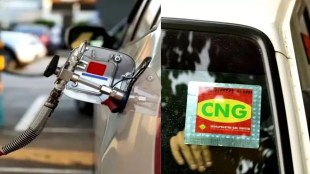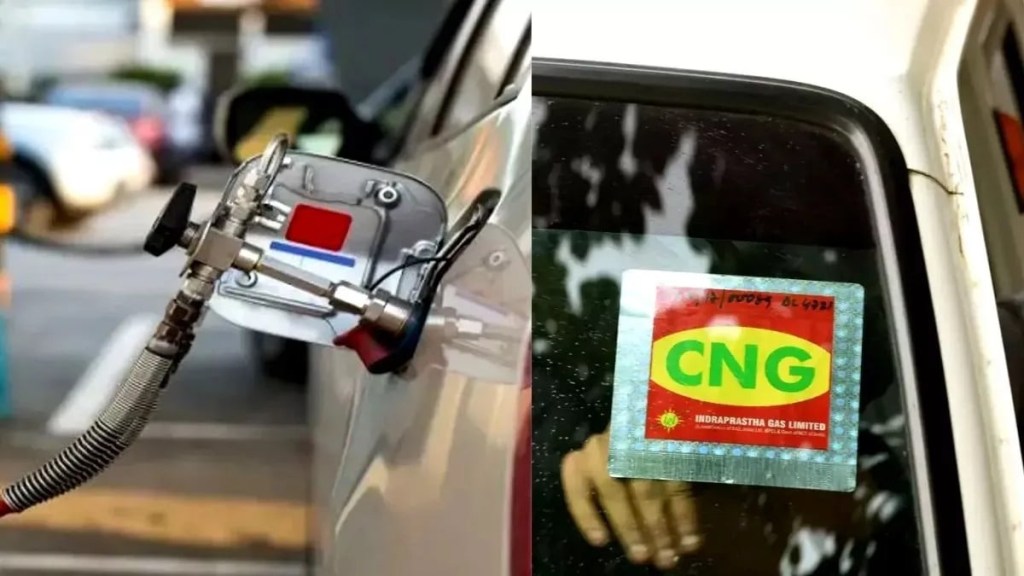
India’s transition towards alternative fuels is revealing a stark difference between two-wheelers and four-wheelers. While CNG is emerging as the fuel of choice in cars — it surpassed the 1-million sales milestone in FY26 — the world’s first CNG-powered motorcycle is struggling to find buyers after its initial sales burst.
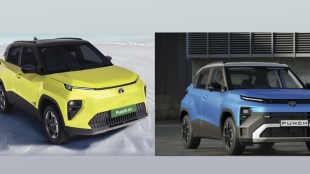
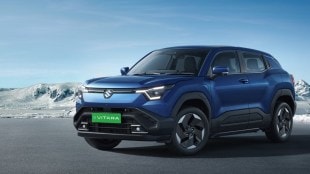
Data sourced from industry shows that CNG captured 21.7% share of total PV sales in FY26, driven by portfolio expansion from Maruti Suzuki, Tata Motors, and Hyundai, but the story isn’t repeating in two-wheelers, neither in terms of sales nor in terms of model launches.
Bajaj Auto launched the Freedom 125 on July 5, 2024, and it was hailed as a potential game-changer for daily commuters. Early curiosity and strong initial dispatch numbers helped the bike clock 74,730 units in FY25.
But into its second year, Bajaj Freedom’s sales dropped by 76% to just 17,959 units. The downward curve is continuing, with the Freedom selling merely 644 units in April and 550 units in May 2026.
Coexistence or Convergence
Industry observers said that economics and physics killed the Freedom. They said that in cars, dual-cylinder tech (Tata and Hyundai) has largely preserved boot space, while large under-floor tanks (Maruti Suzuki) give more than 300 km of CNG range, and even if you drive 50-60 km per day, the Rs 3-per km running cost difference between CNG and petrol offsets the higher purchase price of a CNG car, which is usually Rs 1 lakh more than the same petrol variant. For taxi drives who drive a lot more, CNG makes even more sense because of its lower running costs.
In two-wheelers, however, the physics is even brutal. In the Freedom 125, Bajaj has packaged a high-pressure CNG cylinder safely inside a motorcycle chassis, but this 2-kg CNG cylinder has eaten into petrol tank space, which has reduced from a usual 10-12 litres to just 2 litres. Commuters, therefore, neither get the benefits of CNG nor of petrol, as the 2-kg CNG gives a real-world range of about 100 km, which means commuters have to frequently visit CNG stations for refilling, in long commercial queues alongside autorickshaws and taxis just to save a modest amount.
Another thing that has killed CNG in two-wheelers is electric. Competitors like Hero MotoCorp and TVS have focused sharply on EVs, which offer the ultimate convenience of overnight home charging. The contrast within Bajaj’s own stable is revealing. While the CNG Freedom 125 saw sales tumble in FY26, Bajaj’s Chetak Electric surged 16%, growing from 260,033 units in FY25 to 302,674 units in FY26.
Industry observers, however, caution against declaring the technology dead. According to a senior automotive analyst at a top global advisory firm, new powertrain launches often follow a non-linear trajectory before finding their operational baseline. “The Freedom 125 marked an important innovation by creating an entirely new product category in the two-wheeler market,” he said. “The moderation in sales after the initial year should be viewed in the context of a maturing market, changing consumer preferences, and the natural adoption curve associated with any new technology.”
He added that while electric two-wheelers continue to gain traction in urban markets, CNG retains a compelling value proposition for high-mileage commuters where refuelling infrastructure is available. “Rather than indicating a clear shift from CNG to electric, the current market suggests that consumers are selecting technologies based on economics, convenience, and usage requirements. Going forward, ICE, CNG, and electric powertrains are expected to coexist, each serving distinct customer segments.”
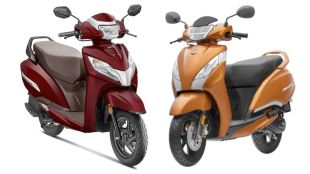
While TVS showcased the Jupiter CNG concept at the Bharat Mobility Expo in early 2025, the company has not launched it even after a year and a half, and sources said that the Freedom’s sales drop possibly made TVS rethink its decision. Going forward, with all OEMs focusing on electric platforms, CNG appears to have a bleak future in two-wheelers.