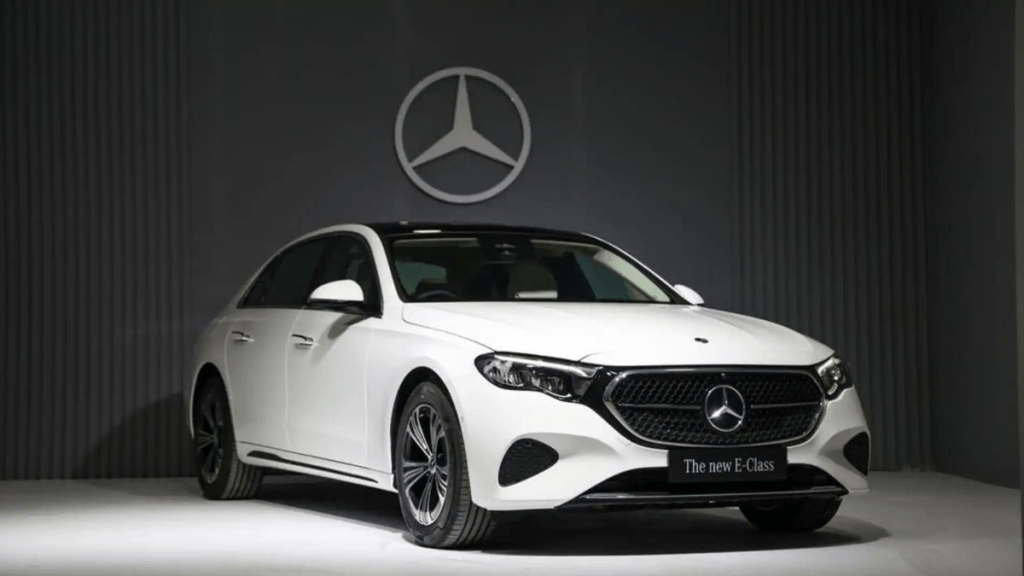
Mercedes-Benz India expects demand for luxury vehicles to remain strong through the rest of the financial year despite geopolitical uncertainties, concerns around fuel transition policies and slowing consumer sentiment, with the company indicating that another price hike of around 2% may be on the cards due to the weakening rupee.
The luxury carmaker has already raised prices twice this year by a cumulative 4% and is monitoring currency movements before taking a final call on another increase.
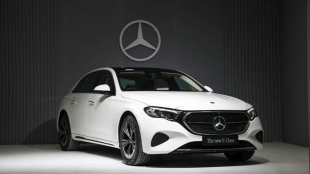
“We already did two price hikes of 4% cumulatively till year date. Another 2% on the cards. In between, we had a ray of hope with the rupee sliding back to 86 to a euro. Now it’s back to 90. So we wait for another two, three weeks before we make a planning decision,” Mercedes-Benz India Managing Director and CEO Santosh Iyer said during the launch of the Mercedes-AMG E 53 Hybrid 4MATIC+. The car is available in Performance and Racing editions, priced at ₹1.45 crore and ₹1.48 crore, respectively, ex-showroom. Bookings are open across Mercedes-Benz dealerships in India, with deliveries expected to begin immediately.
Plug-in Hybrid Launch
The AMG E 53 Hybrid pairs a 3.0-litre inline six-cylinder turbocharged petrol engine with a 120 kW electric motor integrated into the AMG Speedshift TCT 9G transmission. The plug-in hybrid system uses a 400-volt battery with a gross capacity of 28.6 kWh, of which 21.2 kWh is usable. It offers a WLTP-certified electric-only range of more than 100 km and can travel at speeds of up to 140 kmph in electric mode.
A plug-in hybrid electric vehicle (PHEV) combines a conventional internal combustion engine with an electric motor and a rechargeable battery that can be charged externally. It can run on electric power alone for short distances before switching to the engine or using both power sources together.
On calls from parts of the industry for tax concessions on plug-in hybrid vehicles (PHEVs), Iyer said Mercedes is not seeking any policy support and is planning its product strategy around the existing taxation framework.
“We don’t see any change happening on the current taxation… Neither is there any specific demand from our side for any different change of rates,” he said.
He, however, questioned the Delhi government’s decision to restrict EV purchase incentives to cars priced below ₹30 lakh, saying the policy discriminates against premium EVs.
“That was a bit discriminatory because the end goal is to decarbonise the industry. Ideally the government should incentivize everyone,” he said.
Iyer said Mercedes-Benz had a strong first quarter, with the company’s performance demonstrating that affluent consumers continue to spend.
“In quarter one of the financial year, we grew by double digits last quarter. Last quarter also had the geopolitical uncertainties… So I think that clearly reflects that the consumer demand is firm,” he said.
Multi-Powertrain Strategy
Electric vehicles accounted for 14% of Mercedes-Benz India’s sales during the first quarter. Within the top-end portfolio, EV penetration stood at 22%, while the newly launched CLA recorded a 25% EV share in its segment.
However, Iyer acknowledged that conventional powertrains continue to dominate customer preference.
“The other way to see it is that 75% of customers are still buying combustion engine cars,” he said, attributing this to charging infrastructure limitations, concerns over residual values and varying customer requirements for EVs.
Mercedes is therefore pursuing a multi-powertrain strategy spanning petrol, diesel, battery electric vehicles and plug-in hybrids. Iyer said the company’s entire petrol portfolio has already transitioned to E25-compatible engines, ensuring customers need not worry about higher ethanol blending.
Mercedes also ruled out any major disruption to its supply chain from the West Asia crisis, saying delays were largely shipping-related rather than production-related.
“There were some delays, but there were more shipping-related delays… our supply chain has still been strong,” Iyer said.
Asked whether India’s luxury car market could reach annual sales of 100,000 units by the end of the decade, Iyer declined to offer a volume forecast, arguing that value growth matters more than unit sales as customers increasingly buy higher-priced vehicles.
“Volumes are important, growth is important, but not at any cost,” he said.
Reaffirming that the government’s ethanol roadmap should allow multiple fuel technologies to coexist, Iyer said Mercedes-Benz’s entire petrol portfolio is already E25-compatible.
On concerns over fuel quality following recent reports of contamination, he said such incidents were not new and had not increased. “Fuel contamination has always existed to some extent, but we have not seen any spike in such cases,” he said.