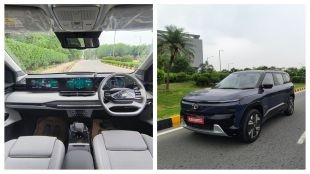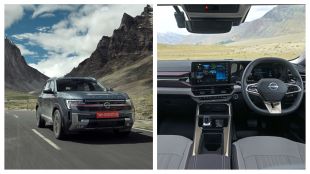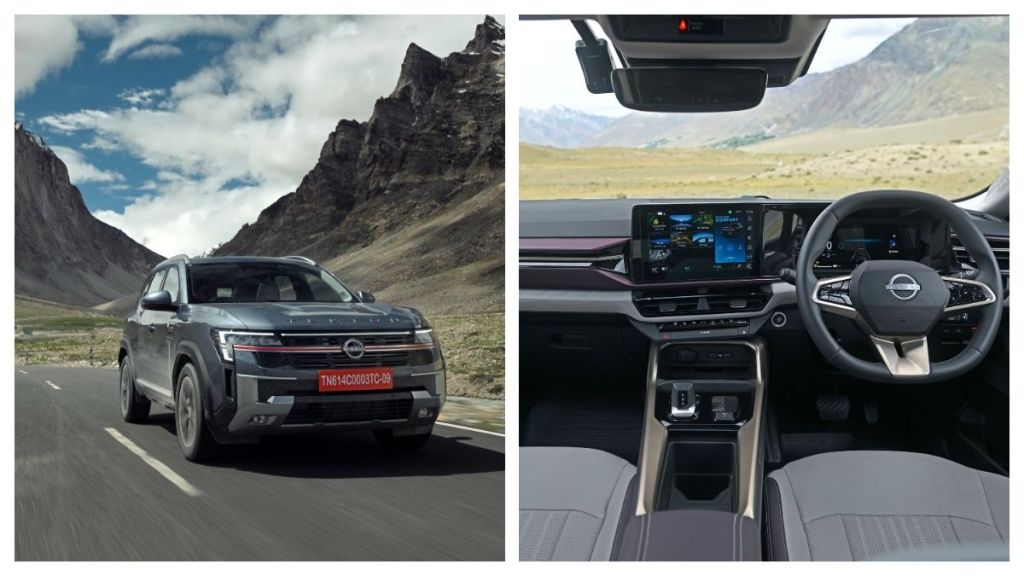
In geology and architecture, ‘Tekton’ is a Greek word for ‘master builder’. This powerful-sounding name has been selected by Nissan for its new SUV, and the aim is to ‘build master presence’ in the midsize SUV segment ruled by the Hyundai Creta and Kia Seltos.
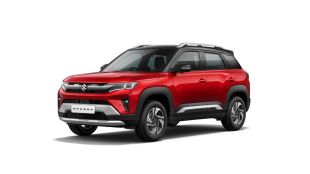
It won’t be easy. The segment size is a little over 60,000 units per month, of which the Creta and Seltos together sell 25,000 units, and the Maruti Suzuki Victoris, Tata Sierra, and Toyota Hyryder do another 30,000 units. It’s a brutal space where even an established brand like the Renault Duster has spectacularly failed (averaging just 1,500 units a month since its April launch).
Can the Tekton succeed? We put its top variant powered by the 1,333-cc turbo DCT petrol engine through a rigorous real-world test – navigating Himalayan riverbeds, steep mountain passes, dense traffic, and high-speed highways.
Tekton in brief
Pricing: Its T160 variants (999 cc, available only with a manual gearbox) are priced from Rs 10.49 lakh to Rs 16.49 lakh. The potent T280 lineup (1,333 cc) starts at Rs 14.99 lakh and tops out at Rs 18.59 lakh (both manual and automatic gearboxes).
Power: The engines are small, but they are turbocharged and powerful. For example, the 999-cc engine produces 100 PS power and 166 Nm torque (it beats the 1,462-cc engine of the Victoris – 103 PS and 137 Nm). The 1,333-cc engine tops out at 163 PS and 280 Nm, and beats even the mighty Creta N Line (1,482 cc; 160 PS; 253 Nm).
Utility: It has the segment-best ground clearance of 212 mm and a large 518-litre boot (expanding to 700 litres till the roof).
Technology: The cabin has Google built-in (native Maps, Assistant, Play Store), 10.25-inch digital cockpit, 17 ADAS features, and ventilated seats.
Design: The road presence is as powerful as the name – with its aggressive chrome grille, commanding stance, and a wide shoulder line.
On paper, therefore, it’s a masterclass in the ‘art of car’.
Drive in brief
Battles, however, aren’t won on paper, but on the battlefield.
Testing it over a couple of days on punishing terrain revealed a well-sorted chassis:
Seats: Body-contoured ventilated front seats keep driver fatigue low, while rear passengers get good thigh and lumbar support.
Space: Wide cabin accommodates three adults in the rear, despite a slight floor bump.
Ride: Peak 280 Nm torque arrives at just 2,000 rpm, acceleration is linear rather than violent, and the DCT gearbox (dual-clutch transmission) executes crisp downshifts when overtaking trucks. But climbing steep mountain roads reveals power lag. Fuel efficiency isn’t top class – our test car returned 14-16 km/litre on highways, reducing to 11-12 km/litre in heavy traffic.
Off the road: It’s not an all-wheel-drive SUV, but its tall ground clearance and steep approach/departure angles can take it a bit off the road, if needed.
Challenge in brief
While it would be far-fetched for the Tekton to take away sales from Creta/Seltos/Victoris, it has the mechanical integrity, high-speed composure, and a tech-loaded cabin. But its biggest challenge may well be psychological – most rivals have 1.5-litre engines, and convincing buyers that a smaller engine can be more powerful is tough, as Indian buyers believe ‘bigger is better’. But if you can look beyond small engine size to real-world output, the Tekton may well be a compelling alternative.