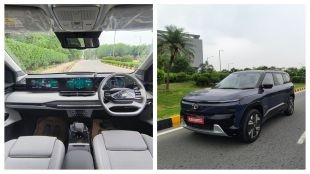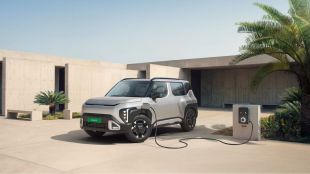
I recently tested the all-new Tata Sierra EV across Delhi, Gurgaon, and the smooth stretches of the Dwarka Expressway. Priced Rs 18.79-22.79 lakh for 63-kWh variants and Rs 22.19-25.99 lakh for 75 kWh, this electric SUV revives an iconic nameplate while pushing the boundaries of EV technology and design.
Monstrous Performance
The talking point is its monstrous performance. My test unit, the QWD dual-motor setup generating 306 PS and 504 Nm of torque, showed every car its back on the expressway, with its claimed 0-100 km/h acceleration time of just 5.8 seconds. Braking is equally good, and even slamming the brakes hard keeps the Sierra EV in line. Steering response is neat, and manoeuvring through Delhi city traffic and merging onto highways felt effortless.
As far as range is concerned, on the expressway at high speeds it showed 330 km range at 70% battery, translating to 470 km at 100% charge. Once in traffic, the display showed a range of 310 km at 60% charge, translating to more than 500 km at 100% charge. Safe to say that on long trips with family the Sierra EV can cover almost 450 km, and more than 500 km in the city where EVs become more efficient because of regeneration (claimed range is 665 km).
Plush Cabin Tech
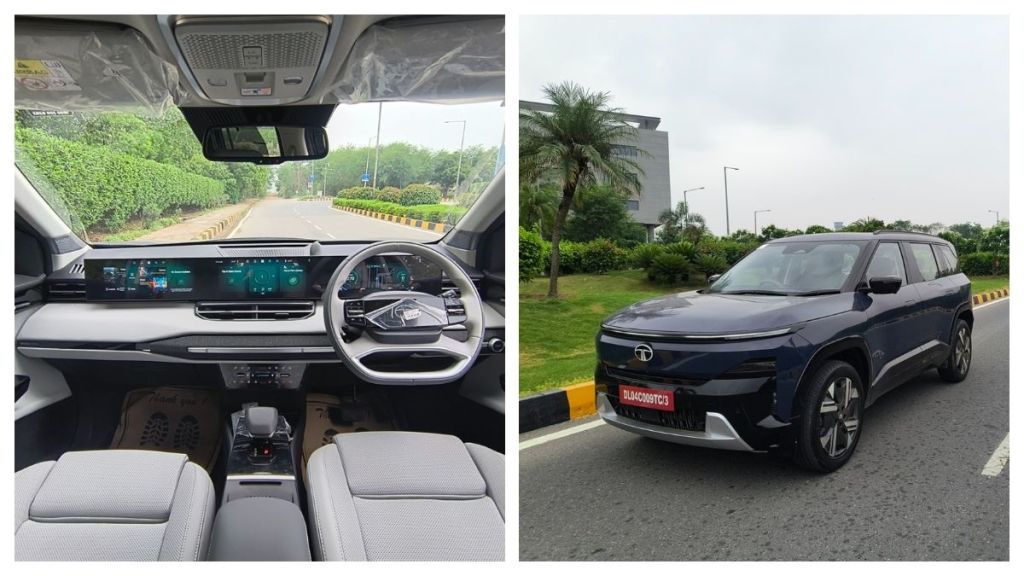
Inside, you see Tata’s focus on luxury and space. The cabin is immensely spacious, featuring comfortable powered seats with thigh support extenders and a massive 622-litre boot. The feature-loaded interior of this top variant is packed, with a triple-screen dashboard, a 12-speaker JBL audio setup with Dolby Atmos, and head-up display.
But the experience isn’t flawless. While the 504 Nm instant torque masks its massive weight when accelerating straight, you definitely feel the weight elsewhere, like on speed breakers and while taking turns, where it feels slightly uncomfortable. In addition, the low-speed ride quality is just about okay, and not plush. At highway speeds of 110-120 km/h, there is noticeable wind noise, possibly due to its boxy design. Finally, it misses out on one-pedal driving – a feature found in most premium EVs, in which you barely need to use brakes – and has a puncture repair kit instead of a spare wheel.
Overall, the Sierra EV feels extraordinarily fast and tech-forward, but its weight gives it some trade-offs.