As the industry heads into 2026, Hero MotoCorp is emerging as a serious challenger in the scooter market, a segment it has historically lagged despite its dominance in motorcycles. The shift has been driven largely by the strong performance of its electric scooter brand Vida, led by the success of the Vida VX2 launched in July 2025.
Hero’s scooter sales grew 45.5% year-on-year in April-December FY26, rising from 279,436 units to 406,500 units. This was sharply ahead of the overall scooter market growth of 12.9% during the same period, when industry volumes increased from 5.2 million units to 5.88 million units. The standout contributor was Vida, whose sales surged 172.3% to 103,213 units, compared with 37,901 units a year earlier.
Automotive analysts said Vida, which had struggled to gain traction after its initial launch in 2022, found a clear product-market fit with the VX2. “What also helped the company was the launch of the Battery-as-a-Service (BaaS) scheme with the VX2, which de-linked the battery cost from the vehicle price, bringing the upfront cost of the entry-level VX2 down to less than Rs 50,000—effectively placing a high-tech, premium-looking electric scooter at a price point lower than even basic entry-level petrol scooters,” they said. “Vida’s isn’t just incremental growth; it is a market-share-grabbing pivot that has caught the industry leaders by surprise.”
BaaS Disruptor
Hero’s petrol scooter portfolio also contributed to the expansion. Updated versions of the Destini and Xoom scooters, launched in January 2025, saw momentum build from the middle of the year as all-India customer deliveries commenced. “The refreshed Destini and Xoom successfully targeted both the family-commuter and the youth segments, revitalising the automaker’s petrol scooter portfolio,” an analyst said.
“Even though Vida was instrumental in enhancing Hero MotoCorp’s scooter market share, Hero minus Vida also grew a robust 25.6%, proving that the brand can compete in the petrol engine space with the right design and feature sets.”
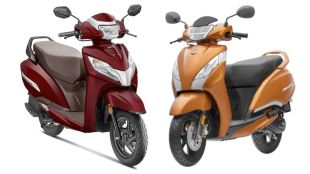
The gains have begun to alter the competitive landscape. Market leader Honda Motorcycle & Scooter India posted growth of 1.6% in the period, while TVS Motor Company reported a 26.1% increase.
By contrast, Hero’s sharper rise suggests it is drawing in value-conscious buyers who were earlier discouraged by the high upfront cost of electric scooters.
Beyond Vida
Looking ahead, Hero plans to expand the Vida portfolio further in 2026, including models positioned below the VX2 on price. “If this momentum holds, within a couple of years the motorcycle powerhouse would have successfully pivoted to the scooter segment—a bus it missed nearly two decades ago,” analysts said. “Hero is now expected to leverage its massive rural network to bring its affordable EV solutions to tier-3 markets, potentially making it the first legacy player to achieve true scale in the BaaS model.”