



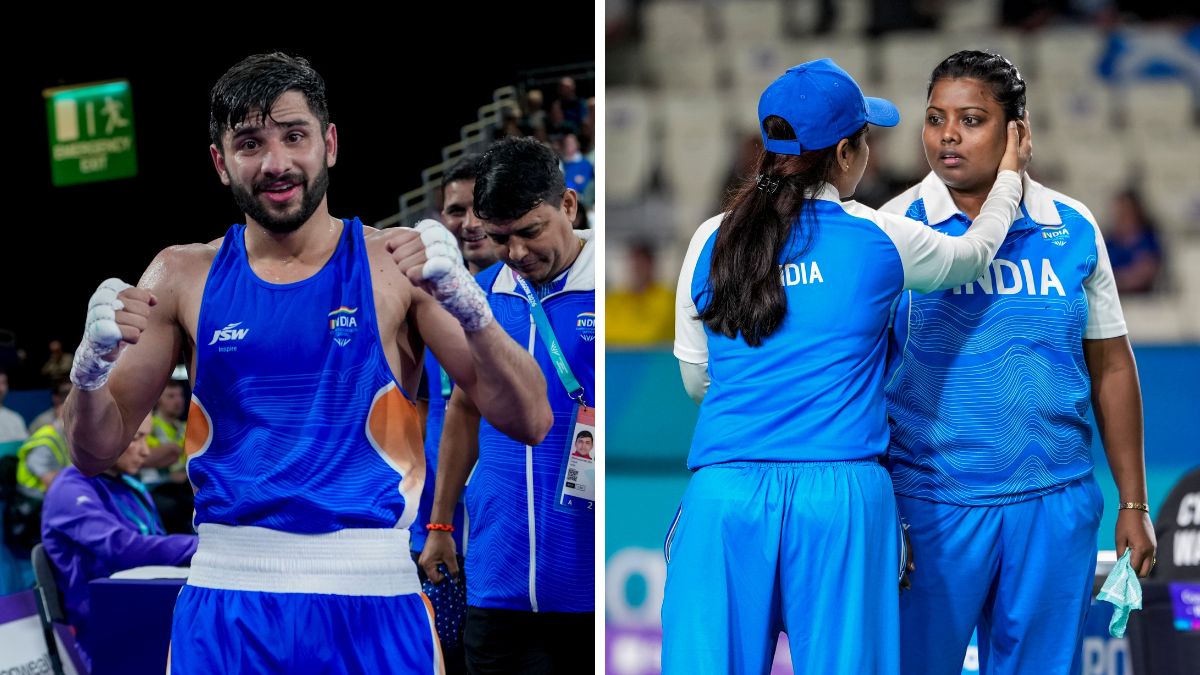
As the Commonwealth Games 2026 opened on July 23 with an unprecedented indoor Opening Ceremony, Indian fans were left ruing the absence of several of the country’s strongest medal-winning sports from the programme.
The trimmed schedule is expected to dent India’s medal prospects, making it interesting to see whether the contingent can still breach the 10-gold mark. At this juncture, history offers an intriguing reference point. The last time the Commonwealth Games featured only 10 sports was 32 years ago in Victoria, Canada. So, how did India fare then?
The 1994 Victoria Games
Before Kuala Lumpur 1998 introduced team sports and significantly expanded the programme, the Commonwealth Games followed a compact core-sport model.
The 15th edition, held in Victoria, Canada, featured exactly 10 sports: Athletics, Aquatics (Swimming and Diving), Badminton, Boxing, Cycling, Gymnastics, Lawn Bowls, Shooting, Weightlifting and Wrestling.
With around 2,550 athletes representing 63 Commonwealth nations and territories, the 1994 Games demonstrated that a smaller sports programme could still deliver high-quality competition without stretching the host city’s resources.
How Did India Perform at the 1994 Commonwealth Games?
India produced what was then its second-best Commonwealth Games performance, finishing fourth in the medal standings with 20 medals — six gold, 11 silver and three bronze.
Four years earlier at the 1990 Auckland Commonwealth Games, India had crossed the double-digit mark in gold medals for the first time, winning 13 titles. That campaign, however, was overwhelmingly driven by weightlifting, which contributed 24 of India’s 32 medals, including 12 of the 13 gold medals.
In Victoria, weightlifting once again carried India’s campaign, but this time it received valuable support from shooting. Indian shooters returned with an impressive haul of three gold, two silver and two bronze medals, helping India secure another strong finish despite the compact sports programme.
How Many Medals Can India Expect at CWG 2026?
Unlike in 1990 or 1994, India is no longer dependent on just one or two sports for Commonwealth success. The country has developed into a far more diversified sporting nation over the past three decades.
However, Glasgow 2026 presents a unique challenge. The absence of shooting, wrestling, hockey, table tennis, cricket and badminton removes several of India’s most reliable medal sources.
Even so, India could still surpass the six gold medals it won at Victoria in 1994. Matching—or exceeding—the 13-gold haul from Auckland 1990, however, appears a far tougher task given the significantly reduced programme.
India at the Last Two 10-Sport Commonwealth Games
| Commonwealth Games | Sports | Gold | Silver | Bronze | Total | Why |
| Auckland 1990 | 10 | 13 | 8 | 11 | 32 | India’s best-ever Commonwealth Games performance at the time. Weightlifting alone contributed 24 medals, including 12 golds. |
| Victoria 1994 | 10 | 6 | 11 | 3 | 20 | Weightlifting remained India’s biggest medal source, while shooting emerged as a major contributor with seven medals, including three golds. |
India’s Likely Medal Prospects at CWG 2026
| Sport | Indian Contender(s) | Why |
| Athletics | Neeraj Chopra, Avinash Sable, Jyothi Yarraji | India’s strongest gold medal hopes. All three have won medals at the highest level and enter Glasgow among the favourites in their events. |
| Weightlifting | Mirabai Chanu, Bindyarani Devi, Gyaneshwari Yadav, Harjinder Kaur, Vikas Thakur | Historically India’s biggest medal-producing sport at the Commonwealth Games. Even with a smaller squad, India is expected to challenge for multiple podium finishes. |
| Boxing | Lovlina Borgohain, Jadumani Singh and the Indian boxing squad | Boxing has consistently delivered Commonwealth medals for India. Despite a relatively young squad, multiple podium finishes remain realistic. |
| Judo | Yash Ghangas, Himanshi Tokas | Judo has traditionally been a productive sport for India at the Commonwealth Games, with both athletes capable of reaching the podium. |
| Lawn Bowls | India’s men’s and women’s fours/triples teams | Following the historic women’s fours gold at Birmingham 2022, India has emerged as a competitive force and could spring another surprise. |
| Para Powerlifting | Jhandu Kumar | Having already become India’s first medallist of Glasgow 2026 with a bronze medal, he remains the country’s biggest hope in the discipline. |