




As many as 37 companies in the BSE SmallCap Index have reported more than a 1000% increase in their share prices during the last three months, data complied from Capitaline showed. Chemicals and textiles firms dominate the list with as many as nine companies from these sectors reporting a more than 1000% increase in their share prices.
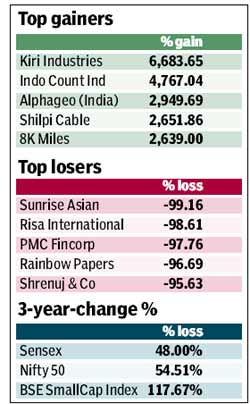
The Sensex went up by 48% and Nifty50 was up by 54.51% during the period. The BSE SmallCap Index has gained 117.67% during the period.
Shares of Kiri Industries jumped close to 6684% during the period. This was followed is by textiles firm, Indo Count Industries which reported an increase of 4767% in its share price. Other firms like Alphageo (India), Shilpi cable, 8K Miles and Arrow Greentech have gained between 2600% and 2950% during the period.
Textiles firm, Welspun India reported an increase of 1720.82% in its share price. The company’s market cap grew from R586.64 crore in August, 2013 to R10,720.42 crore at present. Analysts at Edelweiss wrote recently that, “If the recent spike in cotton prices sustains it could impact margins going forward. With the huge capex cycle behind and ancillarisation plan picking up, we expect Welspun to generate strong cash flows of R1.30 crore over the next two years.”
On June 22, the Union Cabinet approved a special package for promotion of exports and employment generation in the textile and apparel sector. According to analysts, textile is the second largest employer after agriculture. These sops will promote the government’s policy to promote industries and generate jobs in the sector.
ABG Shipyard, Bhushan Steel, Shrenuj & Co, Rainbow Papers, PMC Fincopt, Risa International and Sunrise Asian reported a decline of more than 90% in its share price.