


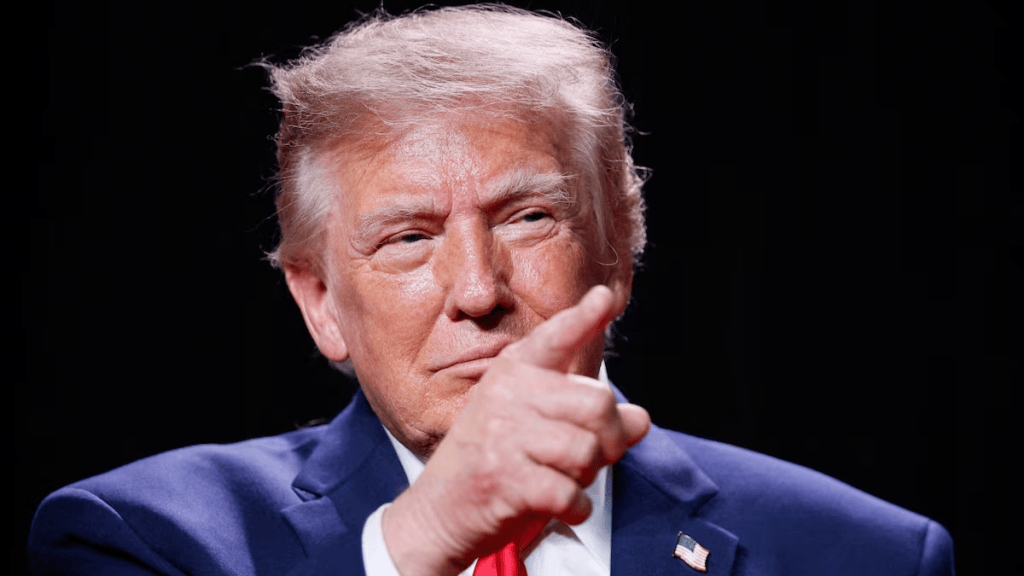

Republicans are showing growing hesitation about President Donald Trump as they head into the November 3 midterm elections, with many vulnerable candidates distancing themselves from him as signs of voter dissatisfaction grow.
Two-thirds of Republican candidates in competitive US House and Senate races have either broken with Trump on policy or played down their ties to him, a Reuters review found. The review of voting records, public statements and campaign materials found candidates in 41 of 62 competitive congressional races seeking some distance from Trump.
This comes as Trump’s approval rating remains at the lowest 32%. A Reuters/Ipsos poll also found registered voters favouring Democrats over Republicans 44% to 37% ahead of the midterms. Among independents, Democrats led Republicans 37% to 21%.
Republican candidates have mostly avoided a direct break with Trump. Many have instead criticised him on individual issues or reduced public displays of support, suggesting they are trying to appeal to voters who are unhappy with the president without alienating his core supporters.
Iran becomes a key point of tension
Policy differences were the most common form of disagreement, appearing in 23 of the 62 competitive races reviewed by Reuters. The Iran conflict was at the center of 12 contests. Some vulnerable Republicans voted to limit Trump’s war powers or called for an end to the fighting, which has contributed to higher gas prices and increased pressure on household budgets.
The disagreements are notable because Trump has spent years reshaping the Republican Party around his political agenda. He has also been quick to punish lawmakers and candidates who challenge him through primary contests, personal attacks or public pressure.
Republican strategist Ron Bonjean said the candidates were responding to what voters were telling them. “(Candidates) are reflecting voter attitudes in these races,” said Republican strategist Ron Bonjean to Reuters. “If (voters) are not with Trump, then they need to show a break.”
Trump references disappear from campaigns
The effort to create distance from Trump is also visible in campaign messaging. Reuters found that 12 candidates removed Trump’s name, image or endorsements from their campaign websites, with most making the changes after securing their party’s nomination.
Some candidates have also skipped Trump’s events or avoided saying whether they want him to campaign for them. Direct criticism of Trump remains relatively rare. His influence over the Republican Party means candidates risk losing support from his loyal base if they openly challenge him.
White House spokesman Davis Ingle defended Trump in response to the Reuters findings, saying he was “the unequivocal leader, best messenger and unmatched motivator” for the party.
Republicans face an enthusiasm problem
Republican candidates are also facing a broader enthusiasm problem. A Reuters/Ipsos poll found that 48% of voters who backed former Vice President Kamala Harris in 2024 were “very enthusiastic” about voting in November. Only 30% of Trump voters said the same.
The poll found that Trump’s 2024 supporters were also less certain about their congressional choices. Some 13% said they were unsure who they would vote for, compared with 7% of Harris supporters.
Republican strategist Charlie Gerow said the party needs to close the enthusiasm gap. “The enthusiasm has to be ginned up among Republicans because turnout is what’s going to determine the outcome of these midterm elections,” Gerow told Reuters.
Among voters who said they were enthusiastic about voting, 62% said they were motivated by opposition to Trump, compared with 36% who said they were eager to support the president.
Men begin to move away from republicans
The warning signs are particularly notable among men, a group that has traditionally been important to Trump. Men favoured Democrats over Republicans 43% to 39% when asked how they would vote in a congressional race if the election were held today. The four-point Democratic advantage was the widest of Trump’s second term.
Men had consistently favoured Republicans in 2025, but since August they have mostly favoured Democrats. The change could be significant for Republicans because Trump won men by 12 percentage points in the 2024 presidential election, according to a Pew Research analysis.
Older voters still give Republicans an edge
Republicans still have an advantage among voters aged 50 and older, a key group in midterm elections. Older voters now favour Republicans 44% to 42%. The Republican lead, however, has narrowed sharply from an eight-point advantage in December.
The decline in support has affected several groups that backed Trump in 2024, including Hispanics, men, rural and suburban voters, people without college degrees and evangelical Christians.
Cost of living is the top issue for voters as they decide how to vote, according to the Reuters/Ipsos poll. Democratic values and immigration followed.
Republican candidates walk a fine line
The growing caution among Republican candidates reflects a difficult political calculation. They need Trump’s support and his loyal voters, while also trying to avoid being closely associated with a president whose approval rating remains weak.
Republican Senator Pete Ricketts illustrates that balancing act. Ricketts has criticised Trump’s plan to expand beef imports but later appeared alongside the president at a Nebraska rally. “President Trump, I have been fighting for you in Washington,” Ricketts told the crowd.
Mariannette Miller-Meeks, a Republican facing a competitive House race in Iowa, has also broken with Trump on several issues. She criticised his beef-import policy and voted to limit his war powers in Iran. Less than two weeks later, she joined Trump at the White House to announce a major steel plant investment in Iowa.
Republican consultant Jeanette Hoffman described the challenge facing candidates as “a balancing act”, saying they want to benefit from the administration’s successes while creating distance from Trump because of “how toxic the Trump brand is at the moment.”
Lawmakers try to show independence
Representative Mike Lawler of New York has taken a similar approach. He has explained disagreements with Trump over temporary legal protections for Haitian immigrants and a proposal involving Turkey’s access to F-35 fighter jets. Lawler’s campaign manager Ciro Riccardi said the congressman acts in the interests of his constituents regardless of the president’s position.
Lawler also acknowledged his differences with Trump while speaking to Republican supporters in September. “The truth is that the president and I don’t always agree. And that’s OK.” The picture points to a Republican Party entering the midterms with a difficult choice. Candidates are trying to hold on to Trump’s base while also responding to voters who appear increasingly hesitant about the president.