



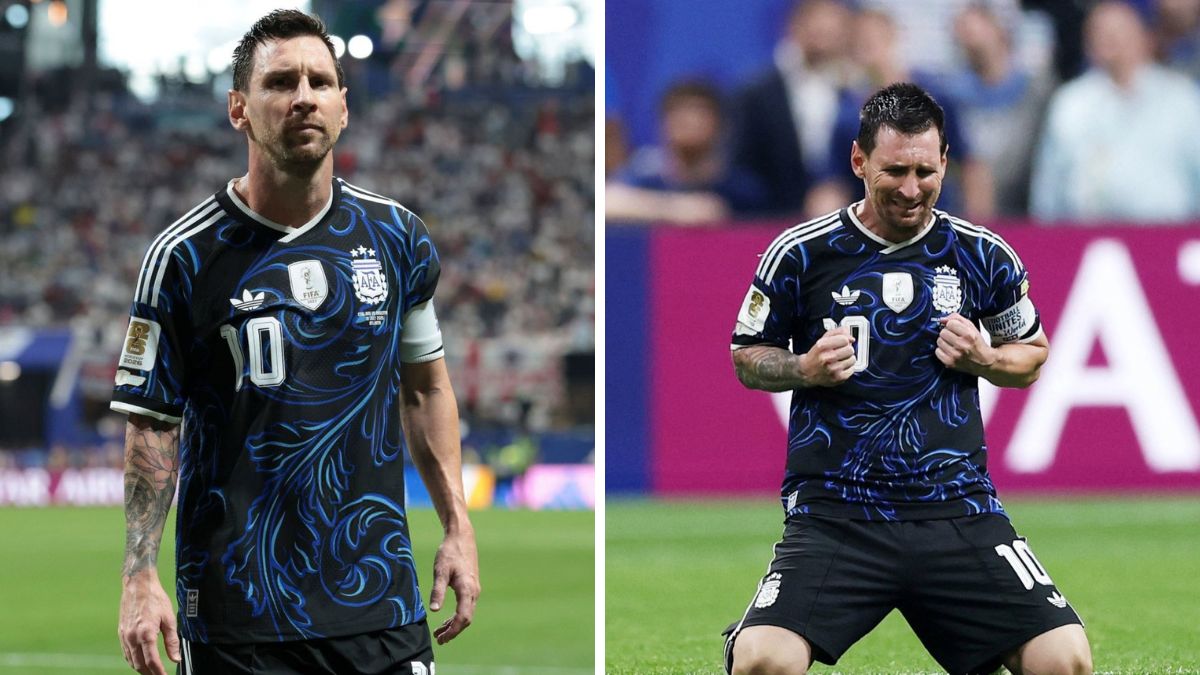
When Lionel Messi engineered Argentina’s dramatic 2–1 comeback victory over England at Atlanta Stadium, he did more than book La Albiceleste a spot in the 2026 World Cup final against Spain. He secured his place at the top of World Cup captaincy history.
By reaching the final, Messi has already become the first player in the 96-year history of the FIFA World Cup to captain his country in three separate finals, in 2014, 2022 and now 2026. That record stands regardless of Sunday’s result. What remains open is something no player has ever achieved: should Argentina retain their crown, Messi would become the first man to captain a nation to back-to-back World Cup titles. With this one match, he has the chance to move clear of a small, exclusive group of leaders, Diego Maradona, Dunga and Hugo Lloris, who each reached two finals as captain but never a third.
The Elite Two Finals Club: The Captains Messi Has Already Left Behind
Until now, the gold standard for World Cup captaincy has been an exclusive club of two. A small handful of players have had the longevity and authority to captain their countries to two World Cup finals.
- Diego Maradona (Argentina, 1986 & 1990)
Record: two finals as captain, one win, one loss. Maradona inspired Argentina to the trophy in Mexico City in 1986. Four years later he led a depleted Argentina back to the final in Rome, where they lost 0–1 to West Germany. - Dunga (Brazil, 1994 & 1998)
Record: two finals as captain, one win, one loss. Dunga captained Brazil to a penalty-shootout win over Italy in the United States after a goalless draw. Four years later in France, his side were beaten 0–3 by Zinedine Zidane’s brace and a rampant French team. - Hugo Lloris (France, 2018 & 2022)
Record: two finals as captain, one win, one loss. Lloris led France to a 4–2 win over Croatia in Moscow. He captained Les Bleus back to the final in Qatar, where Messi’s Argentina beat France on penalties after a 3–3 draw.
A 12-Year Era of Captaincy
What makes Messi’s position so unusual is the span of time involved. Alejandro Sabella, newly installed as Argentina coach, handed Messi the permanent captaincy in August 2011. Messi wore the armband through the 2014 final defeat to Germany at the Maracana, the 2022 triumph in Qatar, and now, twelve years after his first final, remains Argentina’s captain in a third.
Back-to-back World Cup wins have happened before, but never under the same captain. Italy won successive titles in 1934 and 1938, but Gianpiero Combi captained the 1934 win while Giuseppe Meazza wore the armband in 1938. Brazil won in 1958 and 1962, but Hilderaldo Bellini captained the first triumph and Mauro Ramos the second. No player has ever captained two World Cup wins, let alone attempted a third final on top of it.
The Leaderboard
Messi already stands alone on the specific measure of finals reached as captain, a record secured the moment Argentina beat England. Should Argentina beat Spain on Sunday, he would add the distinction no one else on this list can claim:
| Captain | World Cup Finals as Captain | Back-to-Back Wins as Captain | Result |
| Lionel Messi (ARG) | 3 (2014, 2022, 2026) | Chasing first | 1 win, 1 loss, 1 pending |
| Hugo Lloris (FRA) | 2 (2018, 2022) | No | 1 win, 1 loss |
| Diego Maradona (ARG) | 2 (1986, 1990) | No | 1 win, 1 loss |
| Dunga (BRA) | 2 (1994, 1998) | No | 1 win, 1 loss |
| Karl-Heinz Rummenigge (FRG) | 2 (1982, 1986) | No | 2 losses |
The last dance for Messi?
For much of his career, critics argued that Messi lacked the loud, confrontational leadership style that defined Maradona’s mythos in Argentina. By navigating the expanded 48-team format of the 2026 tournament at 39 years old, and leading Argentina past a powerful England side to reach a third final as captain, a record already his, Messi has built a captaincy legacy that stands apart from Maradona’s on its own terms. Sunday will decide whether that record comes with a second winner’s medal to match it, and a distinction no captain in World Cup history has ever held.