



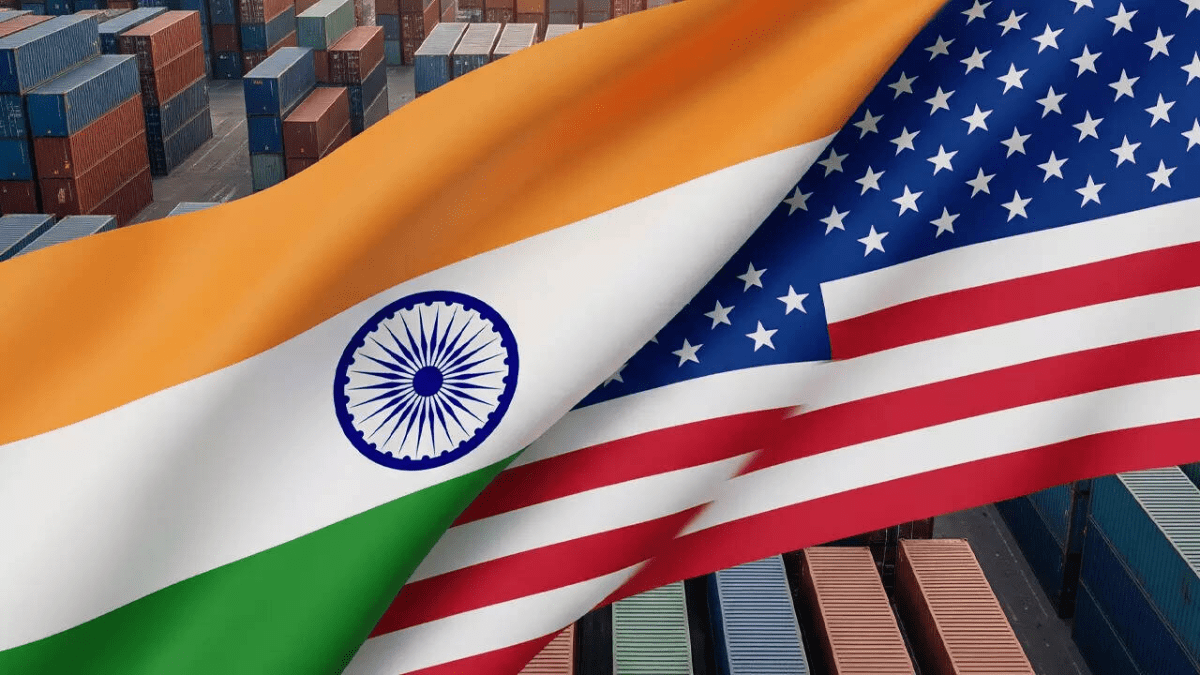
The much-vaunted India-US trade deal is on track, despite the new Section 301 trade investigations launched by Washington recently against 16 economies including India, official sources indicated on Monday.
The trade deal, agreed upon between the two countries in February, would be signed as the US readies the new tariff architecture, a senior official said, adding that both sides remain engaged in fine-tuning other elements of the agreement.
“Any deal that India finalises and signs has to be against the tariff structure or the comparative advantage that it gets in the US market,” the official, who did not wish to be identified, said. “The US is working on trying to recreate a tariff architecture globally. Once they are on that pathway, they are able to create that. I think that would be right to sign the deal,” the official said.
Previously agreed upon deal
The deal agreed upon between India and the US reduced reciprocal tariffs on India to 18% from 25% and removed 25% penal tariffs imposed for buying Russian crude oil. The proposed reciprocal tariff of 18% gave India an advantage over its key competitors like China, Vietnam, Indonesia and Bangladesh. “India would like to retain that advantage,” the official said.
“India remains engaged with the US side for a mutually beneficial trade agreement,” Commerce Secretary Rajesh Agrawal said later.
US Supreme Court ruling
The deal came undone when the US Supreme Court invalidated the country-specific reciprocal tariffs imposed through the International Emergency Economic Powers Act (IEEPA). These tariffs were the basis of all the trade agreements the US was negotiating or finalising with its trade partners.
Other than the tariffs, the deal has many components including preferential access by India to US goods, addressing frictions like non-tariff barriers and purchase commitments.
“Both sides are engaged to finalise the finer details of the legal text of the agreement and engage regularly,” he said.
Immediately after the court’s ruling, the US imposed 10% additional duties on all imports under Section 122 of the Trade Act. These surcharges to address large and serious balance of payment deficits can be imposed only for 150 days and their upper limit is 15%.
Before the expiry of the 150-day window, the US initiated a probe into the policies of its major trade partners including India, the European Union and 14 other countries that enable “excess capacities” in some manufacturing sectors such as steel, aluminium, automobiles, batteries, electronics, chemicals, machinery, semiconductors and solar modules, and hurt the US.
Another probe was launched by the US under Section 301(b) of the Trade Act, it also opened another set of investigations to determine whether acts, policies, and practices of its trade partners related to the failure to impose and effectively enforce a ban on the importation of goods produced with forced labour are unreasonable or discriminatory and burden or restrict US commerce. Section 301 is designed to challenge other countries’ “unfair trade practices.”
This second investigation under the Trade Act will cover 60 economies, including India, Canada, China, Japan, Australia, Bangladesh and Pakistan. Though the investigations under Section 301 take 12-18 months, the US government is expected to expedite them and, through this process, maintain extra tariffs that would expire on July 24 this year.