



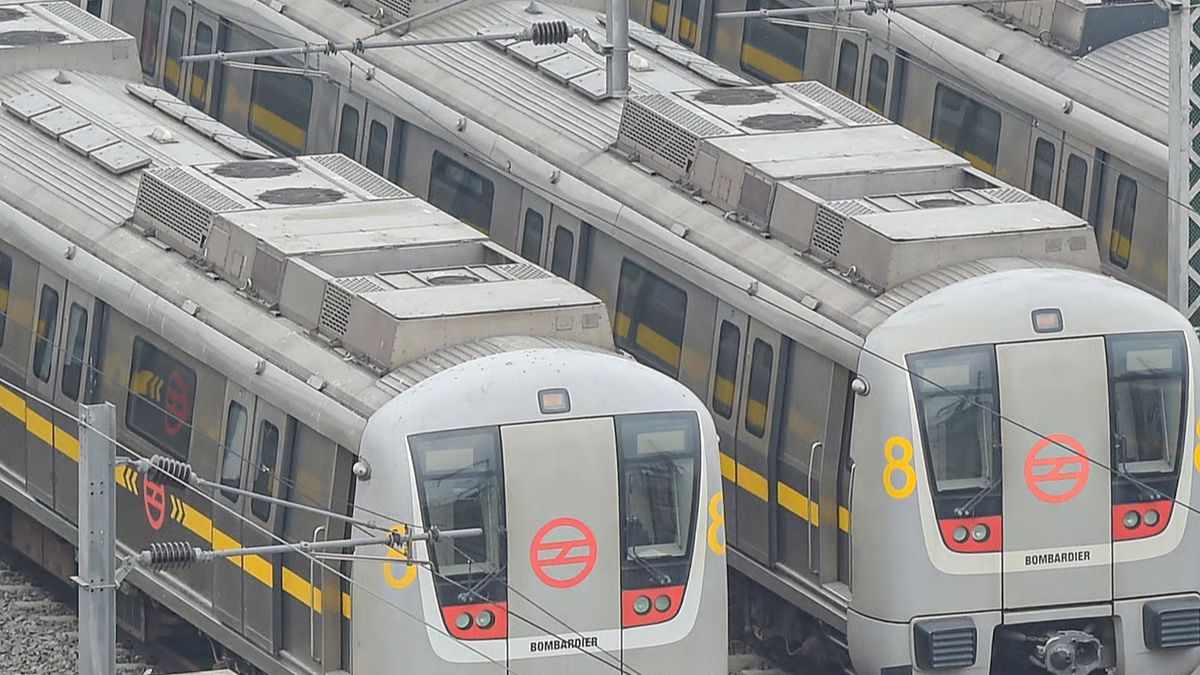
The Delhi Metro Rail Corporation (DMRC) is set to examine the feasibility of developing an integrated double-decker flyover-cum-Metro corridor along the proposed 16.5-km Keshav Puram-Rohini Sector 34 route under Phase V(B) of the Delhi Metro network.
According to a project document, the feasibility study has been estimated at around Rs 2.08 crore and is expected to be completed within six months. The proposed concept envisages an elevated Metro corridor on the upper deck and a flyover or elevated road on the lower deck to optimise urban space and help ease traffic congestion along the route.
Study to assess engineering and commercial feasibility
The consultancy will examine multiple aspects of the proposed integrated corridor, including alignment options, structural feasibility, construction methodology, traffic demand, utility shifting requirements and commercial viability.
The study will also assess the need for supporting road infrastructure such as loops, ramp-in and ramp-out facilities, cloverleafs, directional ramps and other traffic management structures at key intersections along the corridor.
According to DMRC, the proposed alignment passes through densely built-up areas, including Keshav Puram and several sectors of Rohini, where the design will need to accommodate existing Metro infrastructure, flyovers, underground utilities, land constraints and heavily trafficked junctions.
Traffic surveys and transport modelling planned
As part of the study, the selected consultant will undertake detailed traffic and transport surveys, including traffic volume counts, turning movement counts, origin-destination surveys, public transport surveys, road inventory assessments, and speed and delay studies.
Limited topographical verification will also be carried out at critical locations wherever necessary to support planning and design.
The consultant will prepare a transport model to estimate existing and future traffic demand while developing conceptual plans for integrating the Metro viaduct with the proposed road infrastructure.
Cost-benefit and environmental assessment to guide decision
The scope of work also includes a concept-level structural assessment, construction feasibility analysis and preliminary estimates of land requirements for the project.
In addition, the consultant will prepare indicative project cost estimates, conceptual bills of quantities and compare different structural configurations to determine the most viable option.
The study will also include a cost-benefit analysis and an environmental impact assessment. Based on the findings, the final report will recommend the preferred alignment and determine the overall feasibility of constructing the integrated double-decker flyover-cum-Metro corridor on the proposed Phase V(B) route.