



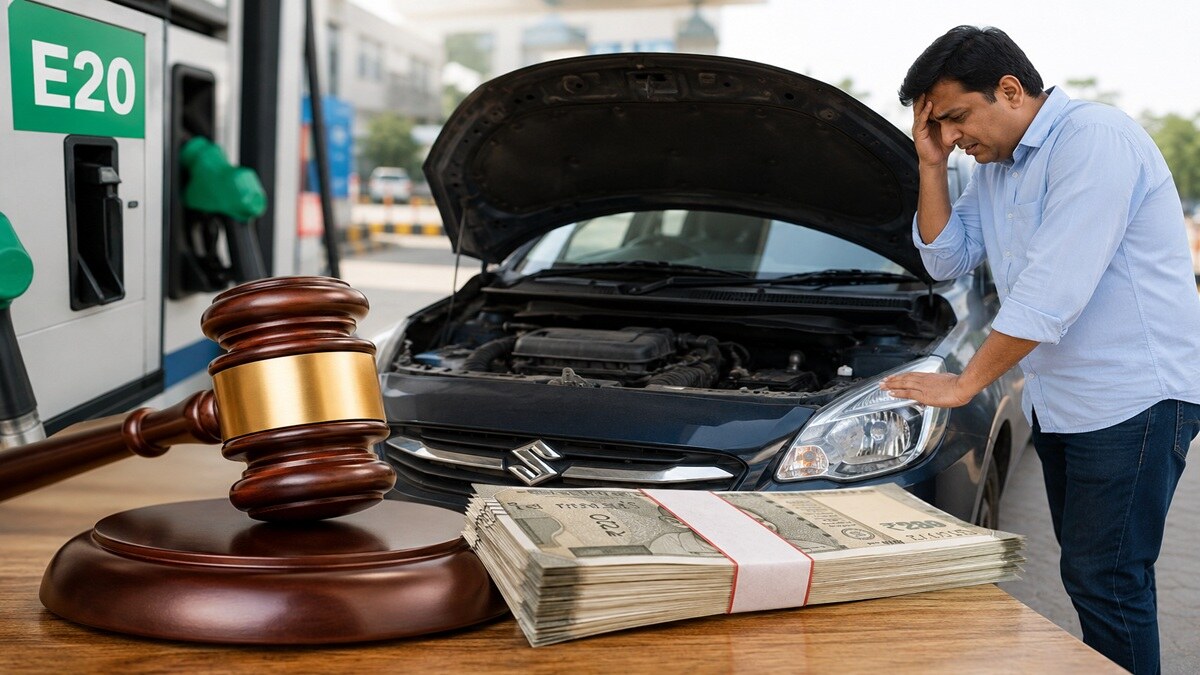
As per the court order obtained by The Indian Express, the Raipur District Consumer Disputes Redressal Commission (Additional Bench) on July 14 directed Maruti Suzuki India Limited and the car dealer to replace the complainant’s 2023 Maruti Grand Vitara Strong Hybrid Zeta Plus with a new E20‑compatible vehicle within 45 days — or refund the entire purchase price if replacement is not carried out. The commission also awarded compensation and litigation costs, bringing total liability to roughly Rs 21.6 lakh.
In a detailed 23‑page order, Chairman Prashant Kundu and member Dr Anand Verghese found deficiency in service and unfair trade practice on the part of the manufacturer and dealer. Besides directing replacement, the commission ordered a refund of Rs 20.50 lakh if replacement is not done within the 45‑day window; this sum comprises the vehicle price of Rs 18.29 lakh, Regional Transport Office (RTO) fees of Rs 1.86 lakh and insurance premium of Rs 34,644.
The bench additionally directed joint payment of Rs 1 lakh as compensation for mental harassment and Rs 10,000 toward litigation expenses. The order makes clear that any delayed compliance will attract interest at 7% per annum from the date of the order until payment.
Technical complaints and sequence of events
The complainant, identified in the order as Dr Premraj Devta of Raipur, reported repeated engine stalling and performance problems after refuelling with E20 petrol. According to the case record, the vehicle required multiple fuel changes and tank cleaning, and the owner made frequent visits to authorised service centres, but the defects persisted. The consumer commission examined service logs, correspondence between the owner and the dealership and technical submissions before concluding that the vehicle was not adequately compatible with E20 fuel.
“The consumer had repeatedly approached authorised workshops but continued to face the same defects,” the bench observed. That persistence, the commission said, made it implausible that the issues were transient or unrelated to the fuel, strengthening the assertion that the vehicle was not fit for the commonly available fuel.
Check full court order details here
Faulty new car, contaminated fuel and a consumer victory
Devta bought a Maruti Grand Vitara IE Strong Hybrid Zeta Plus on May 31, 2024. After driving it for almost five months and 21,913 km, the car broke down on November 11, 2024 with a dashboard engine-warning; the dealer inspected it and blamed adulterated petrol for engine damage, citing a white jelly‑like deposit found in the engine. The vehicle was repeatedly repaired over subsequent months, and the dealer later told Devta that he had been sold an older model and advised him to contact the sales manager.
When the purchaser raised the matter with the manufacturer and dealer, both defended their conduct by claiming external contamination from E20 petrol (20% ethanol blend) and argued such damage fell outside warranty coverage, which ran until May 2029. The buyer was offered only two options by the showroom—sell the car back for Rs 12 lakh or pay Rs 5.30 lakh to replace old parts—and the vehicle was kept at the dealer’s premises at Rs 200 per day for safekeeping.
The District Consumer Disputes Redressal Commission, Additional Bench, Raipur, examined manufacturing records and found the car had been built in January 2023 and therefore was 17 months old when sold as “new” in June 2024. The commission concluded the vehicle sold to Devta was not E20‑compatible, so exposure to E20 fuel (which the complainant could not control) caused repeated stalling and eventual engine defects despite multiple fuel changes and tank cleaning. The commission held this amounted to deficiency in service and an unfair trade practice.
Ruling for the complainant, the commission ordered the dealer/manufacturer to provide a brand‑new, same‑model vehicle equipped with an E20‑compatible engine within 45 days, failing which the entire purchase amount must be refunded. It also awarded Rs 1 lakh for mental harassment, payable within 45 days with 7% annual interest on any delayed payment.
A central factual pillar of the order is the market reality as E20 petrol has become commonly available at retail outlets, effectively limiting motorists’ ability to opt out. The commission noted that in circumstances where ethanol‑blended fuel is the default option at pumps, consumers cannot reasonably be expected to avoid E20. That observation underpins the court’s holding that manufacturers who sell vehicles after the rollout must ensure compatibility with the predominant fuel or adequately inform buyers of limitations.
This market observation has particular resonance with national policy. The Indian government has been steadily increasing ethanol blending (moving beyond E10 to higher mandated blends) to reduce crude imports and lower emissions. While the policy has environmental and energy‑security goals, it has also provoked consumer concerns about mileage, engine longevity and compatibility with existing vehicle models.
Manufacturer’s defence and the commission’s view
Nexa Magneto, representing Maruti Suzuki at hearings, argued the vehicle was E20‑compatible and suggested the faults could stem from maintenance lapses, wear and tear, or unrelated mechanical issues. The commission, however, found the defence insufficient given the recurrence of problems immediately after E20 refuelling and the fact that authorised repairs did not resolve the malfunctioning. The bench concluded the company and dealer failed in their duty to provide an E20‑compatible vehicle, amounting to a deficiency in service.
Although the consumer commission’s order is binding on the parties, it can be challenged by Maruti Suzuki or the dealer before higher consumer fora or through writ petitions in High Courts. Consumer law practitioners note that manufacturers often appeal such orders; nonetheless, because this is one of the earliest adjudications on E20‑related vehicle damage, the Raipur ruling is likely to be cited in subsequent disputes and regulatory discussions.
The decision underscores manufacturer responsibility when market conditions change — specifically, that selling vehicles into a market where E20 is widespread creates a duty to ensure compatibility or to clearly disclose limitations. From the consumer protection angle, the ruling strengthens recourse for motorists who suffer performance or damage where fuel availability effectively eliminates meaningful choice.
Policy implications are substantial. The ruling signals the need for coordination between fuel policy, vehicle certification and manufacturer disclosures. As Higher ethanol blends are adopted, vehicle homologation processes, after‑sale support policies, and public communications should align to prevent consumers from being left vulnerable during the transition. The commission’s emphasis on the practical unavailability of non‑blended petrol at pumps points to administrative challenges: offering a theoretical “choice” of 100% petrol may not be adequate if the retail market is dominated by blended fuels.
The Raipur commission’s order does not upend India’s ethanol policy, nor does it resolve all technical debates about engine design and ethanol chemistry. But by awarding a full replacement or refund, plus compensation, the bench has created a consequential precedent as in a market where E20 is the commonly available fuel, manufacturers and sellers may be held liable if vehicles they sell cannot reliably run on that fuel. As India advances its biofuel goals, this decision underlines the urgency of aligning product standards, manufacturer disclosures and consumer safeguards to ensure a just and technically sound energy transition.