



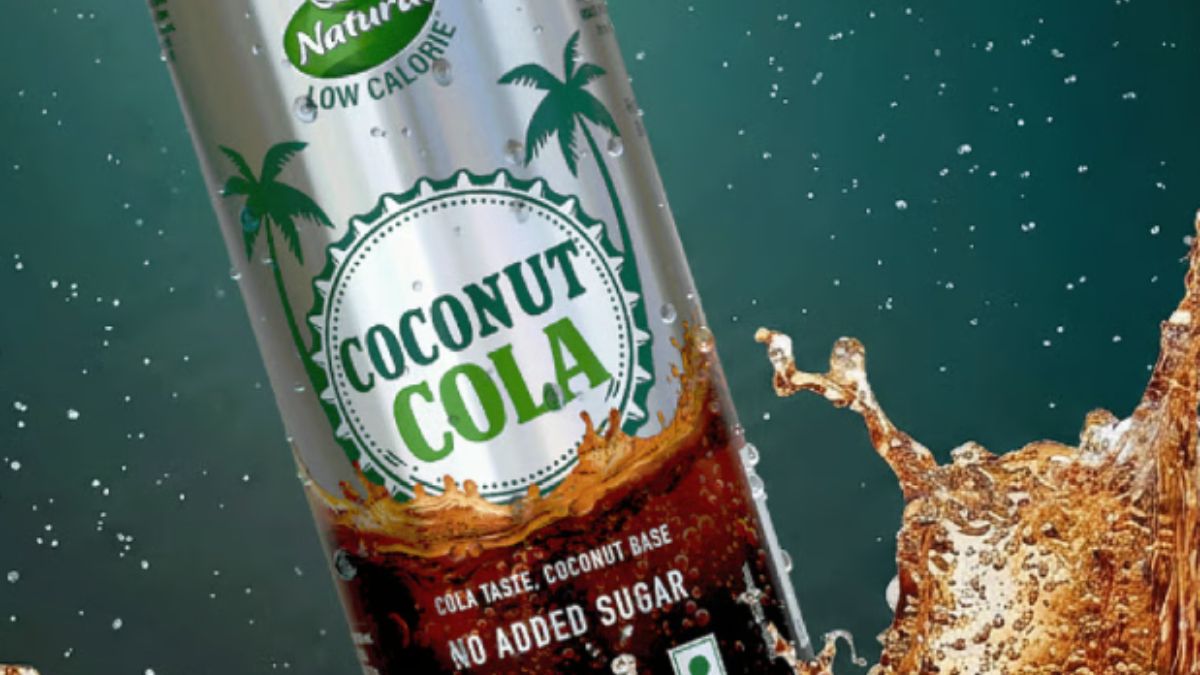
FMCG major ITC. recently made its way into the competitive cola category with the launch of Coco ‘Nut’ Cola under the B Natural brand, an offering positioned as a healthier, low-calorie alternative to traditional colas.
The differentiator for the new product is its sugar-free formulation crafted with tender coconut water, which means it is not planning to shake up India’s Rs 60,000 crore carbonated drinks market in the way Campa Cola did.
The brand’s positioning is interesting. ITC isn’t trying to take away share from either Coca-Cola or Pepsi; rather it is occupying the white space left behind by traditional carbonated soft drinks, coconut water, kombucha and sparkling functional drinks. Experts don’t expect to see Thums Up or Pepsi drinkers switching to the new launch anytime soon either.
“Cola consumption is driven by habit, taste, refreshment and emotional associations built over decades. People don’t usually choose Thums Up because they’re looking for the healthiest beverage available. They’re choosing it for its distinctive taste and brand identity,” says brand and communications strategy consultant Karthik Srinivasan.
He says to make a serious impact the brand should lead with taste and pitch the “health” story as a product plus. If the experience feels like a compromise, adoption will remain limited, Srinivasan adds.
The timing of the launch is perfect. No-sugar or low sugar beverages have seen growing consumption, accounting for close to 30% of the carbonated drinks market in 2025, up from just 5% in 2020. In fact, Varun Beverages, the largest bottling company of PepsiCo’s beverages in the world outside the United States, reported that over 60% of its volumes in the March 2026 quarter came from low and no sugar beverages.
The coconut cola’s non-confrontational strategy is evident from the fact that the company has chosen to take the D2C route by making it available only on quick commerce first before a wider market rollout. The pricing is also notably higher at Rs 60 for a 250-ml can, compared with Rs 40 for a 300-ml Diet Coke can or Rs 35 for a 250-ml Pepsi Black.
It is obvious the brand is tapping into the growing demand for healthier beverages, which is also the raison d’être for the B Natural brand. ITC acquired the fruit juice brand B Natural from the Bangalore-based company Balan Natural Food in 2015. The acquisition gave ITC immediate access into the premium packaged fruit drinks market.
As a challenger to incumbents such as Dabur’s Réal and PepsiCo’s Tropicana, B Natural built a market for itself by leveraging ITC’s vast agri-sourcing network to offer juices with zero concentrates. By 2024, B Natural had grown to become a ₹1,000-plus crore brand and had a double-digit share in the packaged juice and fruit beverages sector.
Making a splash
Experts say ITC’s B Natural brand has already built credibility with its range of fruit-based beverages. With consumers, especially Gen Z, seeking healthier beverage options, it now has the opportunity to build the ‘better-for-you’ category by making its mark with a natural ingredients-led cola. The trick lies in making the perfect pitch.
Nisha Sampath, managing partner, Bright Angles Consulting, says ITC can take a leaf out of the SuperYou protein bars’ marketing book. “They don’t disrupt either chocolate or protein bars, but sit in their own consumption niche. B Natural creates a new consumption occasion with its cola launch, but its success depends on recognising and owning the niche,” she says.
Since pricing could be a barrier to wider adoption across consumer segments, Sampath notes that ITC will need a sharper distribution strategy. “The moment the brand tries to scale into general trade and small towns, the price premium becomes an adoption barrier. It needs to position itself as more than just a cola replacement, and remain available to the right consumer in the right place, whether through quick commerce, workplaces, outside gyms or in airports,” she says.
The quick commerce pilot also allows ITC to innovate, tweak and adapt with faster launches, though experts caution that shoppers on these platforms are also digitally savvy and are more likely to influence product perception and purchase decisions through their social media reviews and feedback.
Experts agree that the key for the coconut cola’s success lies in offering consumers a meaningfully better experience rather than just a healthier cola, since incumbent brands like Coke and Pepsi do that already with their diet versions. Shekhar Suman, co-founder of Brandshark, points out a big task for ITC is to overcome unfamiliar taste, potentially lower fizz and the challenge of securing distribution against brands with established bottling and retail networks.
“The immediate opportunity is among occasional and lapsed cola drinkers who enjoy fizz, but have reduced consumption because of sugar concerns. To win regular consumers however, ITC must drive sampling through food and quick-commerce partnerships, position it alongside familiar occasions such as pizza, biryani and cricket, and eventually introduce more accessible pack sizes without weakening its premium image,” suggests Suman.
B Natural knows the game. It already has a bottled Tender Coconut Water offering which was launched in 2023, and is available currently in two pack sizes of 200 ml and 750 ml priced at Rs 60 and Rs 138 respectively.
If the new product delivers familiar refreshment while reducing some of the perceived negatives associated with conventional colas, it has a good chance of creating a loyal niche that could eventually become mainstream, sums up Srinivasan.