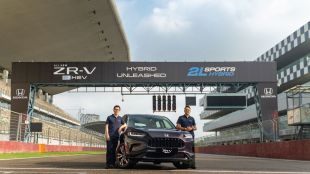
Flooring the accelerator pedal on the backstraight of the Buddh International Circuit (BIC) – India’s Formula 1 track – the Honda ZR-V feels deceptively fast. Its engine doesn’t growl like that of a sports car, but the way it takes off from 0-100 km/h is nothing short of electrifying.
Powered by an electric motor and a 2.0-litre petrol engine, the ZR-V is priced at Rs 47.99 lakh, ex-showroom – quite expensive for a mass-market brand like Honda. Is it worthy enough to be in the consideration set of a Rs 50 lakh buyer? Our day-long test on the BIC got us some answers.
The case for the ZR-V
Performance: It hits 100 km/h in 7.9 seconds, with its hybrid system developing 184 PS and 315 Nm of torque. What impressed me even more was when I let go of the pedal – the petrol engine instantly cut out, the powertrain seamlessly transitioned into EV mode, and the cabin became eerily quiet. Fuel efficiency soared to more than 20 km/litre. The BIC has sweeping corners, and the ZR-V’s suspension kept the body composed, with electric power steering delivering crisp feedback, and all-disc brakes inspiring confidence.
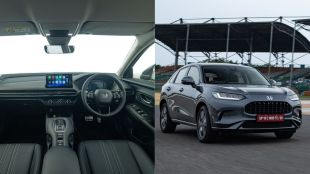
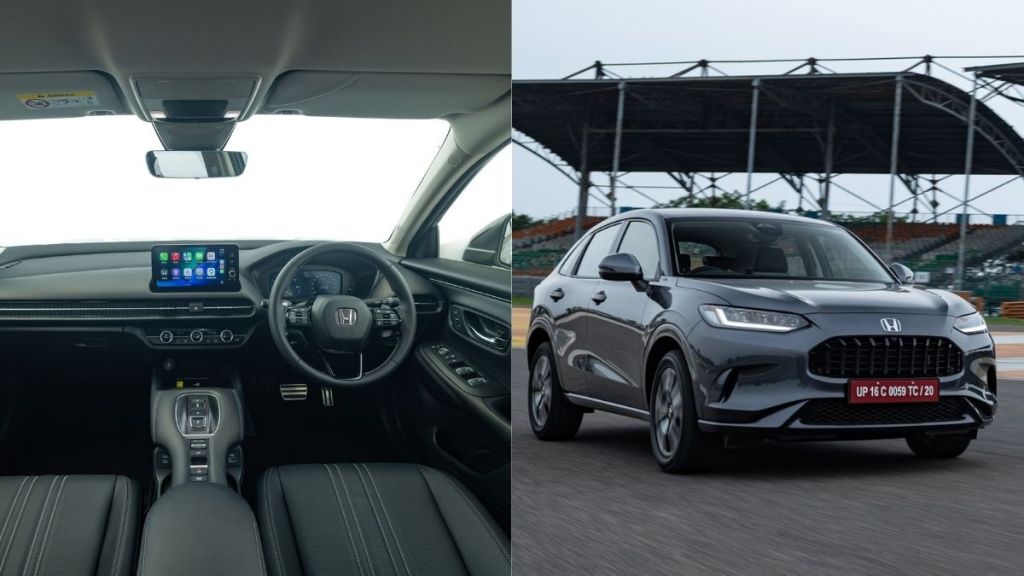
Good design: The vertical-slat glossy black grille, sharp full-LED headlights, and 18-inch diamond-cut alloy wheels give it a bold SUV presence.
Cabin: The all-black cabin feels rich, boasting soft-touch materials, leather upholstery, and metallic accents. Behind the wheel, Honda nailed the posture—offering a sedan-like driving position alongside elevated SUV visibility. In the rear, the flat floor ensures good legroom, making the ZR-V a competitor even to the Toyota Camry.
The case against the ZR-V
Familiar rear styling: Walking around to inspect the back, the smooth, rounded tailgate profile reminds you of a larger Honda Jazz. It looks clean and aerodynamic with an integrated spoiler, but the rear styling is noticeably softer than the aggressive front.
Missing features: At Rs 47.99 lakh, you might notice some things aren’t up to the mark. These include a small screen (the 9-inch display works smoothly, but feels small for this segment); no sunroof (which has become a major selling point for Indian buyers); the omission of a spare tyre (it gets a puncture repair kit); and finally, there is the price roadblock (as an imported CBU unit, its steep price tag remains its single biggest obstacle).
It’s a fine car, Honda, please assemble it in India to make it more affordable.