



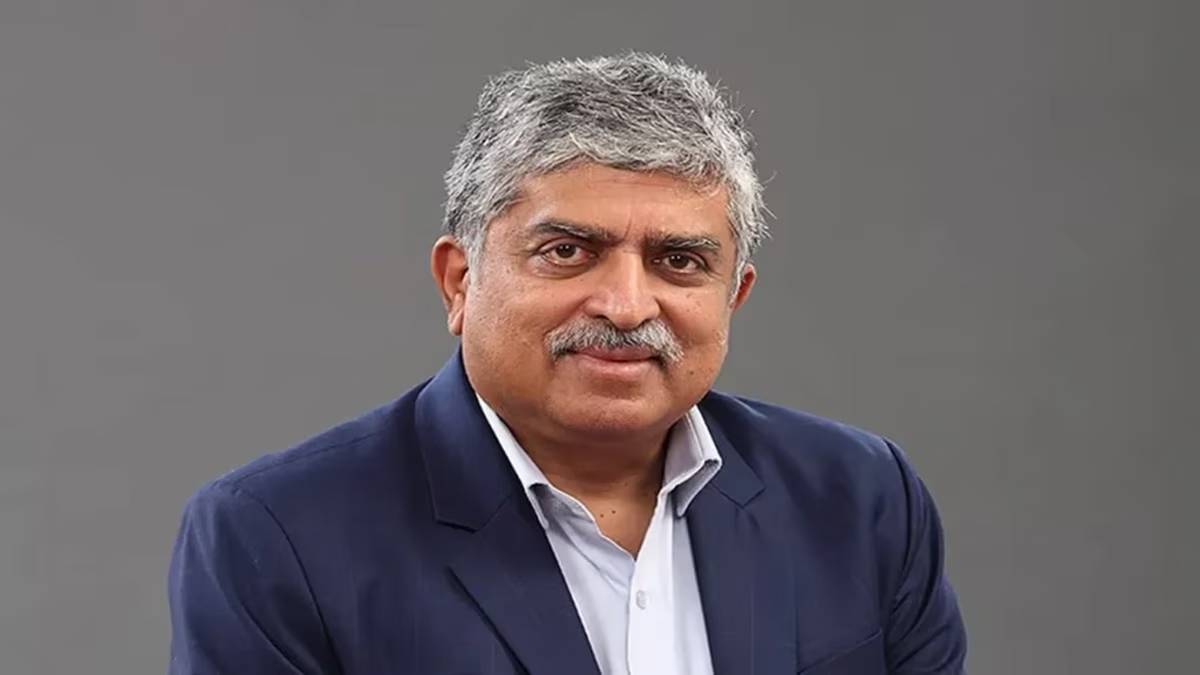
When Prime Minister Narendra Modi appointed Nandan Nilekani to lead a high-powered task force on public examination reforms, the choice reflected more than confidence in one of India’s most accomplished technologists. It signalled the government’s belief that the country’s next wave of institutional reform may require the same systems thinking that transformed digital identity and payments over the past decade.
For much of his public life, Nilekani has been associated with infrastructure rather than applications. As co-founder of Infosys, he helped establish India’s reputation as a global technology powerhouse. As the founding chairman of the Unique Identification Authority of India (UIDAI), he oversaw the creation of Aadhaar, now the world’s largest digital identity programme. More broadly, he has been among the principal architects of what is now recognised globally as India’s Digital Public Infrastructure (DPI)—a network of interoperable platforms that includes Aadhaar, the Unified Payments Interface (UPI), DigiLocker and the Account Aggregator framework.
The significance of these projects lies not simply in their scale, although each serves hundreds of millions of Indians. Their more enduring contribution has been institutional. Rather than building consumer-facing products, they created shared public infrastructure on which governments and private companies could innovate. This philosophy—treating digital infrastructure as a public utility rather than a proprietary asset—has become one of India’s most distinctive contributions to global technology policy.
That record explains why Nilekani’s latest assignment extends beyond digital transformation in the conventional sense.
India’s public examination system has come under sustained scrutiny following repeated paper leaks, allegations of malpractice and administrative failures affecting competitive examinations. The consequences extend beyond operational inconvenience. For millions of young Indians, these examinations determine access to universities, professional qualifications and public sector employment. Every breach therefore carries a broader institutional cost, eroding confidence in the fairness of one of the country’s most consequential public systems.
Restoring that confidence is unlikely to be achieved through tougher penalties alone. The government’s decision to appoint a technology architect rather than a career administrator suggests an acknowledgement that the problem is fundamentally one of system design.
Beyond Tougher Penalties
The success of India’s Digital Public Infrastructure has rested on three principles: secure identity, interoperability and trust. Aadhaar established a mechanism for reliable authentication. UPI demonstrated how open standards could enable competition while maintaining common protocols. DigiLocker showed how authenticated digital records could reduce paperwork without sacrificing legitimacy. Each addressed a structural weakness by redesigning the underlying architecture rather than merely digitising existing processes.
Applying those lessons to examinations will not be straightforward. An examination ecosystem spans question paper creation, secure distribution, candidate authentication, evaluation, results management and grievance redressal across a vast administrative landscape. Weakness at any stage can compromise the integrity of the entire process.
Technology can strengthen each of these links. Digital identity verification may reduce impersonation. Encryption and secure digital workflows can limit opportunities for question paper leaks. Tamper-evident audit trails can improve accountability, while artificial intelligence may assist in detecting organised fraud. Yet technological solutions, however sophisticated, cannot substitute for effective governance.
Technology vs. Governance
The Aadhaar experience itself offers an important lesson. While the programme expanded access to digital services and financial inclusion, it also generated sustained debate over privacy, surveillance and data governance. Those debates helped shape India’s evolving regulatory framework and underscored a broader principle: digital infrastructure commands public confidence only when accompanied by transparency, legal safeguards and institutional accountability.
The same principle will apply to examination reform. Candidates must trust not only the technology but also the institutions operating it. Cybersecurity, independent oversight, procedural transparency and effective grievance mechanisms will matter as much as encryption or authentication protocols.
What distinguishes Nilekani from many technology leaders is his belief that digital infrastructure should function as a public good rather than a proprietary product. By championing open, interoperable systems that governments and businesses can build upon, he has helped position India as a global reference point for Digital Public Infrastructure, with several countries studying aspects of its model.
Whether India’s examination reforms become another defining chapter in its Digital Public Infrastructure story remains uncertain. Designing systems is one challenge; implementing them consistently across a country of India’s size and complexity is another. Success will depend not only on technology but also on administrative capacity, political commitment and sustained public trust.
Yet the appointment itself carries significance. It suggests that India increasingly views its most pressing governance challenges through the lens of infrastructure—digital where appropriate, institutional above all. If Aadhaar sought to establish trust in identity, and UPI in payments, the next frontier may be restoring trust in merit itself.