While two-wheelers and cars—and their high-profile launches—get the most attention when it comes to electrification, the real change is happening on three wheels.
As per retail sales data sourced from the Federation of Automobile Dealers’ Associations (FADA), of the total 1,363,412 three-wheelers sold in FY26, a staggering 60.95% (830,819 units) were electric. This means that, for the first time, a major vehicle segment is no longer dominated by petrol, diesel, or CNG.
Automotive analysts told FE that the electrification rate in three-wheelers crossed 50% in FY23, and has been steadily increasing—54.3% in FY24, 57.25% in FY25, and 60.95% in FY26. “At this rate, two of every three three-wheelers sold in FY27 will be electric, and by 2030, electrification in three-wheelers is set to cross 75%,” they said.
CNG Monopoly
Som Kapoor, EY India Automotive, Future of Mobility leader (Consulting), and partner, said that the three-wheeler segment seems to have reached a point of no return for fossil fuels. “The segments that will grow the most are those with the highest ‘asset sweat’—where vehicles are worked the hardest to generate maximum revenue. Growth also follows ‘circularity of motion,’ or predictable, repetitive routes that make electric charging simple and efficient.” He added that the economic logic for the driver/operator, centred on the lowest possible cost per kilometre, has decoupled the three-wheeler segment from the volatility of oil prices.
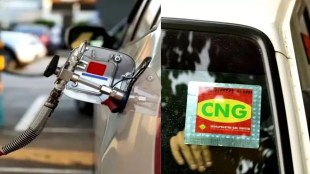
The growth in electrification has come at the cost of CNG/LPG, whose share has dropped from 30.67% in FY25 to 26.49% in FY26, even as the share of diesel three-wheelers marginally increased from 11.35% to 12.18%—unlike cars, petrol/ ethanol is a niche segment in three-wheelers, with a share of just 0.38% in FY26.
Uday Narang, the founder of Omega Seiki Mobility, an EV-only player, said the faster electrification of three-wheelers is driven by strong unit economics and real-world usability. “Be it cargo or passenger applications, electric three-wheelers operate on fixed routes with predictable daily distances, so range is rarely a concern,” he said. “Their significantly lower running and maintenance costs translate into higher daily savings and faster payback for operators.”
Narang added that ease of doing business and a functional charging ecosystem have supported adoption. “Most three-wheelers can be charged at home or at small commercial hubs, which eliminates the dependency on large public charging infrastructure,” he said. But he added that the only meaningful constraint at this point is financing.
“Access to credit is evolving, largely because the secondary market is not yet fully developed. Otherwise, demand is robust,” he said. “At Omega Seiki, we are seeing 3X order book growth compared to last year across segments.”
Speaking on the economic benefits of electric three-wheelers at this year’s Symposium on International Automotive Technology (SIAT) 2026, Abraham Joseph, MD of Bajaj Auto Technology, said that electric three-wheelers offer more than 15% improvement in total cost of ownership (TCO) over diesel, along with lower operating and maintenance expenses. “Their suitability for last-mile transport boosts earnings for operators,” he said.
What has also supported are city-wide policies. Municipal bodies and state governments in Delhi, Bengaluru, and Mumbai are increasingly prioritising new permits for electric three-wheelers over CNG, analysts said.
Legacy Giants Pivot
The market leaders that historically dominated the CNG space—specifically Bajaj Auto and TVS Motor—shifted their focus heavily towards electric three-wheelers in FY26. FADA data shows that while Bajaj Auto’s electric three-wheeler sales grew 76.2% (from 50,851 units in FY25 to 89,604 units in FY26), those of TVS grew a whopping 1,541% (from 1,696 units in FY25 to 27,831 units in FY26).
Market leader Mahindra’s sales also increased 46.4% (from 69,579 units in FY25 to 101,873 units in FY26). “These giants pushed EVs through their massive dealer networks, making electric three-wheelers the default choice for CNG buyers—who had been struggling with long wait times at refuelling stations,” an analyst said.