



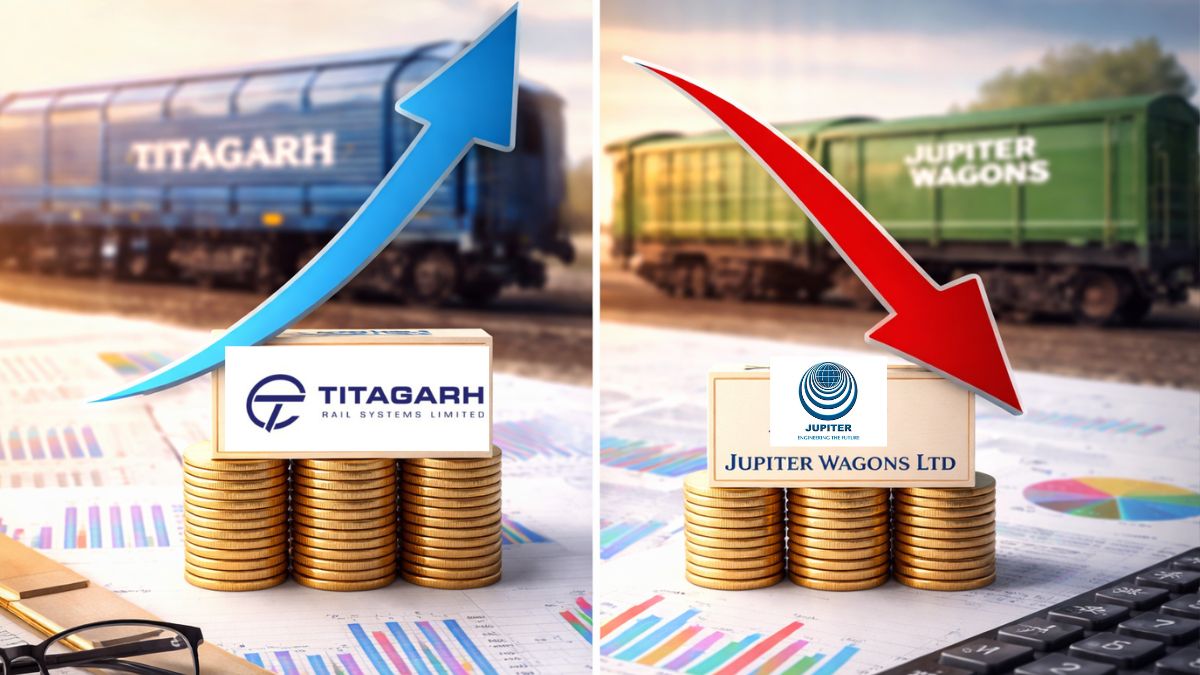
Railway stocks are once again gathering speed, but the question for investors is – which stocks are best placed to bet on. The global brokerage Jefferies has initiated coverage on select railway stocks. The brokerage has highlighted a mix of strong growth visibility and valuation plays.
While the sector outlook remains positive, not every stock is equally attractive at current levels, as per Jefferies. Let’s take a look –
Titagarh vs Jupiter: Which stocks to watch?
Jefferies has initiated coverage on two key railway players – Titagarh Rail Systems and Jupiter Wagons, but with very different views.
The brokerage said, “Initiate on Titagarh Rail at Buy (32% potential upside).” It has set a target price of Rs 810.
In contrast, the stance on Jupiter Wagons is cautious. Jefferies noted, “Initiating on Jupiter Wagons at Underperform (22% potential downside).” The target price set for this stock by the brokerage is Jupiter Wagons.
Explaining the preference, the report added, “With both stocks at 40x FY27E Price-to-Earnings ratio, we prefer Titagarh.”
The key difference lies in growth expectations. “We expect 43% FY26-30 Earnings Per Share CAGR for Titagarh and 23% for wagon-heavy Jupiter.”
A steady investment cycle ahead
Beyond stock-specific views, the report highlighted a broader growth story in railway investments.
Jefferies noted, “We expect 10% FY26-30 CAGR in India rolling stock capex, led by a 9-16% CAGR in passenger & metro coaches.” Rolling stock includes trains, coaches, wagons, and locomotives.
This indicates that investments will continue, but the real momentum will come from passenger and metro segments rather than freight wagons.
The brokerage added, “Wagons should grow at a 5% CAGR as we estimate 6% annual cargo growth for Indian Railways vs its 16% target.”
Metro expansion becomes a big driver
Urban transport is emerging as a major theme in the railway space.
According to the brokerage report, “India’s Metro rail network expanded 4x in FY14-FY25 to around 1,000 km, and we expect it to double to 2,000 km by FY33.”
This growth is being driven by rapid urbanisation and rising demand for public transport.
Interestingly, competition in this segment remains limited. Jefferies noted, “Competitive intensity is low, with only three active players, as technology and the mandatory 75% domestic procurement act as entry barriers.”
Modern trains to lead the next phase
Another key trend is the strong push towards modern and faster trains.
Jefferies said, “We estimate a 33% CAGR in Vande Bharat (VB) trainset spending, led by IR’s FY30 target of 800 trainsets vs 164 trains now.”
At the same time, traditional coaches are also expected to see steady demand. The report added, “an 11% CAGR in non-VB spending led by latent demand and safety.”
Freight growth steady but slower
Freight remains an important part of the railway ecosystem, but growth here is expected to be moderate.
Jefferies noted, “We estimate Indian Railway cargo growth to rise from 4% CAGR in FY08-FY26 to 6% CAGR FY26-FY35.”
Disclaimer: This article provides factual analysis only and is not, and should not be construed as, an offer, solicitation, or recommendation to buy or sell securities. Investors must conduct their own independent due diligence and seek advice from a SEBI-registered financial advisor.