



India’s luxury car market may still account for a small share of overall vehicle sales, but momentum is clearly building. A younger, more aspirational buyer base, growing beyond metros into smaller cities, is reshaping demand for premium mobility.
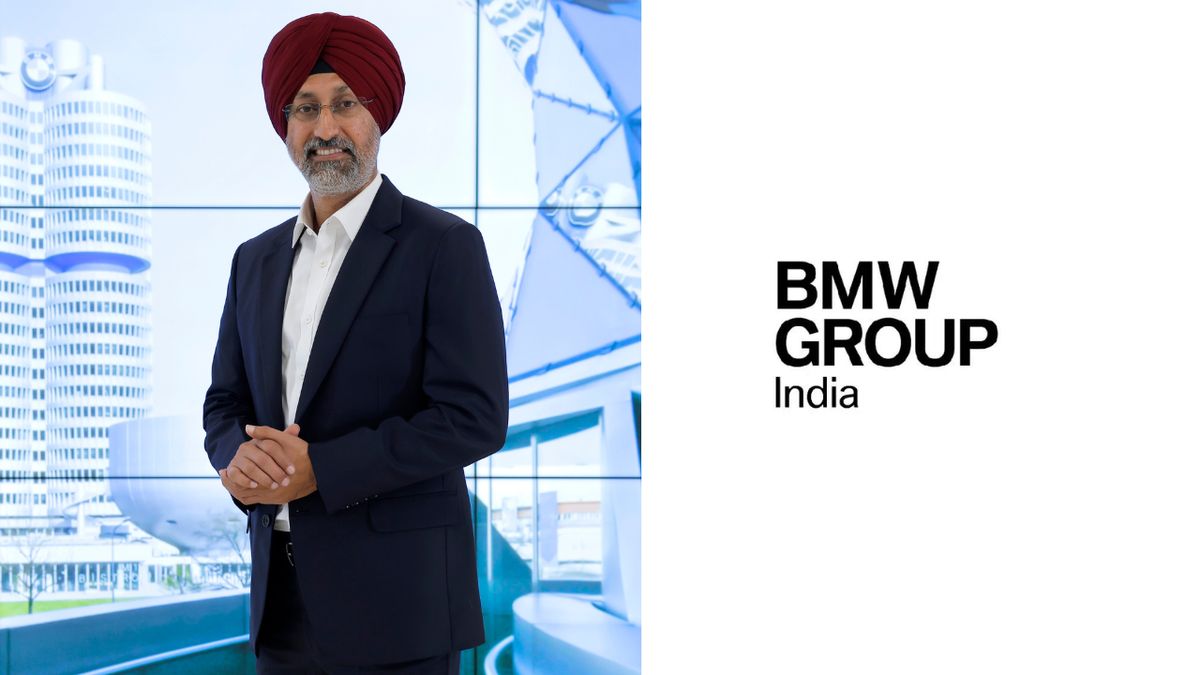
For Hardeep Singh Brar, president and CEO of BMW Group India, this shift is already visible in the numbers, with the company posting its best-ever sales in 2025. In this interview, Brar speaks with Sugandha Mukherjee about how aspiration is translating into demand, the rise of electric luxury, and how BMW plans to strengthen its position in an increasingly competitive Indian market. Excerpts:
India is often called an aspiration-led market. How is that aspiration showing up in actual car demand today?
India’s luxury car segment is still at a very early stage, with penetration at just about 1-1.5% of the total passenger vehicle market. We are clearly seeing a shift, driven by a resilient economy and a growing preference for meaningful, personalised luxury.
This aspiration is especially visible among a new generation of ambitious, younger professionals, not just in metros, but increasingly in Tier 2 and Tier 3 cities. It signals an inflection point for the luxury market in India. The average age is around 42, with buyers coming from sectors such as manufacturing, real estate, IT, legal services and luxury goods.
They lead dynamic, active lifestyles centered around travel, sports, fitness, music and cars. Customers entering the luxury space today want products that genuinely reflect their aspirations and the way they live.
We can see this aspiration translating directly into demand. In 2025, BMW Group India recorded its best-ever sales of 18,001 units. Nearly 50% of this demand came from aspirational buyers.
Our long-term strategy is focused on growing the luxury car market by attracting this evolving customer base, while staying true to our core values of JOY and Sheer Driving Pleasure.
Hardeep on future business growth in India
With more luxury brands entering and expanding in India, how does BMW think about growing the business while staying true to its premium positioning?
We are investing heavily in future-ready technologies, customer-centric services and best-in-class digital experiences. What truly amplifies value, however, is the holistic world customers become part of when they join the BMW family. Our growth approach rests on three pillars. First, strong product substance across performance, design and technology.
Second, customer-centricity through personalised experiences and deep retail partnerships. Third, the power of choice, with a wide portfolio that spans internal combustion engines and fully electric vehicles.
Brand engagement also plays a key role. Our immersive platforms build emotional connection across culture, art, lifestyle and driving experiences. Initiatives such as Joytown, BMW Art and Culture collaborations, the Excellence Club Soirée series, exclusive weekend drives and curated community events help deepen relationships with new-age buyers who value belonging as much as brand stature.
Tariffs on European-made cars imported into India may progressively come down from 110% to 10%. What does this mean for BMW?
The conclusion of the India–EU Free Trade Agreement would be a historic and ambitious milestone, reflecting India’s growing strategic and economic relevance globally. We have consistently advocated free trade, as it improves market access, strengthens economic collaboration, leverages mutual strengths and builds more resilient supply chains, especially at a time when such cooperation is increasingly important.
At BMW Group India, over 95% of our volumes already come from locally manufactured ‘Made in India’ models. Fully imported vehicles account for only about 5% of our sales. While we do not expect any immediate price changes in the near term, an FTA could create opportunities to introduce new or niche products. Over time, if demand scales, it could also support deeper localisation.
Haerdeep on EV market
The BMW i7, offered in two versions in India, has crossed 1,000 sales since launch. How do you see the EV market shaping up, especially with Tesla entering India?
The success of the BMW i7 clearly reinforces that Indian customers are ready for electric luxury when the product delivers uncompromised performance, comfort and technology. The EV market in India will grow steadily rather than overnight. Infrastructure, customer education and confidence remain critical enablers.
We firmly believe the future is powertrain-agnostic, which is why BMW continues to offer electric vehicles alongside petrol and diesel options. More players entering the market will help accelerate awareness and adoption, which is positive for the ecosystem.
We aim to offer the widest product line-up, supported by a mature charging ecosystem, strong service support and complete peace of mind for customers. In 2025, EVs accounted for 21% of our sales, up from 8% in 2024. BMW and MINI EVs recorded growth of over 200% year-on-year, and we plan to carry this momentum into 2026.
BMW finished second in luxury car sales in India in CY25. How are you planning to race ahead?
BMW Group India delivered exceptional growth in 2025, outperforming the broader industry with record sales and growth of 14%. In the luxury EV segment, we remain the brand of choice, recording a 200% surge. Demand for our long-wheelbase models grew by 162%, reflecting strong acceptance of our portfolio.
Our success has been driven by a diverse range of products, from long-wheelbase luxury sedans and high-performance SUVs to a rapidly expanding electric line-up, supported by strong after-sales service, personalised brand experiences and attractive financial solutions.
As we enter 2026, expectations are even higher. We plan to launch 27 new products, including all-new models, major facelifts and special editions. We will also expand our footprint with 19 new touchpoints across 18 cities, including Bhopal, Vapi, Pondicherry, Kolhapur, Nashik and Jammu. With strong fundamentals in place, BMW Group India is well positioned to outpace the market and continue building long-term brand desirability.
BMW has a long association with art and design. What role does art play internally?
For over 50 years, the BMW Group has been engaged in hundreds of cultural collaborations worldwide, with a strong focus on contemporary art, music, film and design.
Art is deeply embedded in BMW’s DNA as a source of inspiration, creativity and progressive thinking. Internally, it encourages designers, engineers and teams to challenge conventions and think beyond purely functional boundaries. Our engagement with art goes beyond sponsorship; it is about collaboration.
We see the automobile not just as a machine, but as a cultural and emotional object. This mindset directly influences our design language, user interfaces and how we shape the future of mobility.