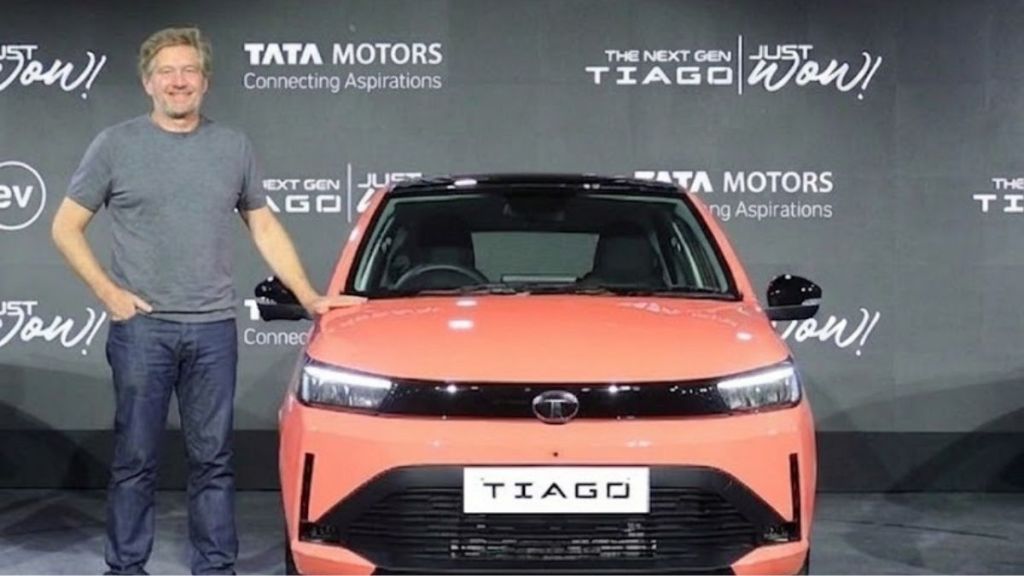
On Thursday, Tata Motors launched the heavily updated Tiago, in petrol, dual-cylinder CNG, and electric vehicle (EV) powertrains. This marks a major visual and strategic overhaul for the compact hatchback – a segment Tata Motors had not fundamentally updated for almost a decade.
Speaking on the sidelines of the launch, Martin Uhlarik, vice-president and head of Global Design at Tata Motors, detailed the strategic choices behind the project. “The first question was whether a market still exists for this segment,” Uhlarik said. “Once greenlit, we focused on enhancing the cabin experience, with high-end visual touches such as soft fabric inserts on the dashboard and door cards to deliver a premium feel in an affordable car.”
Externally, the new Tiago addresses rigid proportional constraints through clever optical trickery. The team created a flatter nose and a clean bonnet to give the car a more substantial road presence. “Black cladding on the wheel arches visually mimics larger wheels,” Uhlarik said. “The EV version has a body-coloured front facade rather than a traditional grille.”
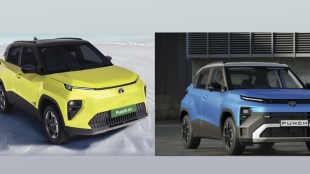
But the design team deliberately avoided SUV styling to prevent market cannibalisation with the Tata Punch. Developed within just two years at the Pune design studio, the finalised design was locked in after only two executive reviews.