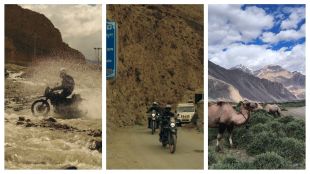
The roar of the engine is the only sound you hear when you travel from Leh into Nubra Valley, via the mighty Khardung La, at 5,359 meters above sea level (17,582 feet). This pass is the entry to a completely different world, unknown to most Indians, as it takes you to a place where the Indian Army – Ladakh Scouts under the leadership of Major Chewang Rinchen – captured 883 sq km of territory from Pakistan-administered Kashmir in the Shyok Valley during the 1971 Indo-Pak War.
This lightning-fast winter operation, called the Battle of Turtuk, happened during December 8-14, and earned Major Rinchen the moniker ‘Nawab of Nubra’ – affectionately given by the very people whom his Scouts conquered, or liberated.
The journey
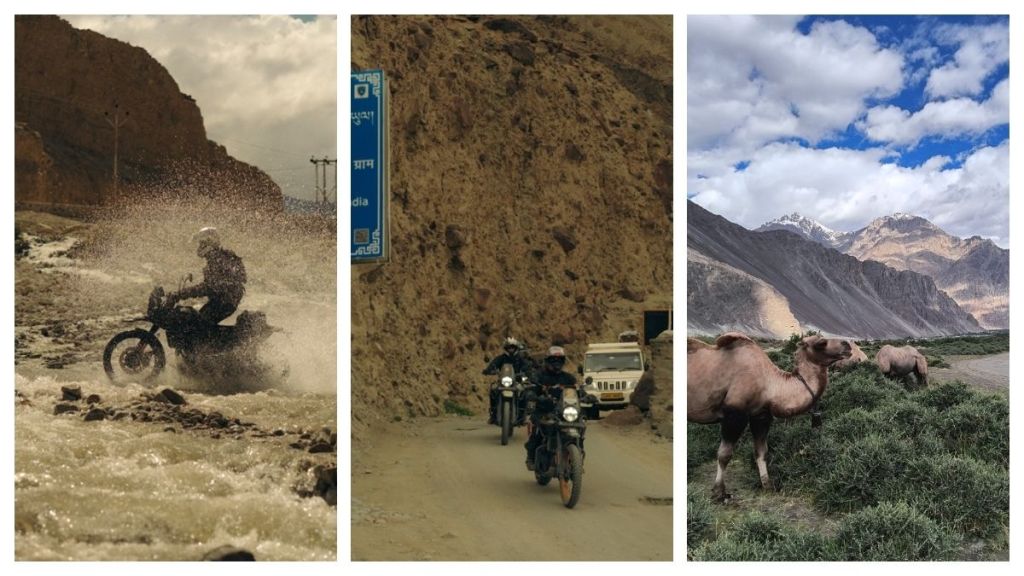
Before reaching Turtuk, you enter a magical world. A place called Hunder, where in a single frame you get to see sand dunes, the world’s highest mountains, streams, grasslands, blue skies, trees, and a lot of snow. Walking through trees and shrubs, you can even see the double-humped Bactrian camels. In the summers, their humps droop to the sides, as they’ve spent their stored energy in the brutal winter, but by November, those humps will be upright.
The Balti people
As you push further, next to the Shyok River, the landscape changes from rugged rocks to green orchards, and so do the people – tall, fair-complexioned, and some with deep blue eyes. While they have Mongoloid features, they look different from both Ladakhis and Kashmiris.
This is Gilgit-Baltistan, and the people are called Balti, with their distinct language and culture, even food. Today, five Balti villages are part of India, and the centre is Turtuk.
You can find a lot of storytellers here, like Ghulam Hussain. In 1971, he was an 18-year-old boy when his family slept in Pakistan and woke up in India, recounting the operation by Major Rinchen that moved the Line of Control overnight. “While hundreds of families were instantly divided, our cousins and friends trapped on the other side, we feel blessed to be in India,” he said. “Tourism and economic growth have brought a level of prosperity my relatives across the LOC can only dream of. The Indian Army has set up schools, and our kids leave the valley not just for Leh or Srinagar, but for world-class higher education and medical facilities in Delhi.”
But he had a bittersweet reality. “Our cousins from across the LOC can visit us, but they have to travel all the way down through Pakistan, cross the border at Attari-Wagah near Amritsar, and then meet us,” he said. “But they are awed by the progress here.”
Why visit here
A journey to this Balti frontier must be on your itinerary, not just because it’s beautiful, but because it shows how diverse and historically rich our country is. But possibly our countrymen need a lesson in cleanliness – with more tourists, this pristine place is getting choked with plastic waste. “We have survived wars, and now we need to survive the tourist,” a local café owner observed.