


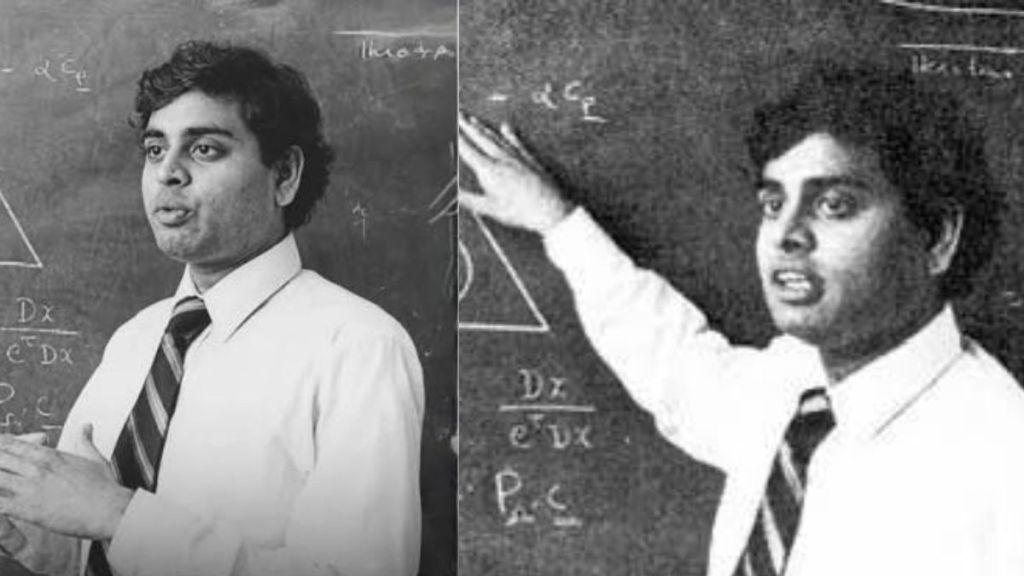

In November 1984, a 28-year-old Indian mathematician at Bell Labs became the subject of a story that set off a deluge of inquiries from brokerage houses, oil companies and airlines. Those industries had millions at stake in a class of problems called linear programming. That mathematician was Narendra Karmarkar. The problem was how to allocate scarce resources so that cost falls or efficiency rises.
An airline must assign aircraft and crews while controlling costs; an oil company must decide how to move and refine crude; a telecom operator has to maximise network capacity; an investor seeks the optimal mix of stocks and bonds.
James Gleick’s contemporary New York Times report called it a “startling theoretical breakthrough,” and the work later earned him multiple major awards. After building a reputation as one of India’s best-known algorithm researchers, he returned to India and became involved in an ambitious attempt to build a world-class supercomputer with backing from the Tata group.
The resulting machine, called Eka, went on to achieve a major place in international supercomputing rankings, reaching fourth in the world and the fastest in Asia on its debut in 2007.

From Gwalior to Bell Labs
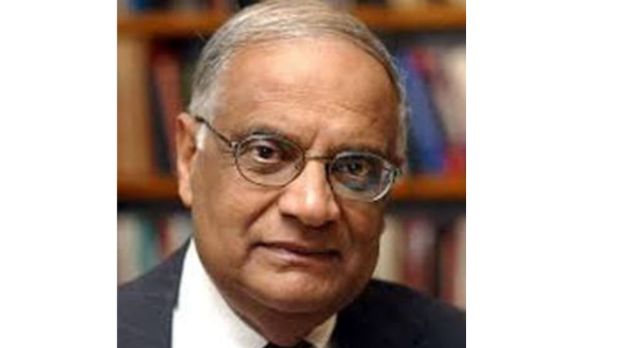
Karmarkar was born in Gwalior and raised in Poona, now Pune. Both his father and his uncle were mathematicians. His education took him from India to some of the leading institutions in the United States.
He completed a BTech in electrical engineering at the Indian Institute of Technology Bombay in 1978. He then earned a master’s degree from the California Institute of Technology in 1979 before moving to the University of California, Berkeley, for a PhD in computer science.
He completed his doctorate in 1983 under Richard Karp. His thesis was titled Coping with NP-Hard Problems, referring to a class of computational problems that can be extremely difficult to solve as their size increases.
After a postdoctoral position at IBM Research, Karmarkar joined Bell Labs in 1983. By the autumn of that year, at the age of 28, he had submitted his paper to the 1984 ACM Symposium on Theory of Computing.
The work quickly earned recognition in the research community.
Karmarkar received the Lanchester Prize in 1984. He received the Fulkerson Prize in 1988. In 2000, the Association for Computing Machinery (ACM) honoured him with its Paris Kanellakis Award.
The ACM said his work had inspired “a renaissance in the theory and practice of linear programming.” He also received the Srinivasa Ramanujan Birth Centenary Award, presented by the Prime Minister of India. He is listed as an ISI highly cited researcher.
Karmarkar’s 1984 algorithm challenged the method that had dominated the field for decades and offered a fundamentally new way to tackle large-scale problems.
The original algorithm is rarely used unchanged today, yet the ideas it revived remain primary to mathematical optimisation and continue to underpin many modern AI systems.
Walking through the middle of the problem
Imagine a giant crystal with millions of corners and faces. Every point on or inside it is a possible solution, the task is to locate the best one without examining every candidate.
Since 1947, one of the main tools used to solve such problems had been the simplex method, developed by American mathematician George Dantzig.
The method works by moving along the edges of the geometric shape, checking one corner after another. At each step, it looks for a better answer until it reaches the best available solution.
Although highly effective on most practical instances, the simplex method can be forced, on certain pathological problems, to take an exponential number of steps—raising doubts about its scalability.
Karmarkar took a different route. Starting from an interior point, his algorithm repeatedly rescaled the feasible region so that the current point sat at its centre, then stepped toward improvement, travelling through the middle of the polyhedron rather than along its edges.
Timing mattered. In 1979 the Soviet ellipsoid algorithm had already proved that linear programming is solvable in polynomial time, yet it remained too slow for most practical use.
Karmarkar’s method improved on that theoretical bound and, more importantly, held out the promise of practical speed on large instances.
Ronald L. Graham, then director of mathematical sciences at Bell Labs, called the work “a path-breaking result” and “one of science’s moments of great progress.”
Richard Karp, Karmarkar’s PhD adviser at UC Berkeley, suggested that the simplex method’s long dominance may have kept researchers from exploring alternatives for years.
Karmarkar’s own motivation was practical. “I felt strongly that there must be a better solution,” he told The New York Times, explaining that the problems businesses wanted to solve had grown beyond what existing methods could comfortably handle.
How businesses saw the potential
Companies soon began exploring how the new algorithm could help them.
American Airlines worked with Karmarkar on problems involving flight crews and aircraft fuel loads. Decisions about which aircraft should refuel at which locations could make a substantial difference to fuel bills.
Exxon was among the oil companies interested in the method. Oil companies use optimisation calculations to decide how crude oil should be distributed across refineries, helping them make better use of their facilities and control costs.
For businesses facing complicated calculations on a large scale, the promise was clear: a faster way to find better answers could translate into significant savings.
The commercial promise was obvious, faster, better solutions meant real money, but practical performance still needed refinement, and researchers continued to improve the method.
Why his 1984 paper made headlines
The practical upside was obvious, more efficient airline fleets, better oil-refinery allocation, smarter portfolio construction, and commercial interest followed at once.
The breakthrough also attracted commercial interest. AT&T built a specialised multiprocessor computer system called KORBX to run versions of the algorithm. The system cost nearly $9 million, and the Pentagon was among its early customers.
The method was later used for US Army logistics planning during the Gulf War, showing how the mathematics could be applied to large, practical problems involving resources and operations.
The work produced US Patent 4,744,028 (1988), which itself sparked debate about the patentability of mathematical algorithms. Within months researchers had connected the method to earlier techniques and begun producing improved variants. Margaret Wright later described the announcement as triggering “an explosion of research into interior-point methods” that lasted more than a decade.
Early claims that the method would immediately outperform the simplex algorithm in practice proved overstated. Yet the announcement permanently changed the field’s direction, reviving interest in interior-point methods that had largely fallen into disuse.
From mathematical algorithms to India’s supercomputer
After his time at Bell Labs, where he became a Fellow, Karmarkar held positions at the Massachusetts Institute of Technology and the Institute for Advanced Study in Princeton.
In 1998, he returned to India to take up the Homi Bhabha Chair at the Tata Institute of Fundamental Research in Mumbai, a position he held until 2005.
During this period, he began working on a different challenge i.e designing a new architecture for massively parallel supercomputers. His approach drew on finite projective geometries and Galois fields, areas of mathematics that can be used to develop structures for complex computing systems.
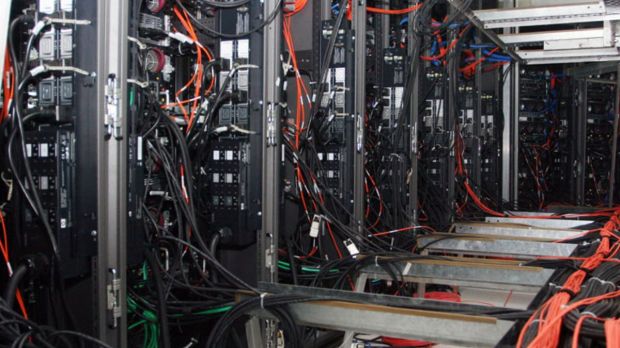
The project received backing from Tata Group chairman Ratan Tata. A prototype developed by Karmarkar was scaled up at Computational Research Laboratories (CRL) in Pune. The machine was name “Eka.”
It was built using dense data-centre layout along with novel network routing technologies. Eka later contributed to applications including work linked to India’s Chandrayaan programme. Dr. Narendra Karmarkar left the Tata Group in July 2007.
Since, he has continued to explore projective-geometry architectures and ideas he terms “sculpturing free space.” By 2016 he was a Distinguished Visiting Professor at IIT Mandi and the Indian Institute of Science, lecturing on “continuum computing,” a mathematical framework he believes can surpass certain limits of conventional machines and, unlike quantum computing, can retain much of its advantage even when simulated on classical hardware.
Why Karmarkar’s work still matters in the AI era
Artificial intelligence has brought optimisation back into the spotlight. Behind many modern computing systems are mathematical processes that help them find better solutions, use fewer resources or make decisions within given limits.
Machine learning uses optimisation to adjust models and improve their performance. Other applications include resource allocation in cloud computing, route planning for logistics networks, and managing the energy consumed by data centres. These systems often need to process large amounts of information while working within practical limits.
However, Karmarkar’s algorithm should not be confused with the methods directly used to train most modern neural networks. Deep-learning models commonly rely on first-order techniques such as stochastic gradient descent.
Karmarkar’s algorithm lies in the broader field of optimisation. Interior-point methods are widely used in linear programming and have been extended to other forms of mathematical optimisation, including quadratic programming, second-order cone programming and semidefinite programming.
Software packages such as CVX, Gurobi, MOSEK and CPLEX, along with open-source alternatives, provide tools for solving these kinds of problems. They draw on decades of research into mathematical optimisation, including the progress that followed Karmarkar’s 1984 work.
Disclaimer: This is an independent profile. As no verifiable contact information for Narendra Karmarkar or their representatives could be established, direct comment could not be sought. Consequently, this article was reported using publicly available records, historical data, and secondary sources. This content was produced in accordance with FinancialExpress.com’s editorial guidelines.