
• English
  • தமிழ்
  • বাংলা
  • മലയാളം
  • ગુજરાતી
  • हिंदी
  • मराठी
  • Business

The Financial Express

  • Whatsapp Whatsapp Link
  • Facebook Facebook Link
  • Twitter Twitter Link
  • Linkedin Linkedin Link
Google News Follow
Watchlist
  • Home
  • Todays Paper
  • Business
  • Markets
  • Market Stats
  • Mutual Funds
  • Money
  • India
  • Tech
  • US News
  • Shorts
  • Defence Stocks
  • Stock Market Today
  • AI Stocks
  • MF Screener
  • Finance Stocks
  • IT Stocks
  • Gold Rate
  • Silver Rate
  • Breakout Stocks
  • Home
  • Market
    • Stock Insights
    • Cryptocurrency
    • IPO News
    • Stock Market Quotes
    • Indices
    • Nifty 50
    • Sensex
    • Top Gainers
    • Top Losers
    • IPO Stats
  • Market Dashboard
  • Commodities
    • Gold Rate in India
    • Silver Rate in India
    • Petrol Rate in India
    • Diesel Rate in India
  • Opportunity Abroad
  • Money
    • Insurance
    • Income Tax
    • Mutual Funds News
    • MF Screener
  • Economy
  • Business
    • Brand Wagon
    • SME
    • Defence
    • Healthcare
  • Industry
    • Banking & Finance
  • India News
  • World News
  • Jobs-Career
  • Infrastructure
    • Railways
    • Aviation
    • Roadways
  • Auto
  • Life
    • Lifestyle
    • Entertainment
    • Technology
    • Travel & Tourism
    • Science
  • Sports
  • Opinion
  • Multimedia
    • Photos
    • Web Stories
  • Events
  • ePaper
  • Today’s Paper
  • About us
  • PRIVACY POLICY
  • TERMS AND CONDITIONS
  • Contact Us

  1. Business News
  2. About
  3. wealth and legacy

Wealth and Legacy

  • Click to share on Twitter (Opens in new window)
  • Click to share on Facebook (Opens in new window)
  • Click to share on WhatsApp (Opens in new window)
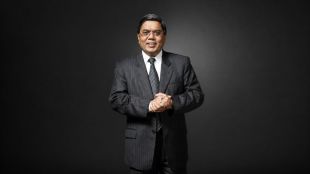
On a humid morning in Rampur, sometime in 1996, Lalit Khaitan stood inside a factory that his family had owned for nearly twenty-five years and realised the business was slowly killing itself. The plant was running. The stills were hot. Trucks were loading. But the money was terrible. Rampur Distillery & Chemical Company was selling bulk Extra Neutral Alcohol to the big boys, the UB Groups and the Shaw Wallaces of the world, and those buyers were squeezing every last paisa out of him. They set the price. He took it. That was the deal. That had always been the deal. He was in his early fifties. His father had bought this plant for ₹16 lakh in 1972, back when it was a loss-making mess that nobody wanted. The family had poured everything into it. And now, after all those years, the business was still just a supplier. Still begging for orders. Still one bad contract away from real trouble. Lalit Khaitan had a choice to make. Keep selling alcohol in steel tankers to people who didn't care whether he lived or died. Or try something that no independent Indian distillery had really done before. Build his own brand. He didn't drink. His family didn't drink. His father G.N. Khaitan was a strict teetotaller from a conservative Marwari background, the kind of family where alcohol was simply not discussed at the dinner table. Lalit himself had only tasted alcohol for the first time at age 29 and that too only because his father had just bought a distillery and he figured he should probably know what the product actually tasted like. But he knew the chemistry. He knew the distillation. He knew the margins. And he knew, with a clarity that must have been almost physical, that the real money in liquor was not in making it. It was in selling it under your own name. That decision, made in the mid-1990s in a dusty Uttar Pradesh factory town, would eventually turn a ₹16 lakh distressed asset into a company worth nearly ₹60,000 crore. It would put a teetotaller on the Forbes billionaires list at age 80. And it would prove that you didn't need to buy brands to build a liquor empire. You could grow them yourself, from nothing, in a country where the rules were stacked against you from day one. ALSO READMeet Lalit Khaitan, the man behind alcohol brands like 8PM whisky, Magic Moments Vodka, Jaisalmer, Rampur… He is India’s newest billionaire at age 80 The boy who wanted to make liquor Lalit Kumar Khaitan was born on June 2, 1943, in Kolkata. His father, Gajanand Khaitan, was a Marwari businessman from a traditional trading family. The Khaitans were not drinkers. This is important. In their world, alcohol was not a business opportunity. It was a moral failing. But something strange happened to Lalit when he was in class 9. He became fascinated by the liquor trade. Not the drinking part. The industrial part. The chemistry of distillation. The economics of supply. The way alcohol moved from factory to bottle to shop to customer. While other boys his age were thinking about cricket or studies or girls, Lalit Khaitan was thinking about fermentation. "From class 9 onwards, I was very clear that I wanted to be in the liquor trade," he told Fortune India years later, in an interview that has been reprinted multiple times since. His family sent him to Mayo College in Ajmer, one of India's oldest and most prestigious boarding schools. Then to St. Xavier's College in Kolkata. Then to BMS College of Engineering in Bengaluru, where he got his Bachelor of Engineering degree. Later, he would do an executive course in managerial finance and accounting from Harvard. He was being trained for business. But not this business. Not the liquor business. That came later, and it came sideways. In 1972, when Lalit was 29, his father G.N. Khaitan did something unexpected. He bought a distillery. Not a good one. Not a profitable one. A loss making, debt burdened, barely functioning plant in Rampur, Uttar Pradesh, that was being sold by industrialist Vishnu Hari Dalmia. The price was ₹16 lakh. The liabilities were significant. The future was uncertain. G.N. Khaitan was not buying a business. He was buying a distressed asset that he believed he could fix. His son would run it. Lalit moved to Rampur. He learned distillation engineering from the inside. He studied chemical formulas. He understood the process of turning molasses  into Extra Neutral Alcohol, the clear, odourless spirit that forms the base of almost every liquor bottle in India. He did all this without drinking a drop. The Teetotaller son of a Teetotaller father was now running a liquor factory. ALSO READSmaller cities to drive alcobev premiumisation The commodity trap For the next two decades, Rampur Distillery did what every other independent distillery in India did. It made bulk alcohol and sold it to the big brands. UB Group. Shaw Wallace. Mohan Meakin. These were the companies with the labels, the distribution networks, the advertising budgets. They bought ENA from suppliers like Rampur, blended it, bottled it, and sold it at prices that were five, ten, twenty times the cost of the raw spirit. The distillery was a B2B supplier in an industry where the real margins sat at the consumer end. Rampur was making the product but capturing almost none of the value. By 1979, the company's total annual turnover was ₹65 lakh. That was it. A single plant in Uttar Pradesh, selling bulk spirit to bigger players, earning thin margins on volume. The business survived, but it didn't grow. It couldn't grow. The model didn't allow it. Lalit Khaitan (Photo: Radico Khaitan) Lalit Khaitan understood this. He had understood it for years. But understanding a problem and being able to fix it are two different things. Building a consumer brand required money he didn't have, distribution networks he didn't control, and marketing expertise his family had never needed. The safe option was to keep supplying. Keep the plant running. Keep the workers paid. Hope for the best. He kept supplying. For twenty years. Until the mid-1990s, when the pressure became unbearable. The problem everyone else accepted The Indian liquor industry in the 1990s was a strange beast. Every state controlled its own alcohol policy. Taxes were high. Regulations were tangled. Distribution was often controlled by state governments. And the market itself was dominated by brown spirits, whisky and rum, consumed mostly by men in lower and middle income groups. White spirits, vodka and gin, were niche products. Expensive. Urban. Almost foreign. Vodka made up a very insignificant portion of total Indian liquor consumption. Nobody in their right mind would build a business around it. The big players, UB and Shaw Wallace, had built their empires on whisky and rum. They bought their ENA from suppliers like Rampur, blended it with flavouring and colouring, and sold it under brand names that everyone knew. McDowell's. Bagpiper. Old Monk. These were the brands that mattered. The fundamental problem that Lalit Khaitan spotted was simple. The distilleries were doing all the hard work and capturing none of the profit. They were manufacturers without brands. Workers without ownership. The value chain was broken, and everyone accepted it because that was how things had always been. But Lalit had a son. Abhishek Khaitan, born in 1973, had grown up around the distillery business. He had seen the contracts. He had seen the margins. And he had an idea that would have seemed insane to anyone else in the industry at the time. Why don't we make our own whisky? ALSO READAlcobev stocks in focus: Jefferies rates Radico Khaitan, Allied Blenders ‘Buy’; ‘Neutral’ on United Spirits The Eureka moment The year was 1997. Abhishek was in his mid-twenties. He had watched his father struggle with the commodity business for years. He had seen the balance sheets. He knew that Rampur Distillery was one bad year away from serious trouble. His proposal was simple but radical. Launch a proprietary whisky brand. Price it in the upper regular segment, above the cheap stuff but below the premium imports. Blend it with a touch of imported Scotch to give it credibility. And use the family's own distillation capacity to keep costs low. The name came easily. 8PM. The time when working India stops working and starts drinking. Lalit listened. He thought. And then he made the call that would define the rest of his life. The family committed its working capital to the launch. Industry observers thought they were crazy. An independent distillery, with no brand experience, no marketing muscle, no distribution network beyond bulk tanker sales, was going to compete with UB and Shaw Wallace in their own backyard? With what money? With what expertise? With guts, mostly. And with a factory that could produce the spirit at cost. One Million cases in year one 8PM launched in 1998. The price point was smart. The quality was decent. The distribution started in the Canteen Stores Department, the armed forces canteen network that was a reliable and profitable channel for any new liquor brand. From there, it spread to state retail networks in North India. The response was immediate. 8PM sold one million cases in its first twelve months. One million. In a market where established brands took years to reach that level, a brand new whisky from an unknown Uttar Pradesh distillery had done it in a year. It entered the Limca Book of Records. Not as a gimmick. As a genuine business achievement. No Indian liquor brand had ever sold a million cases in its debut year. The significance went beyond the numbers. 8PM proved that an independent distillery could launch, market, and distribute a consumer brand without relying on multinational partnerships or acquisitions. It proved that the Khaitans could be more than suppliers. They could be brand owners. The revenue started to shift. Instead of selling ENA in tankers at thin margins, Rampur was now selling bottled whisky at retail prices. The difference in profitability was enormous. The company was still small by industry standards, but the direction was clear. Ahead of the launch of its flagship 8PM whisky in 1998, Rampur Distillery & Chemical Company adopted the name Radico Khaitan, marking a new chapter in its journey. The name change mattered. It signalled that the company was no longer just a distillery. It was a brand house. The bet that changed everything If 8PM was the breakthrough, Magic Moments was the bet that changed the trajectory of the entire company. In 2005, Abhishek Khaitan proposed something that made 8PM look like a conservative decision. He wanted to launch a vodka brand. Vodka. In India. In 2005. The category didn't exist. Vodka was less than 2% of the Indian liquor market. It was seen as a foreign drink, consumed by a tiny urban elite who ordered it in five-star hotel bars. No Indian company had tried to build a domestic vodka brand at scale. The big players weren't interested. The market was too small, too niche, too uncertain. Vodka before its time Abhishek saw something different. He saw changing lifestyles. Young Indians with disposable income. Urban professionals who wanted to drink something lighter, something that didn't smell on their breath the next morning, something that mixed well with juices and sodas and felt modern. He saw a category that didn't exist yet but was about to explode. The investment was significant. Multi crore spending on imported frosted glass bottle tooling. A distinctive guitar shaped window in the bottle design. Direct printing technology that was new to Indian spirits packaging. Specialized grain distillation infrastructure to produce the clean, neutral spirit that vodka demanded. Industry analysts were sceptical. Why invest so much in a category that barely existed? Why not focus on whisky, where the volume was? The answer, again, was backward integration. Radico made its own ENA. It controlled the supply chain from grain to bottle. It could produce vodka at a cost that competitors couldn't match. And if the category grew, Radico would be positioned to dominate it. Magic Moments launched in 2006 The frosted bottle with the guitar shaped window stood out on shelves. The branding was modern, youthful, aspirational. It didn't feel like an Indian liquor brand. It felt like something from a global playbook. Abhishek Khaitan (Photo: Radico Khaitan) The category grew. Faster than anyone expected. And Magic Moments grew with it. Today, Magic Moments commands more than 60% of the Indian vodka market. Sixty percent. In a category that barely existed twenty years ago. The brand sells millions of cases every quarter. In Q1 FY27 alone, the Magic Moments franchise moved 3.25 million cases, up 43% year on year. The sceptics were wrong. The bet paid off. And Radico Khaitan became the company that defined Indian vodka. The Comeback The architects of Radico's turnaround were father and son. Lalit Khaitan brought the financial discipline, the conservative Marwari approach to money, the ability to stretch every rupee. Abhishek Khaitan brought the brand vision, the consumer insight, the willingness to bet big on categories that didn't exist yet. The strategy had three parts. First, shift from contract manufacturing to consumer branding. Stop selling ENA to competitors. Start selling bottled spirits under your own name. Second, leverage backward integration. Radico made its own ENA. It controlled the supply chain from raw grain to finished bottle. This meant lower costs, better quality control, and margins that competitors couldn't match. Third, premiumise. Move up the value chain. Launch brands in the Prestige & Above category, where margins were higher and growth was faster. Magic Moments and Morpheus Brandy were the early bets. Rampur Single Malt and Jaisalmer Gin would come later. The results speak for themselves. Key numbers #NumberWhat It Tells Us1₹1.6 million (₹16 lakh)Price paid for the Rampur plant in 1972. The branded launch used internal cash, amount not disclosed224Abhishek's age when the branded business began in 199738 PM Whisky, Rampur, 1998First product, bottled on basic Italian machines41 million cases8 PM's first-year sales, a Limca Book entry per the company5₹6,050.43 croreFY2026 net revenue, the highest reported6₹850+ croreSitapur plant capex. No acquisition or fundraise is reported7₹737.1 croreDebt at the March 20248₹600.3 croreFY2026 net profit, nearly three times FY2023's9₹60,000 croreMarket capitalisation today The Company Today Radico Khaitan today is not the company it was in 1998. It is not even the company it was in 2018. For the financial year ended March 2026, the company reported net revenue from operations of ₹6,050.4 crore, up 24.7% year on year. EBITDA crossed ₹1,000 crore for the first time, reaching ₹1,018.5 crore, up 52.4%. Profit after tax stood at ₹600.3 crore, up 75.9%. The market capitalisation as of September 2026 is approximately ₹59,756 crore to ₹60,766 crore, roughly $7.2 billion. The stock trades at 4,562 when I’m writing this. The business mix has shifted dramatically. As per FY26 Q1 numbers, Prestige & Above spirits now account for 76.8% of total IMFL revenue. The luxury segment, Rampur Single Malt, Jaisalmer Indian Craft Gin, Magic Moments Dazzle, is the fastest growing part of the business. After Dark Blue Whisky, a relatively new brand, saw volume grow over 60% in FY26 to 3.1 million cases. The company operates two primary owned distilleries in Rampur and Sitapur, both in Uttar Pradesh. It has a joint venture distillation plant in Aurangabad, Maharashtra, where it holds a 36% stake. It runs 42 bottling plants across India. It exports to over 100+ countries. Net debt as of Q1 FY27 stood at ₹106.1 crore, down ₹138 crore during the quarter alone. The company is guiding towards net debt free status in FY2027. The biggest competitor is United Spirits Limited, the Diageo controlled giant that dominates the Indian whisky market. But in vodka, Radico is the undisputed leader. In luxury gin, Jaisalmer commands roughly 50% of the craft gin category. ALSO READHe lost his career for telling the truth. Then he built one of India’s most trusted business empires What Radico Khaitan really built Radico Khaitan changed the Indian liquor industry in three fundamental ways. First, it democratised white spirits. Before Magic Moments, vodka in India was an imported luxury, consumed by a tiny elite. Radico proved that an Indian brand could dominate the category, make it accessible, and grow the market from almost nothing to millions of cases a year. Second, it proved that Indian distilleries could build luxury brands. Rampur Single Malt and Jaisalmer Indian Craft Gin are not budget products. They compete with international brands at premium price points. They have won awards at global competitions. They demonstrate that Indian spirits can stand alongside Scottish whiskies and London gins. Third, it created a model for organic brand building that the rest of the industry is still trying to replicate. While competitors acquired brands to fill portfolio gaps, Radico built everything in house. All eight of its millionaire brands, 8PM, Magic Moments, Morpheus, Old Admiral, Contessa, Rampur Single Malt, Jaisalmer Gin, and 1965 Spirit of Victory, were created from scratch. No acquisitions. No borrowed equity. Just patient capital and brand vision. The industry today is different because Radico Khaitan exists. White spirits are a mainstream category. Premium Indian brands compete with global giants. Independent distilleries know they don't have to accept the commodity trap. There is another way. The next generation Dr. Lalit Khaitan continues as Chairman and Managing Director at age 83. His son Abhishek Khaitan, leads the company as Managing Director. Rather than following a path laid out for him, Abhishek has forged his own way, building the expertise and leadership skills needed to steer the business forward and shape its next phase of growth. The transition has been smooth, structured, and free of the public disputes that have plagued so many Indian family businesses. The Khaitan family holds approximately 40% of the company's equity. As of the time of writing, domestic institutional investors hold around 28.1% of the company, while foreign institutional investors hold approximately 18.2%. The company’s experienced leadership team includes Dilip Banthiya (Chief Financial Officer), Dinesh Gupta (Senior Vice President), Sanjeev Banga (President, International Business), Kunal Madan (Chief Marketing Officer), and Sudhir Upadhaya (Chief Sales Officer), several of whom have been associated with the company for over 15 years. The company has professionalised without losing the family character. Lalit provides the strategic oversight and financial discipline. Abhishek drives the brand and growth agenda. The combination works. The last word The story of Radico Khaitan is ultimately not just about one man. Lalit Khaitan had the courage to walk away from the commodity trap and the discipline to build patiently for decades. But Abhishek Khaitan gave that foundation a new direction. From the decision to build 8PM to the audacious bet on Magic Moments when vodka was barely a market in India, he saw opportunities where others saw risk. Father and son brought two very different strengths to the same table: Lalit’s patience, financial discipline and long-term thinking, and Abhishek’s instinct for brands, consumers and the next big opportunity. That combination turned a ₹16 lakh distressed distillery into a ₹60,000 crore liquor empire. Lalit built the foundation. Abhishek helped turn it into the company it is today. And perhaps that is the most remarkable part of the Radico story: it wasn’t simply inherited wealth being passed from one generation to another. It was a business rebuilt, bottle by bottle, by two generations who dared to think differently.
From ₹16 lakh to ₹60,000 crore: How this teetotaller family built a liquor empire

A teetotaller Marwari family bought a dying Uttar Pradesh distillery for ₹16 lakh. Fifty years later, it dominates 60% of…

October 11, 2026 09:00 IST
Raj Reddy profile
Barefoot boy from Andhra who helped pave the way for Siri, Alexa and modern voice assistants

From a humble farming village in Andhra Pradesh to winning the ACM Turing Award, Raj Reddy pioneered speech recognition systems…

Updated: October 9, 2026 09:36 IST
7 wealth lessons from Sunil Gavaskar: How he turned 34 Test centuries into a ₹257 crore legacy

Before he scored 10,122 Test runs, Sunil Gavaskar was almost lost in a hospital mix-up. Decades later, I found out…

October 6, 2026 05:30 IST
How Leander Paes turned injuries, rivalries and 30 years of tennis into a Rs 80 cr empire

Leander Paes spent 30 years proving doctors wrong, outlasting partners who betrayed him, and building a fortune that has nothing…

Updated: September 26, 2026 11:06 IST
Holck-Larsen chased risk the way some people chase weather, while Toubro moved carefully and thought twice before committing to anything.
Two Danish engineers, one desk and Rs 20,000: The making of a $55 billion Indian giant

Discover the inspiring journey of Larsen & Toubro, from a modest start with Rs 20,000 and a shared desk to…

September 20, 2026 09:00 IST
"My father didn't think I would amount to much," Rekhi says today, with no detectable grievance ( Kanwal Rekhi.com)
Written off at home, he left India with $8 and became Silicon Valley’s Indian mentor 

From being written off by his father to arriving in America with just $8, Kanwal Rekhi built Excelan, became Novell’s…

Updated: September 21, 2026 12:31 IST
Left to Right: J.C.Mahindra, Malik Ghulam Muhammad, K.C.Mahindra (Source: Mahindra and Wikipedia)
The ‘third’ founder of the Mahindra empire that almost no one talks about

Discover the story of Mahindra & Mohammed, which evolved from steel trading to assembling Jeeps during India’s partition, overcoming political…

September 13, 2026 09:00 IST
Jay Chaudhry billionaire
From village boy to cyber billionaire: The Indian-American who turned $200 into $9.3 bn

From a small Himalayan village to US tech billionaire, Jay Chaudhry’s journey showcases the transformative power of education, hard work,…

Updated: September 20, 2026 07:29 IST
Two very different worlds shaped his early years. He studied Sanskrit under the scholar Durga Prasad Shastri in Kolkata.
How a 24-year-old defied the Licence Raj to lay the foundation for a $120+ billion global giant

Aditya Vikram Birla, an MIT-trained industrialist, pioneered Indian overseas expansion with 19 factories before economic liberalization, diversifying industries and building…

September 6, 2026 09:00 IST
Nine Nobel Nominations, no Nobel: How an Indian physicist changed modern physics—while others got the credit

From a small town in Kerala to the frontiers of physics, Prof. E.C.G. Sudarshan’s lifelong pursuit of knowledge reshaped our…

September 4, 2026 05:26 IST
Dr Amar Bose
A freedom fighter’s son went from fixing radios at 13 to becoming a billionaire 

Discover the inspiring journey of Amar Bose, from his refugee roots and teenage radio repair business to founding Bose Corporation…

August 29, 2026 08:10 IST
How a Gujarati farmer became America’s first motel king— and built an industry 

Discover the untold story of Gujarati Patels who built America’s motel empire, transforming roadside motels into a $51 billion industry…

Updated: September 21, 2026 12:31 IST
Tanti went on to study commerce and mechanical engineering.
How a textile mill owner bought 2 wind turbines and built India’s biggest wind energy company

Discover the rise and challenges of Suzlon Energy, founded by Gujarat businessman Tulsi Tanti, from humble beginnings to global wind…

August 9, 2026 09:00 IST
He recalled with a smile about his father’s strict demeanour and his mother’s mild nature that in many ways became the foundation of his personality.
He earned Rs 350 a month. Years later, this repairman built a Rs 800 crore cybersecurity company.

Discover the inspiring journey of Kailash Katkar from humble beginnings in Pune to founding Quick Heal Technologies, a leading name…

July 26, 2026 09:30 IST
Vinod Dham, Father of Pentium Chip
From a partition family to Silicon Valley legend: The Indian engineer who arrived in US with $8

Vinod Dham, known as the Father of the Pentium, revolutionized the semiconductor industry with groundbreaking innovations at Intel and AMD.…

Updated: September 21, 2026 12:27 IST
Narinder Singh Kapany
How a village boy from Punjab helped build the backbone of modern AI era

The AI boom is driving a massive demand for glass fibre, essential for data centers and global communications. This technology…

June 26, 2026 12:06 IST
Desai personally reviewed every watch design before production, scrutinising geometry, proportions, colours and finishes with obsessive attention. (Source: Titan Archives)
From Taj to Titan: The Tata man who redesigned Indian consumer culture

Discover the untold story of Xerxes Desai, the visionary behind Titan Watches, who transformed India’s watch industry through innovation, perseverance,…

June 9, 2026 16:55 IST
Meet India's first family of Chess: Father who never watched, mother who can't name the pieces, two grandmasters
Meet India’s first family of Chess: Father who never watched, mother who can’t name the pieces, two grandmasters

His father almost ended his career at ten. A cement company saved it. Now the Adani Group, Indian Oil, and…

June 9, 2026 05:30 IST
  • Next »

Related News

Thane, Mumbai, Roadways, Airoli–Katai Naka flyover, MMRDA
Thane–Navi Mumbai travel time to cut by 40 mins as Airoli–Katai Naka flyover nears opening

US work permit, US work permit denied, Work visa denied, USCIS denials, Green Card work permits, H-1B visa, I-765 applications, employment authorization document, Green Card backlog, immigration processing times, USCIS approval rates, Work permits for asylum applicants, USCIS data
35,767 Green Card applicants’ work permits denied, rejection rate jumps to 44%: USCIS data
India imports about 18%-20% of its annual pulse consumption—tur, urad, masoor (lentils), yellow peas and Bengal gram – from Canada, Russia, Brazil, Myanmar and Africa.
No plan to reduce import duties on pulses: Official

Jefferies has assigned Buy ratings to Can Fin Homes, Adani Green Energy and Poonawalla Fincorp, citing potential upside of 28% to 50%.
3 ‘Buy’ recommendations by Jefferies with 28% to 50% upside

Kolkata-Metro
Kolkata Metro Orange Line: New timings from Oct 13 — What commuters need to know
shorts
RBI measures aims to curb speculative activity, one-sided bets: Governor
Business

RBI Governor Sanjay Malhotra said nearly one-third of foreign-exchange trades were cancelled on the day they began, suggesting speculation rather than genuine hedging. The RBI has tightened rules to curb one-sided bets, including restricting derivative trades and rebooking, but says the measures are not capital controls and aim to ensure orderly markets—not defend a rupee level.

View all shorts

Trending Topics

defence stocks
Gold rate today
Silver rate today
AI stocks
mutual funds
semiconductor stocks

Top Categories
  • Market
  • India News
  • Stock Insights
  • Money
  • Opportunities Abroad
  • World News
  • Latest News
  • Technology
  • ITR Guide
  • Money Insights
Stock Screeners
  • Stock Screener
  • Break Out Stocks
  • Defence Stocks
  • Consistently Growing Stocks
  • Low Price Blue Chip Stocks
Top NSE/BSE Companies Share Price
  • Tata Motors share price
  • Tata Steel share price
  • State Bank Of India share price
  • HDFC Bank share price
  • Infosys share price
  • ITC share price
  • Wipro share price
  • NTPC share price
  • ongc share price
  • Adani Enterprises share price
  • Adani Ports and Special Economic Zone share price
  • Bharat Petroleum Corporation share price
  • Coal India share price
  • Bajaj Finance share price
  • ICICI Bank share price
  • Titan Company share price
  • Larsen & Toubro share price
  • Power Grid Corporation Of India share price
  • Asian Paints share price
Gold Price in Top Metro Cities
  • Gold Rate Today
  • Gold Rate in Dubai
  • Gold Rate in Chennai
  • Gold Rate in Kerala
  • Gold Rate in Hyderabad
  • Gold Rate in Bangalore
  • Gold Rate in Mumbai
  • Gold Rate in Noida
  • Gold Price in Delhi
  • Gold Price in Ahmedabad
  • Gold Price in Kolkata
Latest News
  • Anthropic warns small AI models may soon self-replicate on smart home devices without data centres
  • RBI measures aims to curb speculative activity, one-sided bets: Governor
  • Explainer| The excess-capacity debate: What it means for India
  • Fusion CX IPO: GMP, price band of Rs 702 crore issue in focus
  • Welspun Corp to JSW Steel: Jefferies’ top metal picks for Q2
Follow Us
  • Facebook Facebook Link
  • Twitter Twitter Link
  • Linkedin Linkedin Link
Download Apps
  • Play_stor Play_stor Link
  • Apple_stor Apple_stor Link
Indian Express Group
  • INDIAN EXPRESS GROUP
  • The Indian Express
  • Loksatta
  • Jansatta
  • Inuth
  • Ramnath Goenka Awards
  • Indian Express Hindi
  • IE Tamil
  • IE Malayalam
  • IE Bangla
  • IE Gujarati
  • Express Tributes
  • This website follows the DNPA’s code of conduct
Quick Links
  • T&C
  • Privacy Policy
  • CONTACT US
  • About Us
Copyright © 2026 The Indian Express [P] Ltd. All Rights Reserved
Market Pulse