


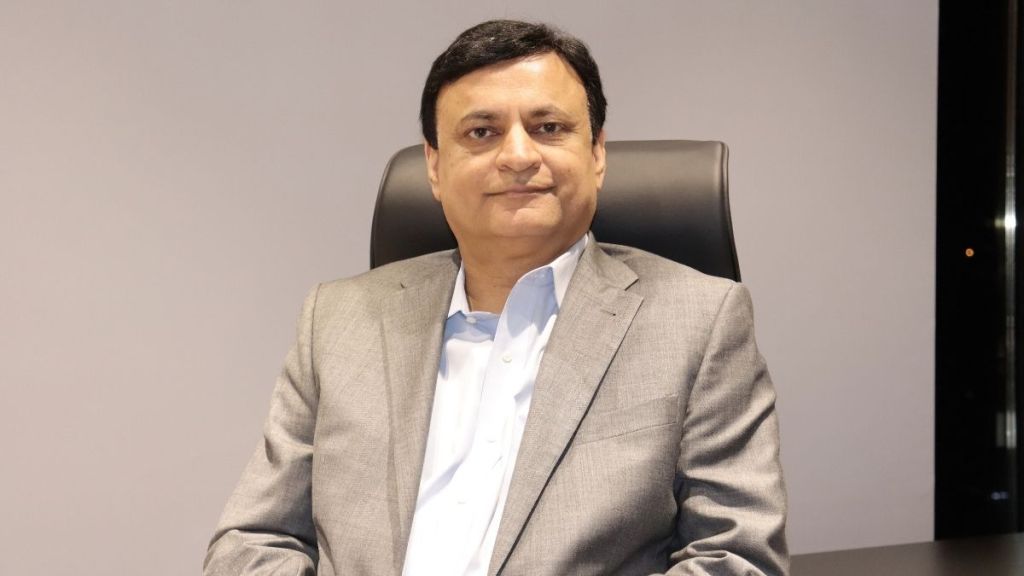

Raj Sardana came to the US from Delhi with just $100 and went from washing dishes at a Georgia Tech cafeteria to building a multi-billion-dollar business. Sardana’s journey from engineer to entrepreneur was shaped by several turns. He nearly returned to India after running out of money during his studies. Years later, losing his engineering job pushed him to put $25,000 of his savings into a small print shop.
Sardana is the founder of Innova Solutions, a technology and digital-transformation company he describes as a multi-billion-dollar business. Over the years, the company has moved from technology staffing into broader technology services, while Sardana has increasingly focused on artificial intelligence and how businesses can adapt to it.
From Delhi to Georgia Tech
Sardana grew up in Delhi in a family that had rebuilt its life after Partition. His parents had limited resources, but education remained a priority. “They believed that education was the one thing nobody could take away from you,” Sardana says.
His parents’ focus on his education eventually took him to the US, where he pursued a master’s degree at Georgia Tech. That move brought opportunity, but also an immediate financial challenge.
Arriving in US with $100
Sardana arrived in the US in 1981 with $100 and no established network.
While studying at Georgia Tech, he worked in the university cafeteria, washing dishes and mopping floors to support himself. At one point, he ran out of money and was considering returning to India.
Sardana told Financial Express Digital that a professor, William Black, noticed his academic performance and financial situation and offered him a research assistantship.
“What stayed with me was not just financial assistance. It was the understanding that help extended at the right moment can change the course of someone’s life,” he says.
That experience would remain important to Sardana as his career developed, particularly in how he thought about education and giving others opportunities.
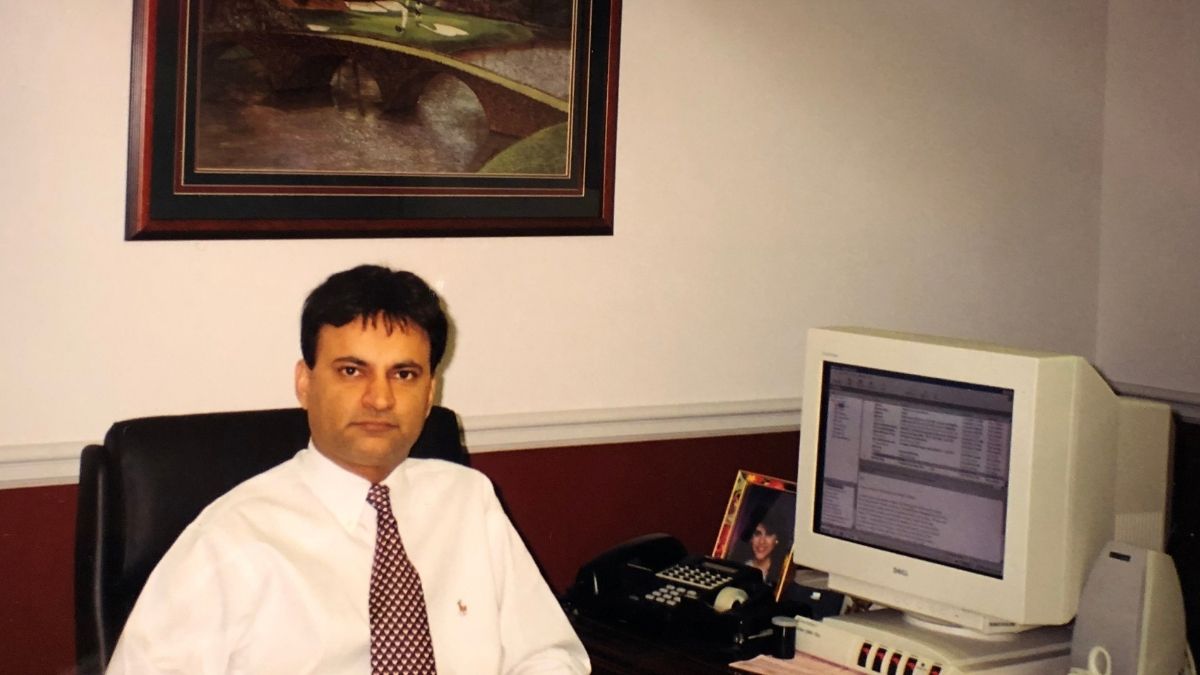
$25,000 print-shop bet
After completing his education, Sardana built a career in engineering. But when the Cold War ended, he lost his job at Teledyne CAE. He had a mortgage, a six-month-old daughter and his parents living with him.
Finding another engineering job would have been the conventional choice. Instead, Sardana decided to try something of his own.
He used about $25,000 of his savings to buy a small print shop in Georgia. “I decided that if I was going to take a risk, I would rather take it on myself,” Sardana says.
The business was not the technology company he would eventually build. But it gave Sardana his first experience of running a business and learning through trial and error. “I learned most of what I did through trial and error,” he says.
The Y2K near-miss
In 1998, Sardana founded ACS, which began as a staffing business connecting US companies with technology professionals.
The timing appeared favourable. Companies were preparing for the Y2K computer problem and demand for technology talent was rising.
But Sardana’s expectations about how long that opportunity would last proved wrong.
The year 2000 passed without the widespread technology disruption many had feared. Soon after, the technology bubble burst, putting additional pressure on the young business.
“There were moments when I genuinely did not know whether the company would survive,” Sardana says.
The experience forced the company to look beyond the immediate opportunity and find new markets, including defence, financial services and healthcare.
For Sardana, the important point was not that his initial judgment had been completely wrong. He had identified a genuine demand for technology talent, but had misjudged the circumstances around it.
“Success is not about always being right. It is about adapting when you are wrong,” he says. That idea would become a recurring theme in the company’s evolution.
From staffing to AI
ACS eventually evolved into what Sardana describes today as Innova Solutions, expanding beyond staffing into technology and digital-transformation services.
The company’s evolution has followed changes in the technology industry and the needs of its clients.
Sardana says that experience reinforced his belief that businesses cannot remain attached to one model simply because it worked in the past. That thinking now extends to artificial intelligence.
Innova has launched AIFICIENT, a company initiative focused on helping enterprises apply AI to business operations and move from AI investment towards measurable outcomes.
Sardana sees AI as a major technological shift. “I see AI as one of the most significant opportunities of our generation, potentially as transformative as the internet itself,” he says.
But he does not believe simply adopting AI guarantees results.
The challenge, in his view, is figuring out where AI can create measurable value while maintaining human judgment, accountability and responsible implementation. “I do not believe the greatest threat is AI itself. The greater threat is failing to evolve,” he says.
Building with family
As the company grew, Sardana’s children also became involved in the business. Sardana says Sonia, Shivani and Rajan have contributed in different ways and brought their own perspectives to the organisation.
For him, family involvement is not simply about succession. He says the next generation also needs to understand the work and responsibility involved in sustaining a business. “There are no shortcuts to lasting success,” he says.
He also sees leadership as extending beyond financial performance. “Success also brings a duty to others,” Sardana says.
Giving back
Sardana’s approach to giving back is partly rooted in his own experience as a student who once depended on help from others.
He and his wife, Nita, established the Innova Foundation, which supports initiatives in areas including education, workforce development and women’s empowerment in the US and India.
Sardana says the foundation’s work reflects a belief that businesses can create opportunities beyond their own employees and customers. “None of us succeeds entirely on our own,” he says.
His own experience shaped that belief. A professor once helped him continue his education when he was running out of money. Years later, he says he wants to create similar opportunities for others.
The long lesson: Adapt or fail
Sardana’s career has passed through several very different businesses – engineering, a small print shop, technology staffing, digital transformation and now AI.
Not every bet worked as expected. The Y2K opportunity did not develop as he had anticipated, and the technology downturn tested whether his young company could survive.
But those experiences also shaped how he approaches the next technological shift.
The same person who once needed a professor’s help to remain at Georgia Tech now leads a business that is betting on AI while funding programmes intended to create opportunities for others.
For Sardana, the connecting thread is not a single business idea or technology. It is the willingness to change when circumstances change.
“Success is not about always being right. It is about adapting when you are wrong,” he says.
His journey started with $100 in America and a $25,000 bet on a small print shop. Today, he is focused on helping businesses adapt to the next wave of technology.