


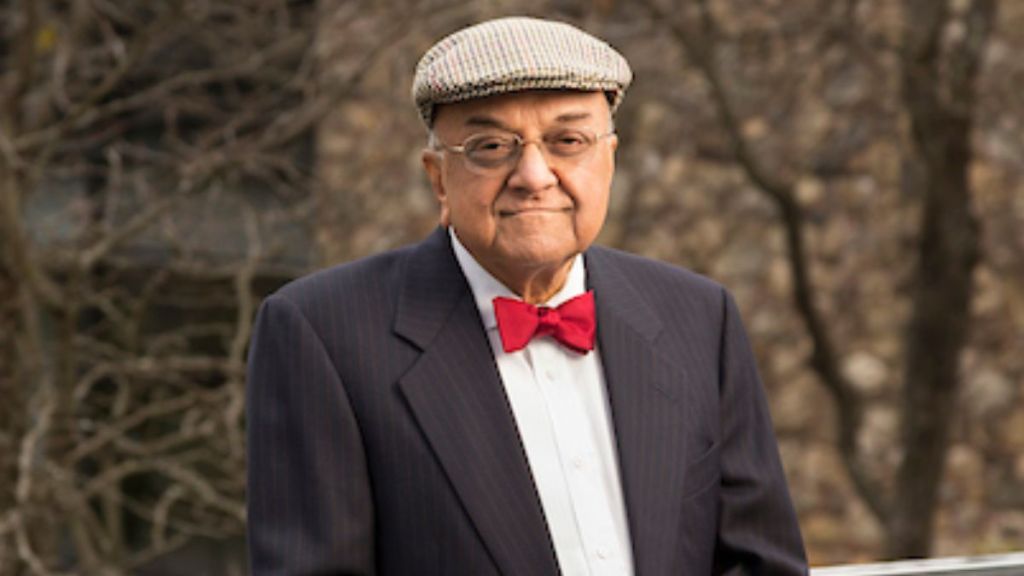

When Rangaswamy Srinivasan handed his laser breakthrough over to IBM, he received roughly $10,000. IBM later sold the patents for $15 million. Years later, the chemist did not complain about the deal. “Between money and recognition, it was always the recognition,” Srinivasan told The Times of India.
Recognition came slowly. In 2012, when former US President Barack Obama nominated him for the National Medal of Technology and Innovation, Srinivasan was 83 and living in New York. He took the news with a chuckle. “The only way for a scientist to become famous is continue living long enough,” he said. “You know they don’t award Nobel Prizes to dead people.”
Behind the joke was a remarkable scientific achievement. Srinivasan is known as the father of LASIK surgery, a procedure that has helped millions of people reduce their dependence on glasses and contact lenses.
His discovery began with a piece of turkey cartilage, new equipment in a laboratory and his curiosity about light. For much of his career, he was known mainly among a small group of photochemists who admired his research and his love for wine.
A boy from Madras with a passion for chemistry
Rangaswamy Srinivasan was born in Madras, now Chennai, on February 28, 1929. He studied science at the University of Madras, completing his bachelor’s degree with honours in 1949 and his master’s degree in 1950. His studies in chemistry and physical chemistry prepared him for a career researching how molecules behave.
In 1953, he moved to the United States to pursue higher studies at the University of Southern California. He worked with chemical kineticist Sidney W. Benson and completed his doctorate in physical chemistry in 1956. His research focused on proteins. During this period, he also developed an interest in photochemistry, the study of how light causes chemical reactions.
Two famous laboratories and an important invention
Srinivasan continued his research through two postdoctoral positions. He spent two years at the California Institute of Technology working with Linus Pauling. He then joined the University of Rochester, where he worked with W. A. Noyes Jr. from 1957 to 1961.
During these years, Srinivasan published his first 15 independent research papers on photochemistry, 13 of them as the sole author. He also invented the Rayonet Photochemical Reactor, a device used to carry out chemical reactions with light.
While working far from home, he was steadily building the knowledge and tools that would later support his most important discovery.
Building a career at IBM
In 1961, Srinivasan joined the research staff at IBM’s Thomas J. Watson Research Center in Yorktown Heights, New York. He was promoted within a few years and began managing research into fundamental photochemistry.
In 1966, he left IBM temporarily to teach at Ohio State University as an associate professor of chemistry. He was soon promoted to full professor. He returned to IBM in 1967 and continued working there until his retirement. He also received a Guggenheim Fellowship in 1965 and 1966.
His early research focused on how light affects organic molecules. He studied several important photochemical reactions, including the Norrish Type I and Type II reactions of alkanones and changes in the structure of conjugated dienes and trienes.
His work helped scientists better understand how molecules change when exposed to light. In the early 1970s, he expanded his research to chemical reactions in liquids and solids. He also discovered several laser dyes that work with short-wavelength light between 400 and 460 nanometres. These dyes continue to be used today.
At IBM, Srinivasan studied how ultraviolet light affects organic materials. His research covered small molecules as well as synthetic polymers used in making computer chips.
In 1977, he published the first paper in a series titled “Organic Photochemistry with 6.7 eV Photons”. The papers explored how far-ultraviolet light interacts with molecules. Over the next six years, he published around two dozen papers in the series, working with Karen H. Brown, whom fellow chemist William J. Leigh identifies as his wife. Leigh described Srinivasan as one of the true pioneers of photochemistry. His biggest discovery, however, was still ahead.
The cold flame that changed everything
The arrival of ultraviolet excimer lasers in 1980 opened a new area of research. Early in 1981, Srinivasan received one at IBM. He planned to use it as a source of far-ultraviolet light for studying small molecules.
IBM asked three researchers to explore the machine’s potential. Srinivasan was the photochemist, Samuel Blum was the materials scientist and James J. Wynne was the physicist who managed their group.
The laser produced powerful pulses of ultraviolet light using a mixture of reactive and inert gases. Soon after switching it on, Srinivasan noticed something unusual. A bright, cold-looking flame appeared when the focused beam struck polymers, materials made of long chains of molecules.
He first tested the effect on his own thumbnail. He then tried it on other polymers. This led to a technique called ablative photodecomposition. which Srinivasan named APD. The process used ultraviolet light to remove extremely thin layers of material.
The team discovered that the laser could etch detailed patterns into polymers. The computer industry later used this technique to drill circuit boards and inkjet printer nozzles.
The researchers then began considering a more ambitious possibility. Human skin and other tissues share some properties with polymers. Could the same laser cut biological tissue precisely without damaging the surrounding area? If it could, the technique might allow wounds to heal with less scarring.
The day after Thanksgiving
The team needed a suitable material to test the laser on. They considered using goldfish tails and meat from the IBM cafeteria, but neither option worked well.
Then, during Thanksgiving dinner in 1981, Srinivasan looked at the turkey on his plate and had an idea. A piece of leftover bone with cartilage could be the perfect test material. The cartilage was smooth and uniform, making it easier to identify damage caused by the laser.
The next day, November 27, he took the leftovers to work. Wynne later recalled the experiment on IBM’s website. Srinivasan used the excimer laser at 193 nanometres to etch patterns into the bone, cartilage and meat samples.
“I had this moment of eureka, we have a new form of surgery!” Wynne told to IBM team describing a cut with “no evidence of damage to the surrounding tissue.”
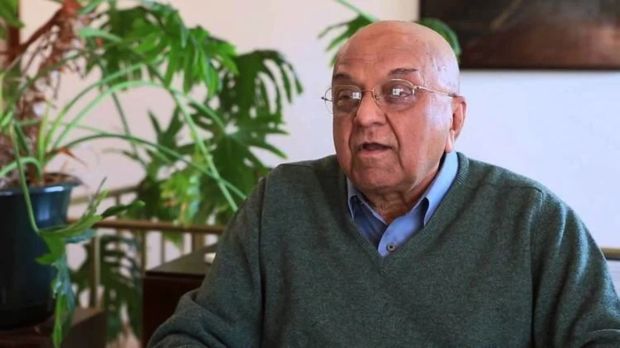
When the team examined the cartilage under an optical microscope, they found that the laser had created a clean cut. Further experiments helped them understand how many laser pulses were needed, how much energy was required and how the surrounding tissue responded.
Existing laser surgery methods relied mainly on heat, which could damage nearby tissue. The ultraviolet laser worked differently. Its light broke chemical bonds and removed thin layers of tissue without generating the same level of heat.
The researchers compared the excimer laser with a conventional green laser. The green laser left rough cuts and charred the surrounding material. The excimer laser produced clean, precise cuts.
Srinivasan explained the difference, “That’s why it has this precision, because light can be focused.” To demonstrate the technique to the medical community, the team used short pulses of ultraviolet light to cut a pattern into a human hair without burning it. They soon began discussing possible applications in brain surgery, orthopaedics, dermatology and dentistry.
Their work led to US Patent No. 4,784,135, titled “Far Ultraviolet Surgical and Dental Procedures”. The patent described a method of removing selected areas of biological tissue using ultraviolet light below 200 nanometres. It was issued on November 15, 1988, to Blum, Srinivasan and Wynne. Their application had been filed on December 9, 1982.
From a turkey bone to the human eye
In the early 1980s, correcting vision through surgery was still difficult. Traditional procedures used surgical instruments to reshape the cornea, the transparent front part of the eye. These methods could be imprecise, required long recovery periods and sometimes weakened the cornea permanently.
Scientists and surgeons had been exploring ways to reshape the cornea for decades. In the late 1940s, Father Waclaw Szuniewicz began experimenting with the idea. In the early 1960s, José Ignacio Barraquer introduced a procedure called keratomileusis, a term derived from Greek that means “sculptured cornea”. It involved removing a disc of corneal tissue, reshaping it and placing it back.
In the 1970s, Soviet surgeon Slava Fyodorov developed radial keratotomy, which involved making a series of cuts in the cornea to correct vision. However, some patients later developed farsightedness.
In 1983, ophthalmologist Stephen Trokel of Columbia Presbyterian Medical Center recognised that IBM’s laser research could be applied to eye surgery. He approached Srinivasan about using APD to reshape the cornea.
Trokel visited IBM’s research centre and worked with Srinivasan and researcher Bodil Braren. In December 1983, the three published a paper describing how the technique could reshape the cornea to treat myopia, or nearsightedness, and hyperopia, or farsightedness.
Their research contributed to the development of LASIK, a procedure that reshapes the cornea to correct myopia, hyperopia and astigmatism, a condition that causes blurred or distorted vision.
The journey from laboratory research to medical treatment took several years. Trokel performed the first laser surgery for vision correction on a German patient in 1988. In 1995, the US Food and Drug Administration approved the first commercial excimer laser system for refractive surgery. LASIK itself received approval in 1999.
The procedure offered a more precise and comparatively affordable alternative to several older methods of vision correction. The technology also found applications in dentistry.
The number of people who have benefited from LASIK is enormous, although estimates vary. A news report published around the time Srinivasan received his medal put the worldwide figure at about 25 million. The National Inventors Hall of Fame later reported that more than 40 million people had benefited from his work. IP Watchdog estimated that more than 16 million procedures had been performed in the United States alone.
The FDA’s most comprehensive study found that about 95 per cent of respondents achieved 20/20 vision or better. The study also found that complaints about ghosting and halos decreased after the procedure.
Srinivasan was amazed by how far the discovery had travelled. “The turkey experiment was in 1981, and you are now talking of millions of people being affected,” he told TOI.
His work improved people’s vision and helped them become more independent. It also created new opportunities in medicine and technology.
Other procedures based on related principles followed, including photorefractive keratectomy (PRK), laser epithelial keratomileusis (LASEK) and Epi-LASIK. Researchers continue to develop techniques aimed at treating age-related vision problems, reducing recovery time and improving surgical results.
Who invented LASIK?
The question of who deserves credit for LASIK has been debated for years. Many accounts identify Trokel as its inventor, while others highlight Srinivasan’s role in developing the laser technology that made the procedure possible.
The patent records add to the debate. Trokel’s US Patent No. 4,638,801, titled “Laser Ophthalmic Surgical System”, was issued on January 27, 1987. It has a lower patent number than the IBM team’s patent.
However, patent numbers alone do not establish who filed an application first. According to IP Watchdog, the IBM team’s application was filed on December 9, 1982, while Trokel’s application was filed on July 6, 1983. The IBM team therefore filed its application earlier. Trokel shared his patent with Richard T. Daly.
The legal dispute also matters. In 1992, Trokel filed an application claiming a LASIK technique as his sole invention. In 2000, an International Trade Commission ruling declared the claim invalid, finding that Srinivasan should have been included.
The specific LASIK method of lifting a thin layer of the cornea, reshaping the tissue underneath with a laser and replacing the layer is covered by a patent held by Gholam A. Peyman of Chicago. His US Patent No. 4,840,175 was issued on June 20, 1989.
IP Watchdog has argued that Trokel and Daly’s absence from the National Inventors Hall of Fame may be an oversight. It has also pointed out that revolutionary inventions rarely come from one person alone. They often depend on the work of several scientists, engineers and researchers.
Srinivasan’s contribution was central to the development of ultraviolet laser surgery. Trokel and other researchers helped take the technology towards its use in eye surgery. Recognising the contributions of everyone involved offers a more complete picture of how LASIK came into being.
This approach also fits Srinivasan’s own outlook. He was more interested in the scientific achievement than in who received the greatest share of the credit.
A long list of honours
The recognition Srinivasan joked about eventually arrived. In 1997, the American Chemical Society presented him with its Award for Creative Invention. He also received the Esselen Medal from its North East Section.
In 1998, the American Physical Society awarded him the Max Delbruck Prize in Biological Physics. He was elected to the National Academy of Engineering in 1999.
In 2002, he was inducted into the National Inventors Hall of Fame in Akron, Ohio. The Times of India reported that he was the only person of Indian origin to have received this honour at the time. The US Patent Office also recognised him for innovation in technology that year.
In 2004, he received the American Institute of Physics’ Prize for Industrial Applications of Physics. Srinivasan, Wynne and Blum also received the Optical Society’s R. W. Wood Prize for discovering pulsed ultraviolet laser surgery. Their work showed how light could cut and remove tissue with minimal damage to the surrounding area.
The three researchers later received the Fritz J. and Dolores H. Russ Prize from Ohio University and the National Academy of Engineering. The award recognised their contribution to bioengineering and its impact on human life. Sources differ on whether the prize was awarded in 2011 or 2013.
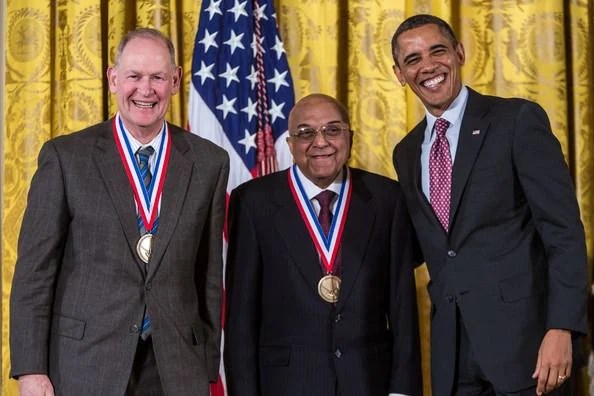
The highest honour came with the National Medal of Technology and Innovation. Obama announced the award in 2012 and presented it at the White House in early February 2013. Sources differ on whether the ceremony took place on February 1 or 2.
Established by law in 1980 and first awarded in 1985, the medal is the highest honour given by the US government to scientists, engineers and inventors for technological achievements. The US Patent and Trademark Office administers the award.
Srinivasan, Wynne and Blum had collectively spent more than 100 years working at IBM. The company had received the medal on nine other occasions. Reports differ on whether ten or eleven fellow inventors were honoured at the same ceremony.
“I am proud to honor these inspiring American innovators,” Obama said, adding that they show “the enormous impact a few good ideas can have.”
At the ceremony, Obama also spoke about how success in America should not depend on a person’s birthplace or surname. He drew laughter when he mentioned that the people being honoured had contributed to a formula for controlling frizzy hair and had inspired the game Tetris.
Wynne described the medal as a huge honour, coming more than 30 years after the original discovery. He also praised IBM’s culture of encouraging researchers from different scientific fields to work together on problems whose solutions might take years to emerge.
By this time, Srinivasan held more than 20 US patents and had published over 130 scientific papers. Some sources put his patent count at 21, while others say at least 22. The number of publications also varies depending on what is counted. Leigh’s 1990 profile listed more than 200 publications.
Doc Srini outside the laboratory
At IBM, Srinivasan was known as Doc Srini. Among his fellow scientists, he was simply Sri. Leigh’s profile, titled “R. Srinivasan Makes a Move,” describes a scientist who was also a teacher and an active member of the research community.
Srinivasan guided many postdoctoral researchers and students. He served as a visiting professor at the City University of New York, Columbia-Presbyterian Medical Center and Harvard Medical School.
He also served on the editorial advisory boards of several scientific journals, wrote reviews and monographs, and edited the two-volume work “Photochemical Organic Synthesis”.
He played an active role in organising scientific conferences. He chaired several photochemistry meetings, served on the organising committee for the International Conferences on Photochemistry from 1971 and was secretary of the Inter-American Photochemical Society in the early 1980s.
His contributions earned him fellowships in several organisations, including the American Physical Society, the New York Academy of Sciences, the American Association for the Advancement of Science and the American Society of Laser Medicine and Surgery.
IBM also gave him at least ten Outstanding Innovation Awards beginning in 1969. Outside science, one of Srinivasan’s greatest interests was wine. Leigh recalled the Organic Photochemistry Gordon Conference, where the lobster dinner was a major event.
At least two dozen chemists competed for around ten seats at Srinivasan’s table. They hoped to taste the bottle of wine he regularly brought along under his jacket. It was a small but telling detail about a scientist whose reputation rested not only on his research but also on his generosity towards colleagues and friends.
Retirement in name only
Srinivasan retired from IBM in 1990 at the age of 61, after nearly three decades at the company’s research centre. Retirement did not mean the end of his scientific work. He founded UVTech Associates, a consulting company through which he continued working on laser ablation.
In his tribute, Leigh wished him success and happiness in his “retirement”. The quotation marks suggested that Srinivasan was unlikely to stop working simply because he had left IBM.
Wynne continued working at IBM’s Watson Research Center, while Srinivasan and Blum eventually retired. The technology they helped develop continued to advance. Ultraviolet laser techniques became widely used in medical procedures, particularly in eye surgery, and researchers explored new applications in other areas of medicine and engineering.
Leigh noted that the discovery had led to a large body of research across chemistry, physics, engineering and medicine. It all began with a cold flame, a thumbnail and a plate of leftover turkey. Srinivasan accepted a modest reward for his breakthrough and spent the rest of his career focused on scientific discovery rather than financial gain.
He lived to see his work recognised by presidents, scientific institutions and millions of people whose lives were improved by the technology he helped develop.
The scientist who once joked that he only needed to live long enough to become famous eventually received the recognition he valued most. For Srinivasan, the greatest reward was never the money. It was knowing that his work had made a difference.
Disclaimer: This is an independent profile. As no verifiable contact information for Rangaswamy Srinivasan or their representatives could be established, direct comment could not be sought. Consequently, this article was reported using publicly available records, historical data, and secondary sources. This content was produced in accordance with FinancialExpress.com’s editorial guidelines.