


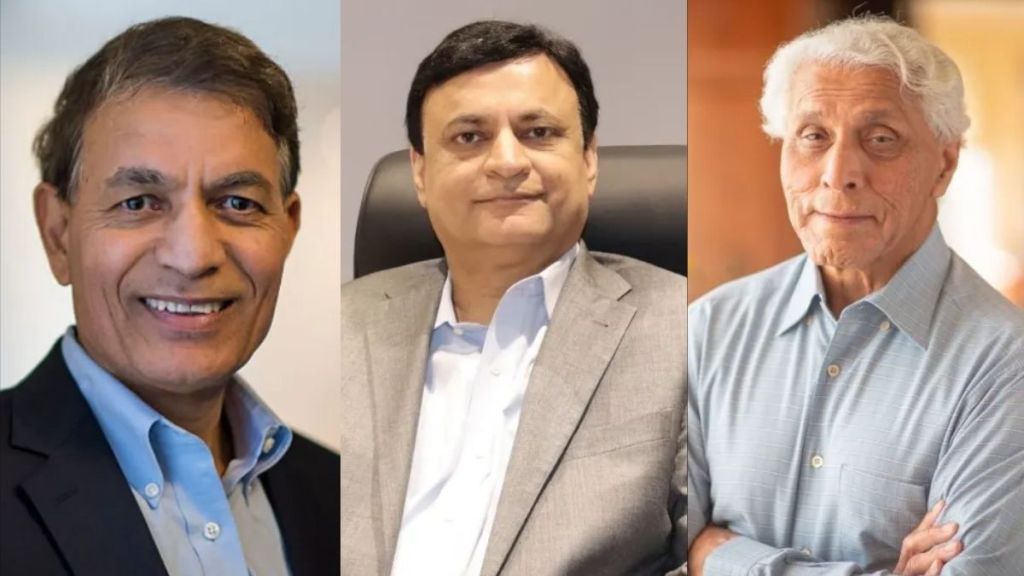

Less than $3. That was all one Indian student had when he arrived in the United States in 1969. Another arrived with $8. A third had $100 and washed dishes to pay for his education. Years later, their careers would take them into billion-dollar technology businesses, major corporate acquisitions and the leadership of some of America’s biggest technology companies.
Their starting points were different, as were the industries they eventually entered. Some started as engineers before risking their savings on a business. One purchased a small print shop after losing his job, another faced about 30 investor rejections before securing funding. Others spent years in the technology industry before reaching the top of a major company.
Their journeys unfolded across decades, through career setbacks, business bets and industries that would become central to the US economy.
A look at seven Indians who arrived with limited resources but went on to build successful careers in American technology.
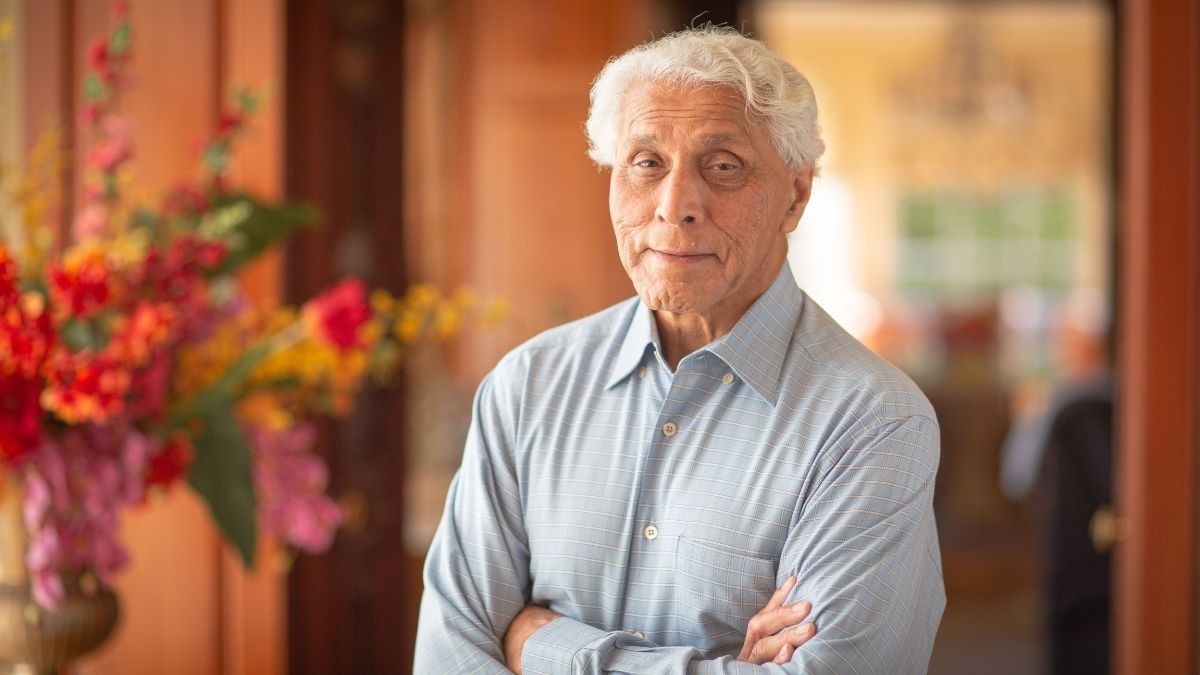
Romesh Wadhwani
Romesh Wadhwani arrived in Pittsburgh in 1969 with less than $3 in his pocket. He had already completed his engineering degree at the Indian Institute of Technology (IIT) Bombay and had travelled to the US for higher studies. He earned a master’s degree and a doctorate at Carnegie Mellon University.
His academic qualifications gave him an entry into the American technology sector, but they did not prepare him to run a business.
After completing his PhD, Wadhwani faced a decision familiar to many technically trained graduates – take a job at an established company or attempt to build something of his own. He chose the latter route, despite having no previous experience running a business or an established network of investors.
Wadhwani founded Aspect Development, a software company that developed tools to help businesses manage complex supply chains and product information. Its technology addressed a problem faced by large manufacturers: coordinating the many parts, suppliers and processes involved in making a product.
The company grew as businesses increasingly used software to manage their operations. In 2000, Aspect Development was acquired by i2 Technologies in a deal valued at $9.3 billion. The transaction turned Wadhwani’s first major entrepreneurial venture into a multi-billion-dollar exit.
He did not stop after the acquisition. Wadhwani established Symphony Technology Group, an investment firm focused on technology and technology-enabled businesses. He later launched SymphonyAI, which develops artificial intelligence tools for industries including retail, financial services and healthcare.
In 2017, he committed $1 billion of his own capital to the AI venture. The investment represented another substantial bet on enterprise software, this time on the use of AI to help businesses make decisions and automate operations.
Wadhwani also established the Wadhwani Foundation, which works on entrepreneurship, skills development and job creation.
Kanwal Rekhi
Kanwal Rekhi grew up in a large refugee family after the Partition. His father served in the Indian Army and was frequently posted away from home. Money was tight in a household that included eight children and several other family members.
Rekhi took on financial responsibilities early. At around 12, he began helping his mother manage the household budget, calculating how much the family could spend on essentials such as flour, pulses, sugar and vegetables. He has recalled that prioritising expenses became an important skill long before he entered the technology industry.
He eventually studied electrical engineering at IIT Bombay. In 1967, he left India for the US with $8, a consequence of the foreign-currency restrictions that limited how much money students could take abroad. He enrolled at Michigan Technological University and completed his master’s degree in electrical engineering in 1969.
Rekhi began his career as an engineer, working on flight simulators for the US Air Force and Navy. He moved to California with his wife in 1971 and spent the next several years working in the technology sector. By 1980, however, he was dissatisfied with the limited opportunities to move beyond engineering into senior management.
The personal computer was beginning to change the industry. Rekhi recognised that as businesses adopted more computers, they would need ways to connect them and transfer information between machines.
In April 1982, he left his job and co-founded Excelan with fellow Indian engineers Inder Singh and Navindra Jain. The company developed networking products, including technology that allowed computers to communicate using emerging networking protocols.
Excelan grew into a technology business and went public on Nasdaq in 1987. It was later acquired by Novell. Rekhi subsequently became Novell’s chief technology officer, moving from engineering into senior corporate leadership.
His work did not end with his own company. In 1992, he helped establish The IndUS Entrepreneurs, known as TiE, a network intended to connect entrepreneurs with investors, advisers and experienced business leaders.
Rekhi also became an early investor and mentor to other founders. Among the companies he backed was Exodus Communications, an internet infrastructure business. His investment and guidance helped its founders raise additional capital.
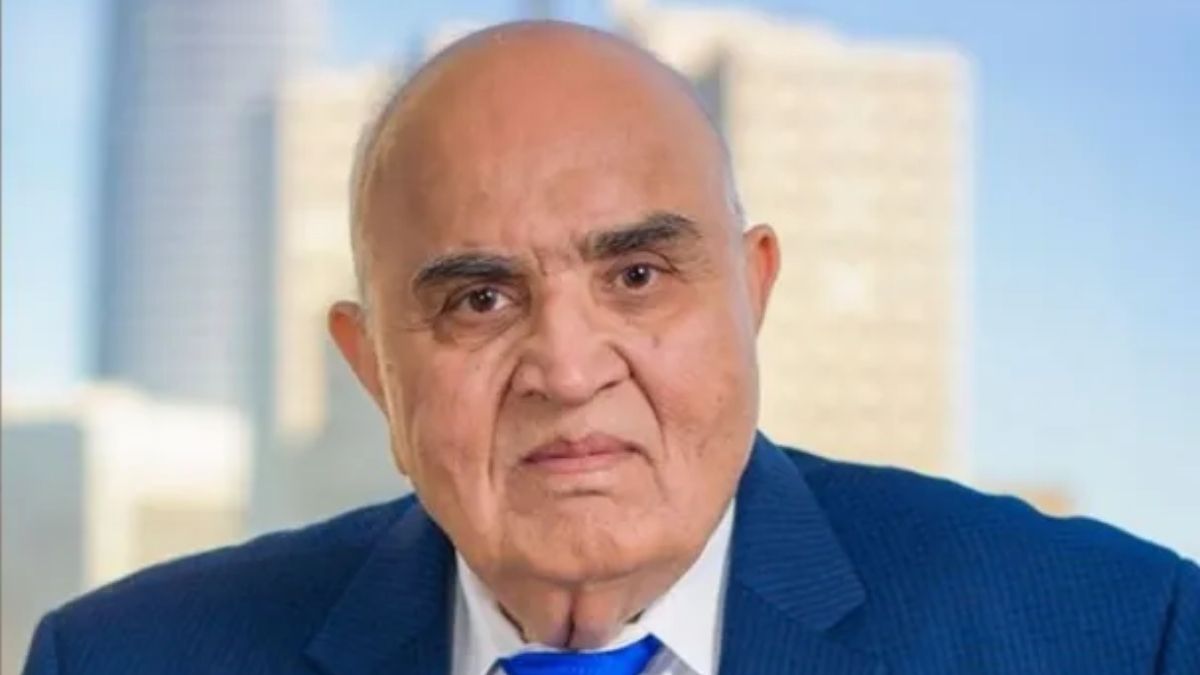
Raj Sardana
Raj Sardana moved from Delhi to the United States in 1981 to pursue a master’s degree in mechanical engineering at the Georgia Institute of Technology. He arrived with $100 and took a job in the university cafeteria, washing dishes and cleaning floors to help pay for his education.
After graduating, Sardana entered the engineering industry. He worked at Howmet Aerospace and later at Teledyne CAE, where his work included Tomahawk missile engines.
His career changed when the end of the Cold War disrupted the defence industry. The US and Russia halted missile production, and Sardana’s division faced layoffs. He had recently bought a house, had a six-month-old daughter and was supporting his parents.
Rather than rely entirely on finding another engineering job, Sardana decided to start a business. He had saved $25,000 and used the money to buy a small print shop in Stone Mountain, Georgia.
The purchase became his first entrepreneurial venture. It was not initially a large technology business, but it gave him a way to operate independently and learn how to run a company.
In 1998, Sardana launched ACS, initially a technology staffing business. It later developed into a broader technology services operation and became Innova Solutions. The company expanded into areas including digital transformation, technology consulting and services for sectors such as financial services, healthcare and defence.
The business faced setbacks as markets changed. The technology industry experienced a downturn after the Y2K spending cycle, and some expansion decisions did not deliver the expected results. Sardana had to reassess the business and adjust its direction rather than continue with the same strategy.
In recent years, Innova Solutions has placed greater emphasis on artificial intelligence and helping businesses implement new technologies. Sardana has also backed AIFICIENT, an initiative focused on AI adoption and implementation.
His career moved from engineering employment to a small print-shop acquisition, then into technology staffing and digital services. Innova Solutions grew into a multi-billion-dollar technology services business, while Sardana also became involved in education and women’s empowerment through the Innova Foundation, which he established with his wife.

Jay Chaudhry
Jay Chaudhry grew up in Panoh, a small village in Himachal Pradesh. His parents were small-scale farmers, and the village lacked basic infrastructure, including running water and electricity. As a child, he walked several kilometres to attend school.
Education eventually took him beyond the village. Chaudhry studied at IIT (BHU) Varanasi before moving to the United States for further education. He earned master’s degrees in engineering and business administration at the University of Cincinnati.
He began his career in the technology industry, working at companies including IBM, Unisys and IQ Software. These roles gave him experience with enterprise computing and the needs of large organisations.
Chaudhry moved into entrepreneurship in the 1990s, when businesses were beginning to rely more heavily on networked computers and the internet. In 1996, he founded SecureIT, a cybersecurity company that was later acquired by VeriSign. He subsequently started other technology businesses, including CoreHarbor and AirDefense.
Those ventures gave him experience in building companies, raising money and selling products to businesses. They also helped him identify a longer-term opportunity in cybersecurity.
In 2007, Chaudhry founded Zscaler with a focus on cloud-based security. Traditional corporate security systems had largely been designed to protect networks inside an organisation’s offices. As companies moved applications and data to the cloud, that model became less suited to employees accessing systems from different locations and devices.
Zscaler developed a cloud-based security platform that checks users and devices before allowing access to applications and information. Its approach became increasingly relevant as businesses adopted remote work and moved more of their operations online.
The company went public in 2018 and grew into a major cybersecurity business. Its expansion increased the value of Chaudhry’s stake.
Zscaler market capitalization is of about $26.6 billion and Chaudhry’s personal net worth is estimated at $9.3 billion.
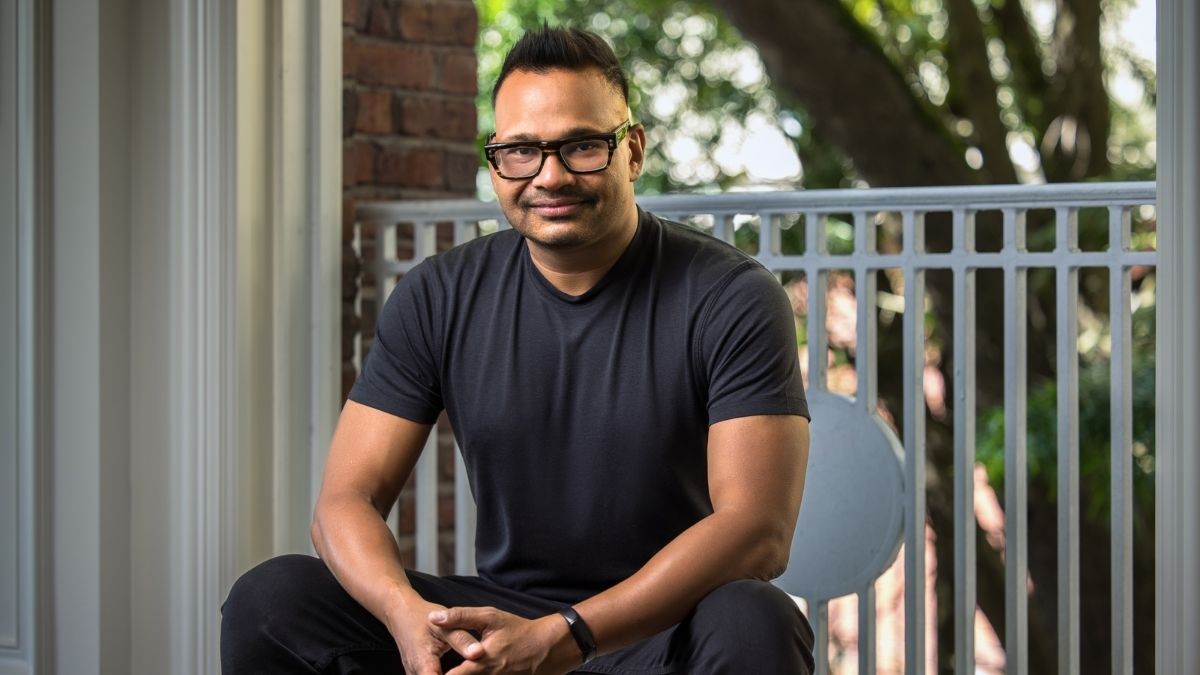
Jyoti Bansal
Jyoti Bansal grew up in a small town in Rajasthan, where his family ran a farm-equipment business. He spent time helping his father with the business before moving towards engineering and software.
He studied computer science at IIT Delhi and moved to Silicon Valley at the age of 21 on an H-1B work visa. He worked as an engineer and software architect at technology startups, learning how software products were developed and how young companies operated.
For years, however, his ability to remain in the US was linked to his employment status. Starting a company would mean giving up a job while still facing uncertainty over his immigration situation. Bansal spent about seven years working in the country before receiving his green card.
He had been developing an idea for software that could help businesses monitor the performance of their applications. As companies increasingly relied on complex software systems, a failure or slowdown could disrupt services and cost money. Bansal wanted to build a product that would help technology teams identify problems before they affected customers.
Raising money proved difficult. About 30 investors rejected the idea before he secured an initial investment of roughly $5 million in 2008. At that stage, he had an idea and code he had been writing at nights and on weekends, but no established business.
The investment allowed him to build AppDynamics, which developed application-performance monitoring software. The company grew as businesses needed better visibility into increasingly complicated software systems.
In 2017, Cisco agreed to acquire AppDynamics for $3.7 billion. The deal came just before AppDynamics was due to go public.
Bansal did not retire after the acquisition. He went on to co-found Harness, a software delivery and automation company. Harness focuses on helping businesses develop, test and release software more efficiently, including through automation.
Building a second company meant starting again in a different market. Bansal had experience raising money, hiring executives and scaling a business, but Harness still had to find customers and establish demand for its products.
The company grew into another major software venture and was valued at $5.5 billion after a funding round.