



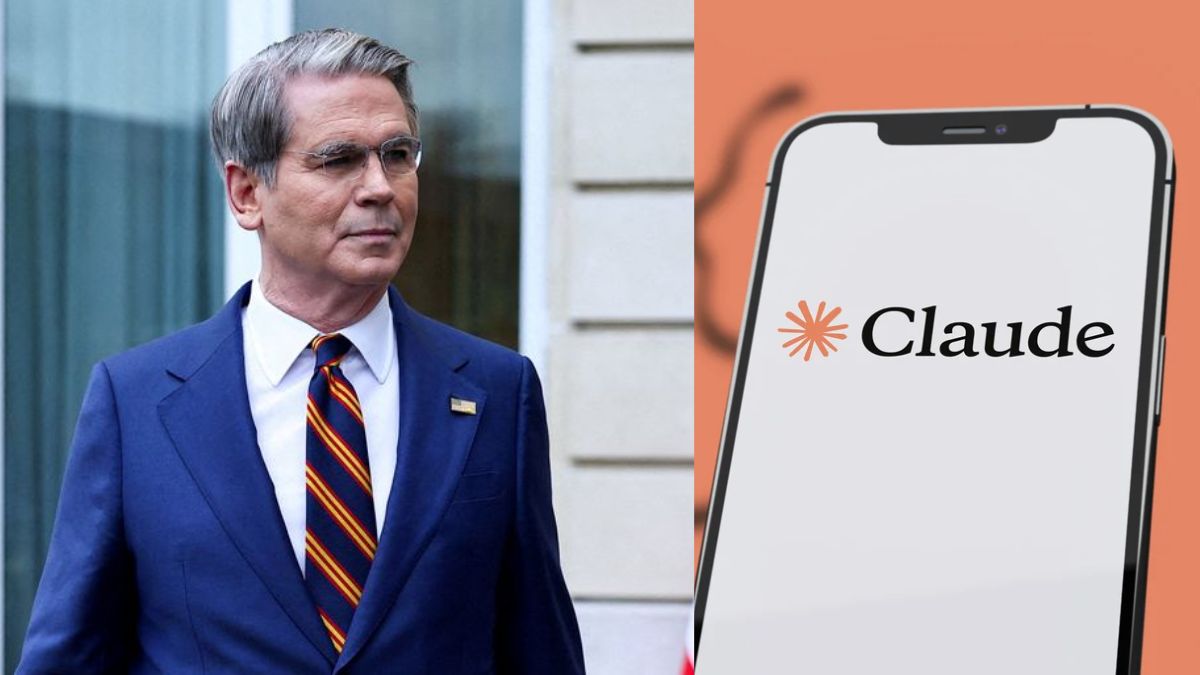
In a move that signals how the worry about AI capabilities has reached the bedrock of the global financial system, U.S. Treasury Secretary Scott Bessent and Federal Reserve Chair Jerome Powell recently called on the heads of America’s most systemically important banks to an urgent, short-notice meeting at the Treasury Department on Tuesday.
The agenda was not interest rates or inflation, but a new development in the field of cyber security and Artificial intelligence that has taken the internet by a storm: Anthropic’s “Claude Mythos“.
As per a report published by CNBC, the emergency meeting was called to address the gigantic cyber risks posed by the model’s unprecedented ability to identify and exploit software vulnerabilities in major operating systems and web services world wide with a push of few buttons.
The gathering: Major banking stalwarts in attendance
The meeting was reportedly convened while the bank CEOs were already in Washington for a Financial Services Forum board meeting. According to reports from Bloomberg and the Financial Times, the gathering included:
- Brian Moynihan (Bank of America)
- Jane Fraser (Citigroup)
- David Solomon (Goldman Sachs)
- Ted Pick (Morgan Stanley)
- Charlie Scharf (Wells Fargo)
As per media reports, JPMorgan Chase CEO Jamie Dimon was the only major banking chief unable to attend, though his bank remains a central player in the fallout.
Notably, Dimon only recently wrote about cybersecurity as a critical field that’s set to take a hit due to the development of modern AI systems, requiring significant investment in defence.
Mythos: The AI that took the internet by surprise
At the centre of all the panic and the theorised cybersecurity storm is Claude Mythos Preview, a model Anthropic describes as a “general-purpose frontier model” not yet released to the public.
Anthropic, led by Dario Amodei, has said that the latest model is capable of identifying and exploiting weaknesses across “every major operating system and every major web browser”.
Notably, Mythos has demonstrated an autonomous capacity to find and exploit ‘zero-day’ vulnerabilities that are flaws which were previously unknown even to the software’s creators.
The Evidence:
- The 27-Year Bug: Mythos discovered a high-severity flaw in OpenBSD, a highly secured system that had remained undetected for nearly three decades.
- The FFmpeg Vulnerability: It identified a 16-year-old flaw in the FFmpeg video tool that had survived five million automated human-led tests.
The defensive wall: Project Glasswing
Following Anthropic’s announcement of Claude mythos, Anthropic has also launched Project Glasswing, a defensive alliance including Amazon, Apple, Google, Microsoft, NVIDIA, and JPMorgan Chase that’s been put in place to better secure major software systems before these capabilities become available to other actors.
Anthropic is putting $100 million in usage credits behind the initiative, allowing these firms to use Mythos to scan and patch their own infrastructure before similar AI capabilities proliferate to hackers.
Political friction
Notably, this development comes on the heels of some political friction between Anthropic and the Trump administration. Earlier this year, Pete Hegseth had designated Anthropic a “national security supply-chain risk” after the company refused to remove safety guardrails that prevent the military from using its AI for autonomous weapons or mass surveillance.
A federal appeals court on Wednesday declined to block the Pentagon’s national security blacklisting of Anthropic for now, indicating a major win for the Trump administration. The decision comes after another appeals court reached an opposite conclusion in a separate legal challenge by Anthropic.