



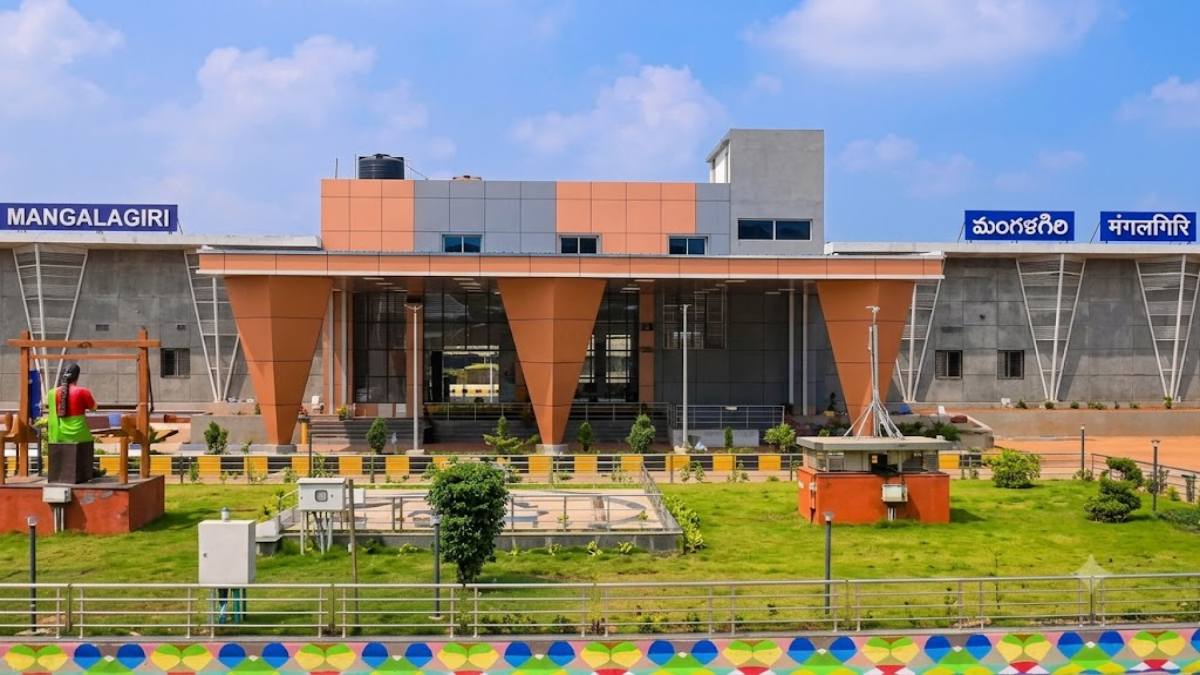
Mangalagiri Railway Station, located in Andhra Pradesh, is set to enter a new phase with upgraded facilities and modern infrastructure.
Redeveloped under the Amrit Bharat Station Scheme (ABSS), the station will be virtually inaugurated by Prime Minister Narendra Modi on July 17, as per news agency PTI.
The redevelopment work, completed for Rs 12.5 crore, has transformed the station with improved passenger amenities, better accessibility features and upgraded infrastructure aimed at making train travel more comfortable and convenient.
From modern waiting areas and improved platforms to better parking facilities and easier movement for passengers, the revamped station brings several changes for daily passengers and travellers.
Here’s what you can expect from the newly developed station.
What’s New at Mangalagiri Railway Station?
The redeveloped station now includes a modernised station building with upgraded passenger facilities, along with a newly constructed second-entry station building featuring a booking office, waiting halls and a VIP lounge.
Other major additions include:
- Improved station façade and redesigned entrance areas
- Spacious waiting halls with better passenger facilities
- Dedicated parking and upgraded circulating areas
- Modern toilets, comfortable seating and improved signboards
- Better lighting and landscaped surroundings
- New platform shelters on Platforms 1 and 4
Focus on passenger comfort and accessibility
A key feature of the redevelopment is making the station easier to access for all passengers. The station now has two lifts, ramps, tactile pathways for visually impaired passengers, and accessible toilets to support Divyangjan, senior citizens, and passengers requiring additional assistance.
The upgrades are designed to make movement within the station smoother, from entering the premises to reaching platforms and boarding trains.
Improved station surroundings for smoother movement
The areas around the station have also received a makeover. The front and rear circulating areas have been improved with dedicated parking spaces, pedestrian pathways, street lighting, and proper lane markings.
Wider entry and exit gates, along with improved access control measures, have been introduced to manage passenger flow better and reduce congestion during busy hours.