



Just days before the FIFA World Cup kicks off across North America, one of the tournament’s biggest geopolitical flashpoints has moved closer to resolution but not without controversy.
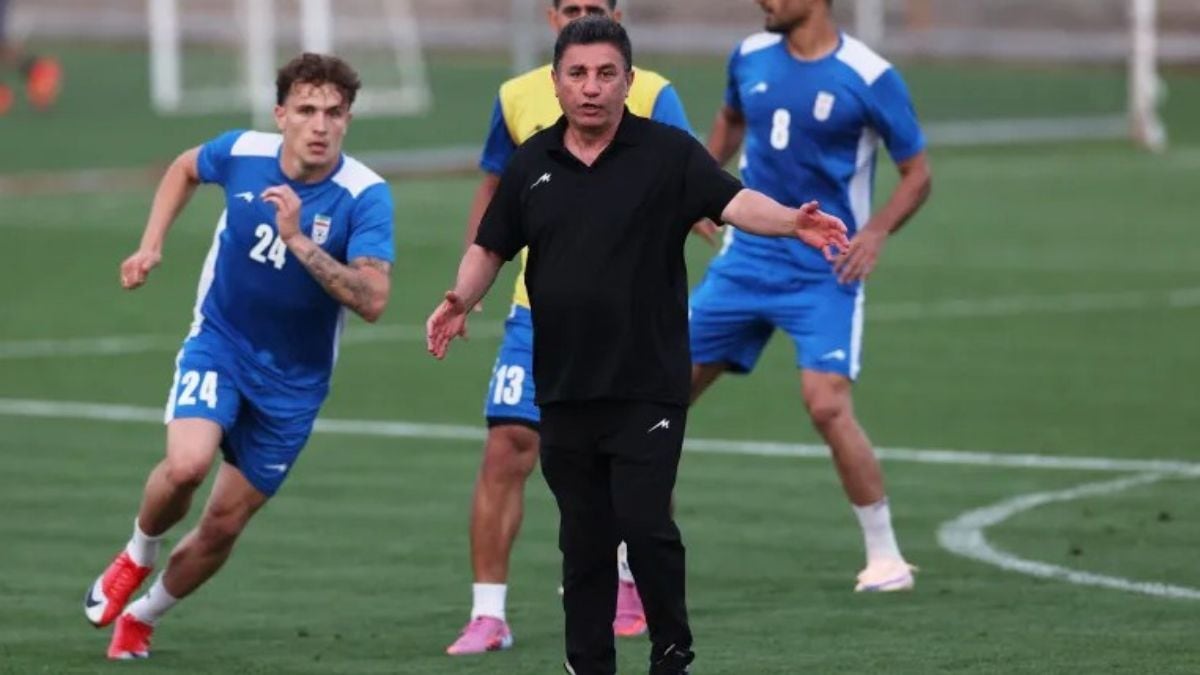
Iran’s national football team has reportedly been cleared to enter the United States for the World Cup after months of uncertainty. However, several senior federation officials and support staff members have allegedly been denied visas, triggering criticism from Tehran and raising fresh questions about FIFA’s ability to guarantee equal access for participating nations.
The development comes against the backdrop of continuing tensions between Washington and Tehran, with the United States and Iran finding themselves in the unprecedented position of being both geopolitical adversaries and stakeholders in the same World Cup.
Players cleared, officials left behind
According to multiple reports, all members of Iran’s 26-man playing squad have received approval to travel to the United States, where the team is scheduled to play all three of its group-stage fixtures.
However, more than a dozen individuals linked to the team’s broader delegation, including federation officials and support personnel, were reportedly denied entry visas.
Among those affected is said to be Iranian Football Federation president Mehdi Taj, whose travel history has attracted scrutiny in recent years because of past links to Iran’s Islamic Revolutionary Guard Corps (IRGC), an organisation designated as a terrorist entity by both the United States and Canada.
The reported visa denials mean Iran could arrive at football’s biggest tournament without parts of the administrative and operational structure that normally accompanies a national team.
FIFA faces a test of its influence
The episode has placed FIFA in an uncomfortable position. For months, football’s governing body has worked behind the scenes to ensure Iran’s participation amid growing uncertainty surrounding travel permissions.
The issue strikes at the heart of one of FIFA’s core principles: that all qualified nations should have equal access to its competitions regardless of political disputes. That principle is now being tested on one of the biggest stages in world sport.
The 2026 tournament marks the first World Cup jointly hosted by the United States, Canada and Mexico. It is also the first expanded 48-team edition in tournament history.
With Iran among the qualified nations, FIFA was always likely to face difficult diplomatic questions. Those challenges intensified after relations between Tehran and Washington deteriorated further in recent months.
Iran accuses US of failing host responsibilities
The visa issue has already sparked a public response from Iranian officials. In a strongly worded statement posted on social media, Iran’s embassy criticised the United States for what it described as a failure to meet its obligations as a World Cup host.
The embassy argued that participating teams are guests of FIFA and that it is FIFA’s responsibility to ensure all accredited members of a delegation receive the necessary travel permissions.
The remarks reflect growing frustration inside Iran’s football establishment, which has repeatedly voiced concerns over travel restrictions and logistical hurdles during the buildup to the tournament.
A World Cup shaped by geopolitics
Iran’s preparations have been far from straightforward. The team was originally expected to establish a World Cup base in Arizona but later shifted plans closer to the US-Mexico border, reportedly to minimise time spent inside the United States.
Players have also faced an interrupted domestic calendar, with football activity in Iran heavily affected by regional instability over recent months. Despite those challenges, Iran remains set to participate in the tournament and is scheduled to begin its campaign against New Zealand before facing Belgium and Egypt in the group stage.
For FIFA, the situation serves as an early reminder that the 2026 World Cup is not merely a sporting event. As the tournament expands across three host nations and 48 participating teams, football increasingly finds itself intersecting with diplomacy, immigration policy and national security concerns.
The immediate crisis appears to have been avoided with players receiving clearance to travel. But the fact that senior officials and support staff may be left behind ensures that one of the World Cup’s biggest off-field stories will continue long after the opening whistle is blown.