



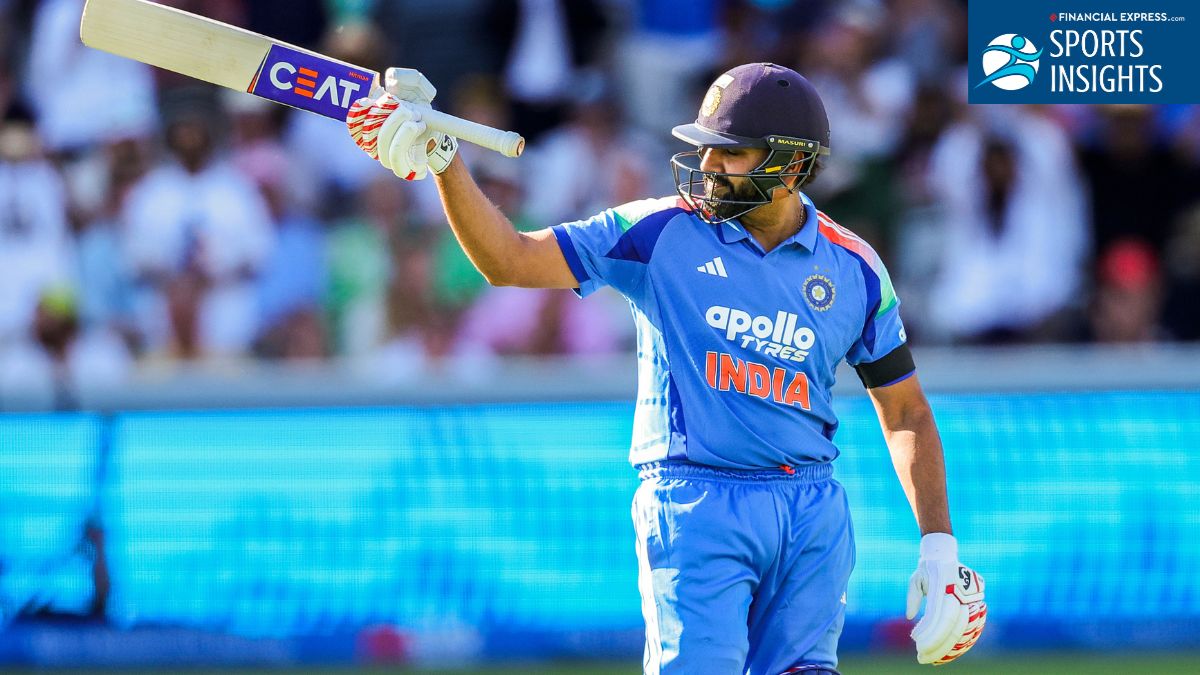
The bat did not belong to him.
Rohit Sharma had spent days in the Indian dressing room turning it over in his hands, feeling the grain, checking the balance. It belonged to Shardul Thakur, his old Mumbai teammate, a bat made by SS Bats under owner Jatin Sareen. Thakur handed over a couple of them without much thought. Friends do that.
On July 19, 2026, at the home of cricket, Sharma walked out with someone else’s willow and someone else’s bat sponsor’s craftsmanship, chasing 388 against England with his own career under public interrogation. Every commentator that week had asked the same question in different words. Was this the end.
He answered with 138 runs off 110 balls. Seventeen fours, five sixes. His 34th ODI hundred. When he reached three figures, he pointed the borrowed bat toward the Members’ Balcony, where his family sat. Then his legs began to cramp.
He kept batting anyway, had a quiet word with Virat Kohli during a mid-pitch chat that marked their 400th international match together, and eventually top-edged a part-time spinner, Jacob Bethell, who had been introduced almost as an afterthought.
Sam Curran mopped up the middle order. India were bowled out for 360. England won by 27 runs and took the series 2-1.
By the scoreboard, Sharma had failed. His team lost. The series was gone. Somewhere in a boardroom, though, none of that mattered very much.
Two scoreboards, one man
Sport has always kept two scoreboards running at once, though only one of them is painted on the ground.
The first belongs to the match. India lost it, playing much of the series without their strike bowler Jasprit Bumrah, watching Ben Duckett and Bethell put on a stand that tore through an inexperienced bowling attack.
The second scoreboard belongs to Sharma alone, and it does not care who won the toss. On that ledger, a man written off by half the country as too old, too slow, too close to retirement, walked into the most famous cricket ground in the world and outbatted everyone in it. That is the version of the story that sponsors were watching.
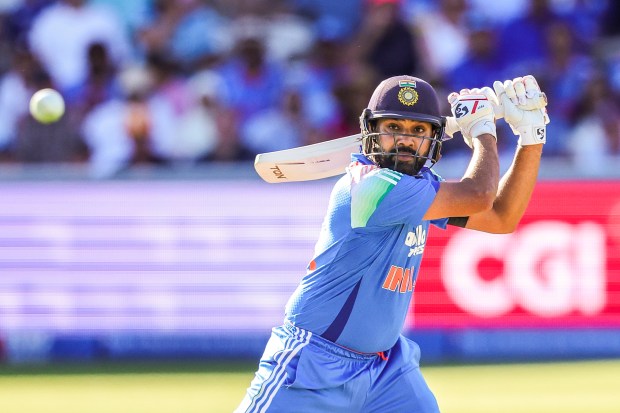
This is the strange arithmetic of sports business once an athlete crosses into his late thirties. A young cricketer’s value is built on projection, on what he might still become. An older one’s value is built on defence, on proving he has not yet become what people fear.
A hundred at 39 does not add growth to the brand. It removes doubt from it. And removing doubt, for a company paying crores to attach its name to a face, is worth just as much as adding growth.
Marketing people have a phrase for what Sharma did at Lord’s, though they would never say it to his face. They call it a reset. Every time an ageing star performs under real pressure, the clock resets on how long a sponsor is willing to wait before asking uncomfortable questions.
From Dombivali to Indian dressing Room
To understand why companies trust Sharma with their money, you have to go back to a one-room flat in Dombivli that had no room in it for him.
He was born in 1987 in Bansod, near Nagpur. His father Gurunath worked as a caretaker at a transport company storehouse, earning too little to raise a family of four in the city. So the boy was sent away, to live with his grandparents and uncles in a crowded house in Borivali, because there simply was not enough space or money at home.
When he was old enough for a proper cricket camp, it was his uncles who scraped together the fee. Even then, school costs of 275 rupees were enough to threaten the whole plan. A single fee. That is how thin the margin was.
A coach named Dinesh Lad noticed something in how the boy timed the ball. Lad could see the talent but also saw the family could never afford Swami Vivekanand International School, where the real opportunities were. So he did what good coaches sometimes do quietly. He arranged a full scholarship, four years of it, and pulled the boy in.
There is one more detail people forget. Sharma did not start as an opening batsman. He came into that camp as an off spinner who batted at number eight, somewhere near the bottom of the order. It was Lad who watched his easy, flowing swing of the bat and pushed him up to open the innings. That single decision rearranged the rest of his life.
This is why the story sticks to him the way it does. It is not manufactured. A man who once needed a scholarship to afford school fees is now the face of insurance companies and finance firms, and the public believes him when he tells them their money will be safe.
That belief has a name in the industry. People call it trust equity, and it is nearly impossible to buy. You either have the story or you do not.
What is actually on his jersey and why it is there
Look closely at what Sharma is paid to represent and a pattern appears.
There is Hublot, the Swiss watchmaker, and Oakley, the eyewear brand, both selling a kind of aspirational polish.
There is Adidas, a partnership running since 2013, and CEAT Tyres, tied directly to the bat in his hand.
There is Max Life Insurance and IIFL Finance, both built on the idea of a steady family man who will not gamble with your future.
And there is the mass market end, Swiggy Instamart, Dr. Trust wellness devices, Oral-B, Swiggy, Rasna, brands that simply want to be seen where ordinary people are watching. Very few of these brands are chasing youth culture. Almost all of them are selling stability.
According to Kroll’s celebrity brand valuation numbers for 2026, Sharma sits at number 17 on the overall celebrity list and carries a brand value of $48.4 million. That places him fourth among Indian cricketers, behind Virat Kohli, Sachin Tendulkar, and MS Dhoni. Hardik Pandya and Jasprit Bumrah sit just below him.
The number matters less than what it tells you about company. Kohli’s portfolio, built around Puma and Audi, sells performance and aspiration to a younger crowd. Pandya’s, anchored by boAt and Monster Energy, sells energy and edge.
Sharma sits closer to Tendulkar and Dhoni, the two men who have already made the leap from playing cricket to being trusted with other people’s money. That is the neighbourhood he lives in now, and it is a deliberate address, not an accident.
The retirement problem nobody likes to talk about
Every sponsor sitting across the table from an ageing athlete is quietly running the same calculation. What happens to this deal the day he stops playing.
The pattern is fairly consistent across sport. A brand’s enthusiasm usually peaks right before an athlete retires, dips hard around the announcement itself, and then either fades away or transforms into something new. Which path it takes depends almost entirely on what kind of brand it is.
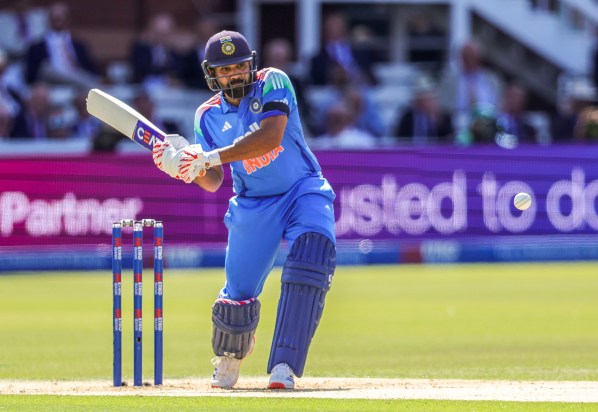
Youth brands panic first. A fizzy drink or a sportswear label built on speed and reinvention cannot wait around. They need someone playing right now, in front of a young audience right now, and they will move their budgets to the next face the moment the current one steps away.
Trust brands behave differently. An insurance company or a bank is not really buying six sixes in an over. It is buying the feeling that this man will not let you down, and that feeling does not expire the day he retires. If anything, it can deepen once he becomes a settled, dignified elder statesman rather than a player still under scrutiny every weekend.
Two templates already exist for what comes next, and Sharma’s team appears to be studying both.
Tendulkar chose what people in the industry call the national guardian route. Highly selective partnerships, premium pricing near 10 to 11 crore rupees a campaign, decades-long relationships with names like Luminous, and quiet, careful ownership stakes in real estate and clean energy rather than loud new deals.
Dhoni chose something more accessible, the relatable strategist route. Higher volume, pricing closer to 5.5 to 6 crore rupees per campaign, playful reappearances like the Oreo World Cup relaunch, and early investment bets on ventures like BluSmart.
There is a third template, further away, that belongs to Roger Federer. Extreme scarcity, a $300 million Uniqlo apparel deal, a board seat and an 8 to 10% stake in the running shoe company On, a holding now valued near $500 million.
Very few athletes anywhere in the world reach that altitude. But it is the direction of travel that matters, from being paid to wear a logo, to owning a piece of the company itself.
1️⃣3️⃣8️⃣ Runs
— BCCI (@BCCI) July 19, 2026
1️⃣1️⃣0️⃣ Balls
1️⃣7️⃣ Fours & 5️⃣ Sixes
What a knock from Ro-HITMAN Sharma 🔥
Updates ▶️ https://t.co/pLZ2PvDH5G#TeamIndia | #ENGvIND | @ImRo45 pic.twitter.com/ITMhfLq0ID
Back to the balcony
When Rohit Sharma walked off that Lord’s field on July 19, 2026, after holing out to Jacob Bethell’s left-arm spin, after Sam Curran had taken 4 for 75 to choke India, after the 27-run defeat was confirmed and the series was lost, the brands were not worried.
They had seen what they needed to see. They had seen a 39-year-old man play through cramps that would have stopped most people. They had seen him chat with Virat Kohli, marking their 400th international match together as a pair, and then pivot to trying to win an impossible game.
They had seen him point a borrowed bat toward his family and the Member’s Balcony, a gesture that said: I am still here. I am still fighting. I am still the man you thought I was.
That is why Sharma’s brand equity went up even when his team lost. Because the brands do not sponsor teams. They sponsor people. They sponsor stories. They sponsor the idea that when everything around you is falling apart, one man can still stand tall and remind you why you believed in him in the first place.