



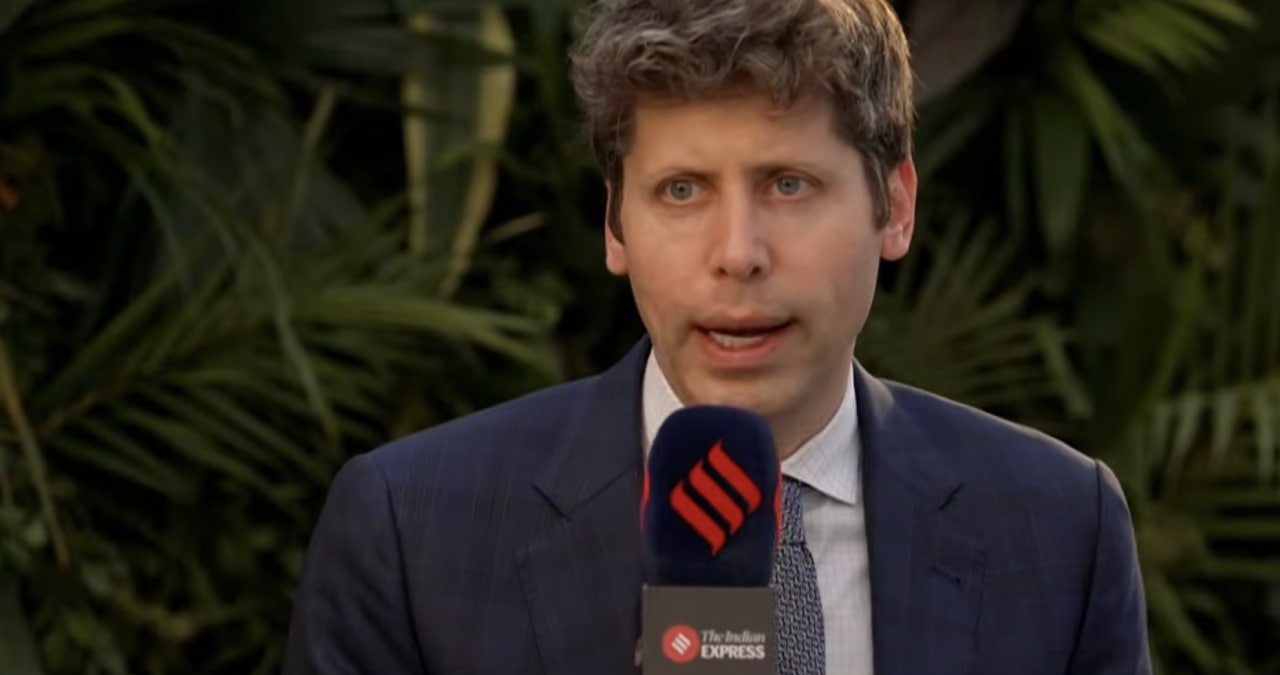
In his blog post following a recent attack on his home, OpenAI CEO Sam Altman has offered a deeply personal reflection on his leadership at OpenAI, acknowledging several mistakes while expressing pride in leading the company through intense challenges. He also spoke about his past resistance to unilateral control sought by co-founder Elon Musk, who has filed a lawsuit against the firm.
Altman addressed both the recent Molotov cocktail attack on his home and broader introspection about his decade at OpenAI.
Pride in resisting Elon Musk’s unilateral control
Altman stated that the decision he remains proud of is standing firm against Elon Musk’s desire for unilateral control over OpenAI during the company’s early years.
“As I reflect on my own work in the first decade of OpenAI, I can point to a lot of things I’m proud of and a bunch of mistakes,” he wrote. “I was thinking about our upcoming trial with Elon and remembering how much I held the line on not being willing to agree to the unilateral control he wanted over OpenAI. I’m proud of that, and the narrow path we navigated then to allow the continued existence of OpenAI, and all the achievements that followed,” he added.
The comment references the ongoing legal battle between Musk and OpenAI, with a trial approaching in late April. Altman portrayed the early resistance as crucial to the company’s survival and subsequent success.
Regret over conflict-aversion and past board drama
However, Altman was candid about his shortcomings. He expressed regret over being overly conflict-averse, which he said caused significant pain for himself and the company.
“I am not proud of being conflict-averse, which has caused great pain for me and OpenAI. I am not proud of handling myself badly in a conflict with our previous board that led to a huge mess for the company,” he admitted.
He described himself as “a flawed person in the center of an exceptionally complex situation,” noting the immense pressure of navigating bitter conflicts amplified by the high stakes of AI development. Altman offered a direct apology, “I am sorry to people I’ve hurt and wish I had learned more faster.”
He acknowledged that the past few years have been “extremely intense, chaotic, and high-pressure.” Altman also added that OpenAI must now operate in a more predictable and mature way as it has evolved from a scrappy startup into a major platform.
Proud of achieving the mission
Despite the mistakes, Altman expressed great pride in OpenAI’s achievements. He listed key accomplishments under his tenure, i.e., building powerful AI systems, raising massive capital for infrastructure, creating a successful product company, and delivering safe, robust services at global scale.
“Mostly though, I am extremely proud that we are delivering on our mission, which seemed incredibly unlikely when we started. Against all odds, we figured out how to build very powerful AI… and much more,” he wrote.
“A lot of companies say they are going to change the world; we actually did,” he ended as a footnote.