



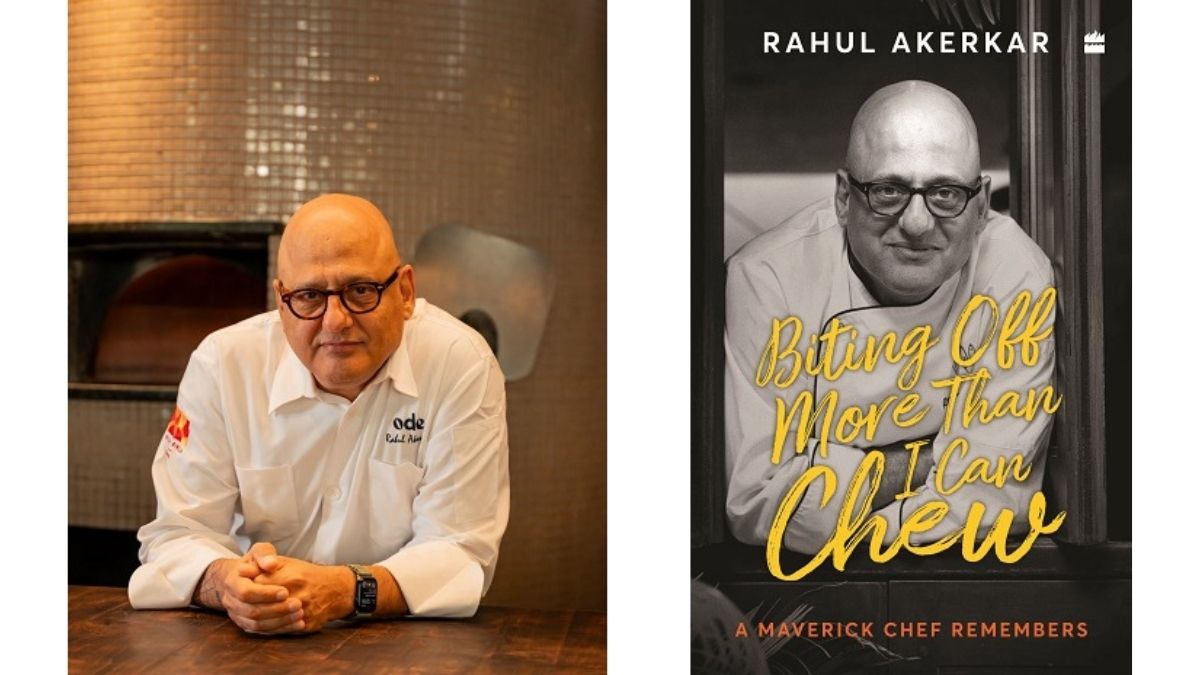
Veteran restaurateur and chef Rahul Akerkar has long been regarded as one of the architects of modern dining in India. In his memoir Biting Off More Than I Can Chew, he reflects on ambition, reinvention, risk-taking and the evolution of India’s restaurant culture. In a conversation with FE, Akerkar speaks about abandoning academia for kitchens, building Indigo into a landmark institution, balancing creativity with commercial realities, and why substance must ultimately outlast spectacle in the hospitality business, among others. Edited excerpts:
You studied biochemical engineering before eventually choosing hospitality over academia. What led to that transition, and how difficult was it to start over in an entirely new industry?
I was studying biochemical engineering in New York while simultaneously working in restaurants. During my PhD, I had a falling out with my advisor, lost interest in academia, and eventually decided to walk away from it altogether.
It wasn’t a carefully planned pivot. I simply shut one door and continued doing something I already enjoyed. At that stage, I had no certainty about whether I could build a sustainable career in hospitality.
Financially, there was very little security. This was the early 1980s, I hadn’t attended culinary school, and I was entering an extremely demanding industry from scratch. There was no formal risk assessment involved. Sometimes decisions are made while moving forward rather than after drawing up a blueprint.
By the time Indigo opened in 1999, you already had significant experience in hospitality. What made Indigo such a defining and high-stakes venture for you?
Leaving academia felt like a deeply personal risk because I was stepping into the unknown. But from a business standpoint, Indigo was unquestionably the larger gamble.
By the time we launched Indigo in 1999, I wasn’t starting from zero. I had already spent close to a decade building Moveable Feast into a successful catering business, worked on Under The Over in Mumbai, collaborated on projects in Bengaluru, and briefly partnered with AD Singh on Just Desserts.
However, Indigo represented a completely different level of ambition. We weren’t trying to open just another restaurant; we wanted to build something thoughtful, consistent and internationally benchmarked. The venture was largely financed through friends, family and bank loans, which made the pressure intensely personal. You’re accountable not just to investors, but to the trust people place in you.
Your memoir also highlights the tension between culinary creativity and operational realities. How did you strike that balance?
I’ve always been instinct-driven, perhaps more than I should have been. In hindsight, I could have paid greater attention to balance sheets and the larger financial picture, although operationally I always understood the numbers well.
That said, instinct often leads to good business decisions if you remain attentive. We never compromised on food quality for the sake of margins, but that doesn’t mean margins were ignored. There’s an important distinction between financial discipline and diluting the product.
You don’t necessarily need the most expensive ingredients to create exceptional food. What matters is clarity of thought, technique and consistency. We were always conscious of costs and menu engineering, but the integrity of the food was never negotiable.
Indigo became a landmark in Mumbai’s dining landscape. What legacy do you think it leaves behind?
At the time Indigo opened, serious European cuisine in India was largely confined to five-star hotels, many of which had become complacent. Indigo challenged that ecosystem by bringing global restaurant standards into the standalone dining space.
What we introduced wasn’t novelty for its own sake, but discipline — attention to detail, seasonality, consistency and hospitality. It was about getting every element right simultaneously: food, service, music, lighting and pacing.
People often described Indigo as “fine dining”, but it was never intended to feel stiff or overly formal. We took food seriously, but the experience itself was always meant to feel warm, relaxed and human.
How do you assess the state of India’s restaurant industry today?
Certain aspects of the industry frustrate me — restaurants designed primarily for optics, food created for social media, and experiences built around presentation rather than flavour.
But this is also a reflection of larger shifts in consumer behaviour and digital culture. At the same time, there’s a growing community of thoughtful chefs focusing on local ingredients, regional identity and more meaningful menus.
So, while I remain mildly cynical about spectacle-driven dining, I’m optimistic about the industry’s long-term direction. Diners today are more exposed, more informed and increasingly capable of distinguishing substance from performance. Ultimately, quality endures.
In the quest for ‘experience’, the must of ‘flavour’ seems to be lost at most restaurants. Would you blame the consumer for this?
No, I wouldn’t blame the consumer. And I wouldn’t blame chefs or restaurateurs either. This is simply a stage in the evolution of the industry.
When I opened Under The Over in 1992, people didn’t have the vocabulary to explain why they liked something. They just knew whether they did or didn’t. And that instinct is still valid. Your palate doesn’t lie.
What’s changed is exposure. People travel more, eat more, and understand nuance better. Today, diners can articulate what works and what doesn’t. At a fundamental level, consumers always recognise flavour, but recognising nuance is learned behaviour. That comes with time and experience.
As that exposure deepens, the market becomes more informed, and the industry responds. Over time, the ecosystem corrects itself, rewarding substance over spectacle.