



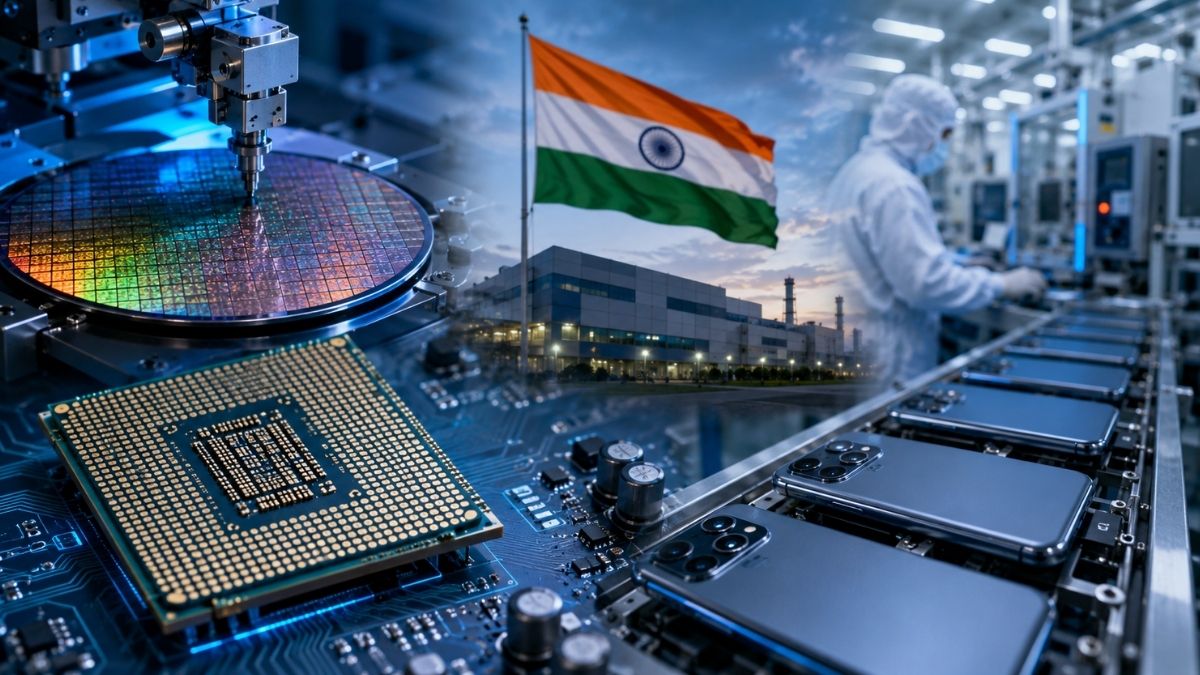
The Union Cabinet on Wednesday approved a major expansion of India’s semiconductor programme with fresh funding of Rs 1.28 lakh crore ($13.3 billion) to strengthen the country’s chip manufacturing ecosystem. The government also cleared a separate Rs 62,500 crore programme aimed at boosting mobile phone manufacturing over the next five years.
Information and Broadcasting Minister Ashwini Vaishnaw announced the decisions after the Cabinet meeting. The approvals form part of India’s broader strategy to establish itself as a global hub for electronics manufacturing and reduce dependence on imported semiconductor components.
#WATCH | On the Cabinet approving the Mobile Phone Manufacturing Scheme (MPMS), Union Minister Ashwini Vaishnaw says, "An outlay of Rs 62,500 crore has been allocated. The last decade has witnessed a massive transformation in electronics manufacturing: production has increased… pic.twitter.com/6CWcCllW1n
— ANI (@ANI) July 15, 2026
According to a government statement, the additional investment in the semiconductor programme will support the development of intellectual property, chip design capabilities, new fabrication plants and research and development activities. The government aims to build a stronger domestic semiconductor ecosystem by encouraging manufacturing as well as innovation.
The latest approval comes nearly five years after India launched its semiconductor incentive programme in 2021 with an outlay of $10 billion. That programme was introduced to attract global semiconductor manufacturers and promote domestic chip production.
The government said India has so far approved 12 semiconductor manufacturing units and 24 semiconductor design projects under the 2021 incentive scheme.
PM Modi hails Semicon 2.0
Prime Minister Narendra Modi hailed the approval of the Semicon 2.0 program. In an X post, PM Modi said, “India’s semiconductor journey gets even more vibrant.”
India’s semiconductor journey gets even more vibrant!
— Narendra Modi (@narendramodi) July 15, 2026
The Cabinet has approved Semicon 2.0 with an outlay of Rs. 1,27,500 crore, reaffirming our long-term commitment to making India a global centre for semiconductor design, manufacturing and innovation. Powered by our youth,…
“The Cabinet has approved Semicon 2.0 with an outlay of Rs 1,27,500 crore, reaffirming our long-term commitment to making India a global centre for semiconductor design, manufacturing and innovation. Powered by our youth, Semicon 2.0 will strengthen every aspect of the semiconductor ecosystem. Semicon 2.0 will attract greater investment, create high-value opportunities for our youth, strengthen supply chains and advance technological self-reliance in critical sectors,” he added. .
How will the new semiconductor funding be used?
The fresh Rs 1.28 lakh crore allocation will expand India’s efforts across the semiconductor value chain. The government said the funding will support companies developing semiconductor intellectual property and chip designs while also helping establish additional fabrication facilities.
#WATCH | On Semicon 2.0, Union Minister Ashwini Vaishnaw says, "The expected outcomes include investments worth approximately Rs 4 lakh crore, production valued at Rs 2 lakh crore, and exports amounting to Rs 1 lakh crore. The introduction of 'Semicon 2.0' will generate both… pic.twitter.com/tRT419AoId
— ANI (@ANI) July 15, 2026
The investment will also strengthen research and development, which remains a key requirement for building an advanced semiconductor industry. By supporting both manufacturing and innovation, the government hopes to improve India’s long-term competitiveness in the global semiconductor market.
The expansion comes as countries around the world increase investments in semiconductor production following global supply chain disruptions and rising demand for chips used in smartphones, electric vehicles, consumer electronics, data centres and artificial intelligence applications.
India has steadily increased its focus on attracting semiconductor investments by offering financial incentives, improving manufacturing infrastructure and encouraging global technology companies to set up operations in the country.
What does mobile manufacturing scheme offer?
Alongside the semiconductor programme, the Cabinet approved a Rs 62,500 crore initiative to encourage mobile phone manufacturing in India over the next five years.
The programme offers incentives on eligible sales of mobile phones manufactured in the country. Companies will receive benefits at different rates ranging from 2.25% to 5%, depending on the category of manufacturing, reported Reuters.
The scheme also includes an additional incentive of up to 1.5% for companies that source key components domestically. The government expects the extra incentive to strengthen local supply chains and increase value addition within India.
According to the government, the mobile manufacturing programme is expected to generate around 60,000 direct jobs over the next five years, reported Reuters.