



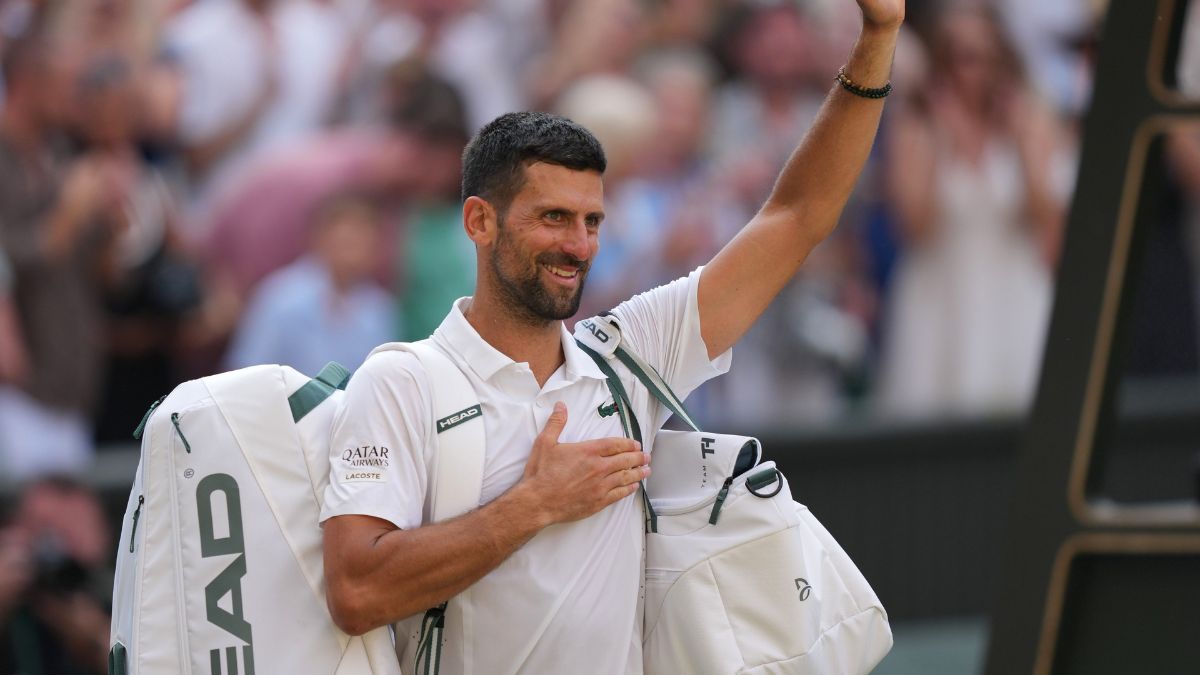
At 38, with more Grand Slam singles titles than any man in tennis history, Novak Djokovic still speaks like someone with something to prove.
In a candid conversation on Jay Shetty‘s On Purpose podcast in August 2025, the Wimbledon champion pulled back the curtain on the mindset, habits and life philosophy that have sustained him through more than two decades at the top of one of the world’s most demanding sports.
For Djokovic, the mindset that fuelled his success was never just about tennis.
Success was never optional
Djokovic doesn’t describe his drive in terms of ambition or ego. Instead, he says success always felt like a necessity.
“Not having success is not an option, like I have to succeed. It’s basically a matter of existence.”
He explained that his definition of success was deeply tied to his family’s wellbeing. Every match, every trophy and every milestone carried a sense of responsibility that went far beyond sporting achievement.
That intensity, he said, is also shaped by one’s environment. The people, places and communities around an individual can either accelerate growth or become obstacles to it.
Although Djokovic is known for his disciplined approach to nutrition, sleep and daily routines, he believes no one succeeds entirely alone.
“We’re social beings,” he said, stressing that lasting change requires at least a small circle of supportive people.
The three-year slump that changed everything
Like most sporting greats, Djokovic’s rise was anything but linear.
After winning Wimbledon and becoming world No. 1 for the first time, he experienced what he described as an almost surreal feeling—like travelling to the moon. But the euphoria was followed by one of the toughest phases of his career.
For nearly three years, he failed to win another Grand Slam as Roger Federer and Rafael Nadal repeatedly denied him on the biggest stages.
Rather than accept the plateau, Djokovic rebuilt almost every aspect of his career. He changed his equipment, reshaped his coaching team and, most importantly, transformed his nutrition—something he credits as the turning point that unlocked another level of performance.
Equally important was learning from defeat.
Recalling advice from the late NBA legend Kobe Bryant, Djokovic said:
“Kobe Bryant used to talk about this a lot. And when I was talking to him personally about that, he said, even if it’s just specific intervals of the match that you lost that you want to watch, that you definitely look at that.”
Instead of avoiding painful moments, Bryant encouraged him to revisit them, analyse them and grow from them.
What still drives Djokovic?
Perhaps the most revealing part of the conversation was Djokovic’s explanation of why he continues to compete despite having already achieved virtually everything tennis has to offer.
He traced his relentless desire to win back to childhood, describing an enduring feeling of “not being enough” that stemmed from his relationship with his father.
Even now, with a record-breaking career behind him, friends and family often ask why he keeps pushing himself.
For Djokovic, the answer is simple.
“I don’t feel like I do have limits. And I feel like the limits are normally constructs in our mind.”
While many elite athletes begin contemplating retirement in their early 30s, Djokovic says he still feels capable of competing for the sport’s biggest prizes because he refuses to accept self-imposed limits.
Wellness beyond tennis
Away from the court, Djokovic says his biggest long-term passion is wellness—a subject he has studied and practised for more than 15 years.
He hopes more people will take ownership of their health through simple, everyday habits such as eating well, staying hydrated, sleeping adequately and exercising regularly. While he acknowledges that changing society takes time, he believes meaningful progress begins with small, consistent actions.
The conversation also turned personal as Djokovic reflected on raising his children in an age dominated by screens and constant digital stimulation.
Rather than reaching for a phone whenever boredom strikes, he wants them to embrace those quiet moments—to spend time outdoors, observe the world around them and simply sit with their own thoughts.
In his view, creativity, resilience and self-awareness often emerge from moments of stillness.
Summing up the philosophy that continues to drive him, Djokovic said:
“I feel like as long as I have the capacity or ability to compete for the biggest titles in my sport, I want to keep going… I don’t feel like I do have limits. And I feel like the limits are normally constructs in our mind.”