



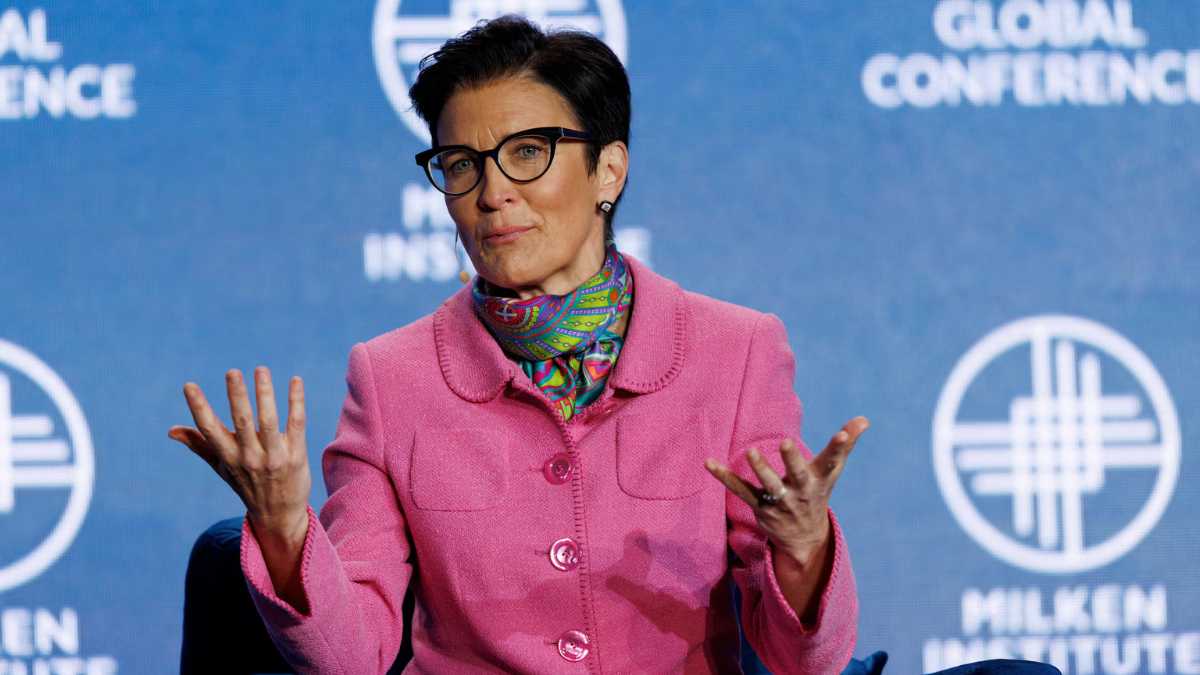
When one of the world’s most powerful banking chiefs needs advice on navigating a tough workplace situation, she turns to a rule she learned from legendary investor Warren Buffett – and it starts with a permission slip to be as angry as you want. Just not right at that moment.
Citigroup CEO Jane Fraser, the first woman to lead a major Wall Street bank, recently revealed that the former Berkshire Hathaway head gave her two pieces of counsel that have shaped how she leads through conflict, pressure and difficult personalities. She shared the advice at an event at Stanford Graduate School of Business, as reported by Fortune.
The first rule? “You can always call them an a*****e tomorrow,” Fraser quoted Buffett as saying. “Really good piece of advice. So, never in anger, respond to that email.”
Never send the angry email
The wisdom here is deceptively simple: delay the reaction. When emotions are running high – whether over a board decision, a colleague’s conduct, or a difficult investor – Buffett’s advice is to wait. The morning after will bring perspective that the heat of the moment cannot.
Fraser recalled one instance where this proved particularly useful. When an activist investor began putting pressure on Citigroup, her first instinct, she said, was decidedly unsympathetic. But stepping back and making a genuine effort to understand the investor’s position, she told the Stanford audience, ultimately led to a breakthrough. “I think empathy gives you a competitive edge because there’s far too many people that don’t try and understand the other perspective,” she said.
Praise by name, criticise by category
The second piece of Buffett’s guidance is equally practical. According to Fraser, Buffett counselled her to praise employees by name but to criticise by category – meaning that when something goes wrong, leaders should address the behaviour or the pattern, never single out an individual publicly.
“You’re always going to regret it if you criticise someone by name; it’s going to come back and bite you,” Fraser said at Stanford.
Together, the two rules form a coherent leadership philosophy: protect your relationships from your worst moments, and protect your people from your most frustrated ones. Fraser distilled it simply: “Just don’t be a jerk to people.”
Why it matters – inside Citi and beyond
Fraser, who joined Citigroup in 2004 and became CEO in 2021, built her career through a series of demanding roles – starting as a mergers and acquisitions analyst at Goldman Sachs after graduating from Cambridge, earning her MBA at Harvard Business School, and then spending a decade at McKinsey before moving to Citi.
As part of that process, she has been explicit about one priority: removing toxic employees. “…But if an a*****e’s always an a*****e, and it’s amazing how that just drains energy…” she said.
Her emphasis on attitude and interpersonal conduct has broader resonance at a time when companies are grappling with workplace culture and employee conduct.
Amazon CEO Andy Jassy has similarly noted that attitude plays an outsized role in early career success, saying in a conversation with LinkedIn CEO Ryan Roslansky, that an “embarrassing amount” of how well someone does in their twenties comes down to mindset.
For Fraser, Buffett’s framework is not a soft management platitude – it is a practical tool she has applied at the highest levels of global finance. The two rules, stripped back, add up to one thing: lead with patience, and the rest tends to follow.