



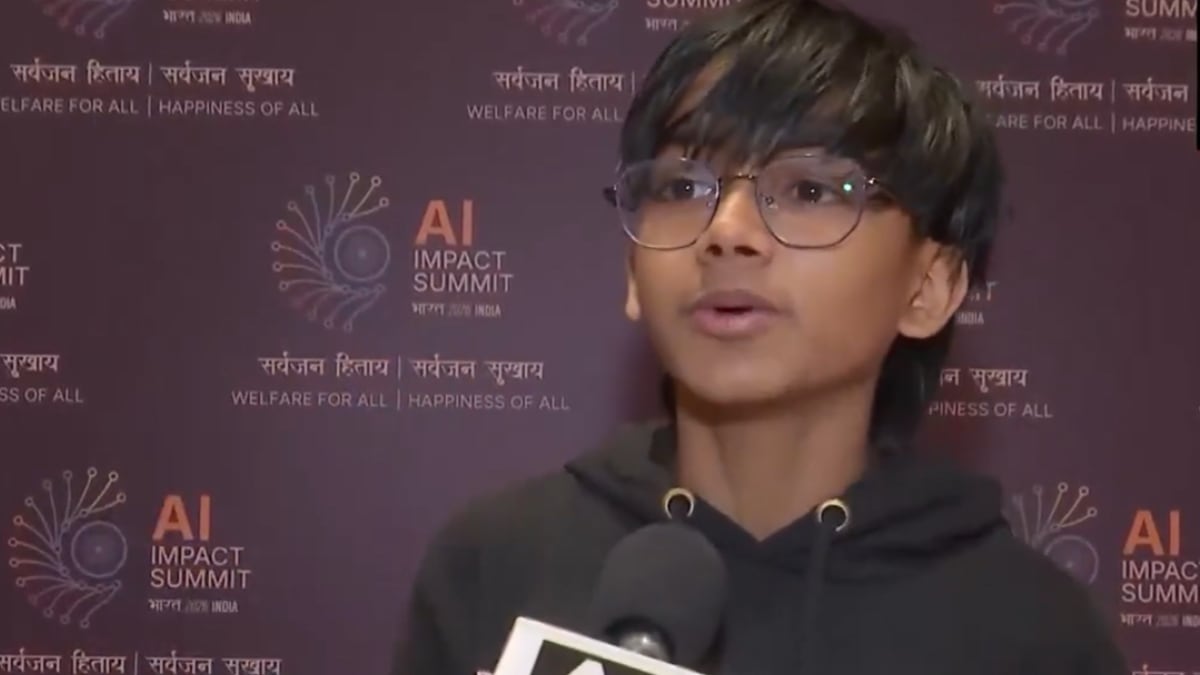
In a powerful moment that connected global diplomacy with the future of technology, António Guterres, Secretary-General of the United Nations interacted with “AI kid of India” Raul John Aju during the India AI Impact Summit in New Delhi.
Speaking about his meeting with the UN Secretary-General, Raul said, ” I met him here, and it was a very good experience. I was called here as I am known as the ‘AI Kid of India’, and I am also speaking here ( AI Impact Summit). I have been building AI tools, trained 1.50 lakh students and some companies. I have been doing self-learning with help from YouTube and the guidance of my parents.”
Who is Raul John Aju?
Raul John Aju, widely known as “AI kid of India” is a 16-years-old boy from Kerala. At just 16, he has already created more than 10 AI tools. Aju has started his own company, Arm Technologies, in an unusual move, he even hired his father to work at his startup, showing that for him, leadership begins at home.
Raul’s interest in artificial intelligence started when he was just six years old. By 16, he had developed his own robot called Me-bot. His first major project, MeBot, was actually a digital clone he built for a school science fair.
Since then, he has continued to design AI tools focused on one main goal – helping people solve everyday problems.
Advising governments and driving civic tech
Raul is now working as an AI advisor for the governments of Kerala and Dubai. One of the key projects he’s involved in is JustEase, an AI-based platform designed to help people understand and navigate complicated legal and government systems more easily.
At the same time, he’s building something even bigger – Project 47X. He calls it his “rescue project.” It’s a legal-tech initiative focused on using AI to make public services simpler, faster and more accessible for everyone.
Beyond his official work, Raul also shares his knowledge online. Through his YouTube and Instagram platforms, he offers free AI lessons and practical guidance. He regularly encourages students to use AI tools smartly — not to replace effort, but to reduce workload and boost productivity. For him, innovation isn’t just a buzzword; it’s a habit that should be part of everyday life.