



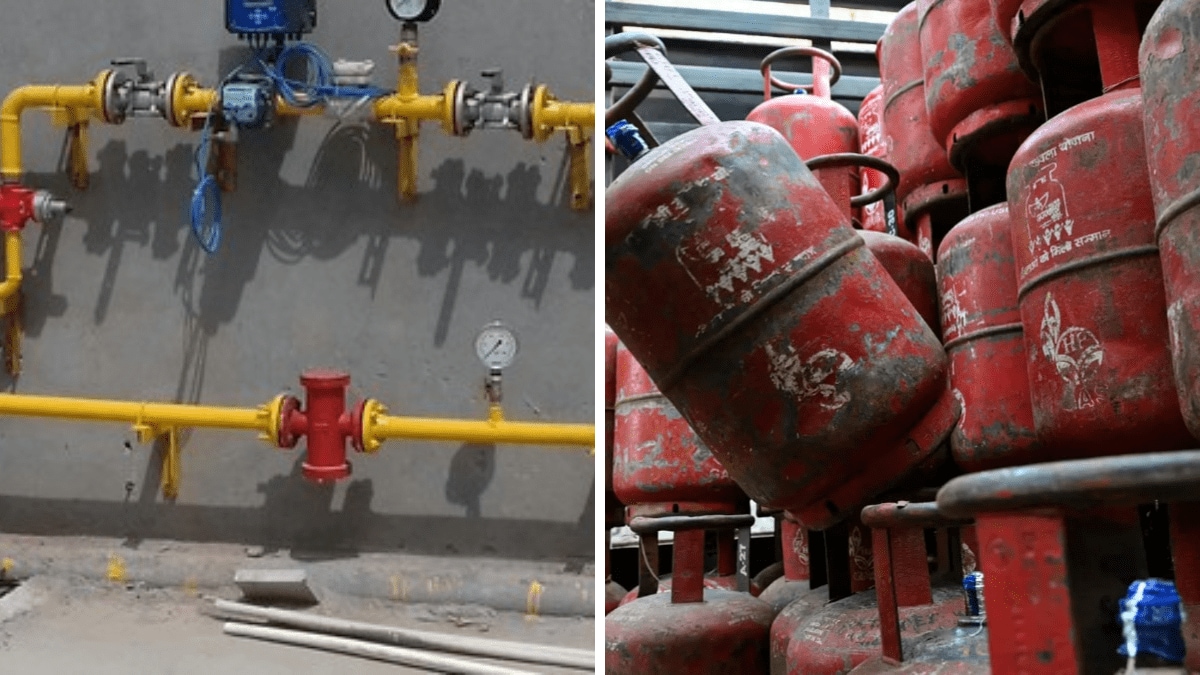
The Centre has introduced a major policy shift mandating households to transition from LPG to piped natural gas (PNG) in areas where such infrastructure is available, in a move aimed at strengthening energy security and optimising fuel distribution.
Under the newly notified Natural Gas and Petroleum Products Distribution Order, 2026, households that do not switch to PNG despite availability may see their LPG supply discontinued after a three-month window. The decision comes at a time when India is facing supply pressures due to disruptions in West Asia, impacting LPG availability.
Push for PNG to Ease LPG Shortage
The government is encouraging consumers to adopt PNG, which is supplied through pipelines directly to homes, removing the need for cylinder refills. Officials believe the transition will help redirect limited LPG supplies to regions where pipeline connectivity has not yet been established.
The order, issued by the Ministry of Petroleum and Natural Gas, is designed to accelerate the expansion of gas pipeline networks, streamline approval processes, and promote fuel diversification. Global supply constraints, including disruptions in the Gulf region and blockage of key transit routes, have further underscored the urgency of reducing dependence on LPG.
Commenting on the development, Oil Secretary Neeraj Mittal in the post on X said “a crisis (has been) turned into an opportunity” through the ease of doing business reforms.
Strict Timelines, Faster Infrastructure Rollout
To ensure swift implementation, the order mandates time-bound approvals for pipeline projects. Authorities are required to grant permissions within specified timelines, failing which approvals will be treated as deemed granted. It also restricts local bodies from levying additional charges beyond those prescribed.
In residential complexes, permissions for laying pipelines must be provided within three working days, while last-mile PNG connections are to be delivered within 48 hours. The order also bars rejection of applications for pipeline connectivity in such areas.
Further, designated officials have been empowered to resolve disputes related to land access, with authority similar to that of a civil court. Companies authorised to lay pipelines must begin work within four months of receiving approval, or risk penalties, including potential loss of exclusivity.
The Petroleum and Natural Gas Regulatory Board (PNGRB) will act as the nodal agency overseeing the rollout, ensuring compliance and monitoring approvals and rejections.
The order clearly states that LPG supply will be discontinued if households fail to switch to PNG despite being notified. “The LPG supply to such an address shall cease after three months from the date of the communication.” “The supply of LPG to a household shall not cease, if the authorised entity issues a no-objection certificate (NOC) on the ground that it is technically infeasible to provide a piped natural gas connection or gas supply to such household,” it said.
Authorities clarified that exemptions will apply in cases where PNG connections are not technically feasible, with authorised entities required to maintain records and review such cases periodically.