



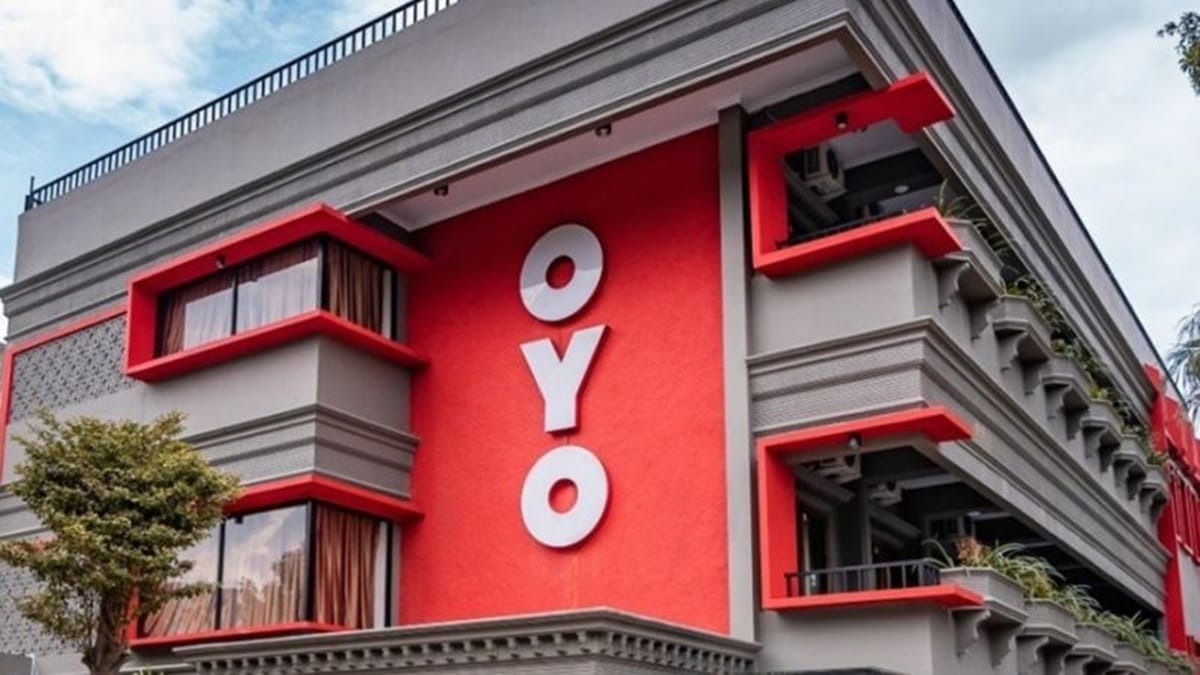
Five years after reporting losses of nearly Rs 4,000 crore and undertaking large-scale layoffs during the pandemic, Oyo is showing signs that a sweeping overhaul of its business model is paying off.
Prism, Oyo’s parent company, reported a consolidated revenue of Rs 6,253 crore in FY25, up 16% year-on-year, while profit after tax stood at Rs 245 crore, up 6.5% from the previous year. Earnings before interest, taxes, depreciation and amortisation (Ebitda) rose to Rs 1,083 crore, marking the company’s twelfth consecutive Ebitda-positive quarter, according to its annual report.
In the first quarter of FY26, Oyo said provisional profit after tax crossed Rs 200 crore, more than double the Rs 87 crore reported a year earlier, while revenue rose 47% to Rs 2,019 crore. The turnaround follows a fundamental shift away from the growth-at-all-costs strategy that defined Oyo’s early years.
Backed by billions of dollars from investors, including SoftBank, the travel-tech company had expanded rapidly across more than 80 countries, relying heavily on minimum-guarantee contracts with hotel owners and prioritising scale over profitability. The model came under strain during the pandemic as travel demand collapsed, exposing the cost of maintaining fixed commitments despite weak occupancy.
In response, Oyo began exiting loss-making markets and reducing its global footprint. The company now operates in about 35 countries, nearly half the number it once did. It also phased out minimum-guarantee contracts, under which hotel partners were paid fixed amounts regardless of occupancy levels.
The move helped reduce financial liabilities and improve operating efficiency. As a result, adjusted gross profit margin rose to 33% in FY21 from 9.7% a year earlier, while operating expenses fell sharply to Rs 2,773 crore from Rs 9,738 crore in FY20.
The company simultaneously doubled down on an asset-light franchise model and shifted its focus towards higher-yielding properties. Brands such as Townhouse, Capital O, Collection O, Palette and Sunday Hotels have become central to its premiumisation strategy, helping improve room economics without requiring ownership of hotel assets.
Oyo’s biggest strategic bet came in 2024 with the acquisition of G6 Hospitality, owner of the Motel 6 and Studio 6 brands in North America, for $525 million. The deal added around 1,500 properties across the US and Canada and significantly increased the company’s exposure to developed markets. It also acquired Paris-based Checkmyguest as part of its push into premium vacation rentals.
According to Fitch Ratings, the growing contribution from developed markets is expected to reduce earnings volatility and improve profitability, given their higher gross booking values. The ratings agency said around 65% of Oyo’s Ebitda could come from the US and Europe following the acquisitions. By FY24, nearly 77% of the company’s revenue was already being generated outside India.
The expansion has also added scale. Between March 2023 and March 2025, Oyo’s homes segment grew organically from 79,000 to 120,000 storefronts, while its hotels business expanded from 13,000 to 21,000 storefronts. The acquisitions of Checkmyguest and G6 Hospitality added another 2,000 and 1,500 storefronts, respectively, according to the annual report.
To support its growth plans, Oyo refinanced its debt through an $830 million Term Loan B facility in late 2024 and repaid the balance of an earlier loan due in 2026. The refinancing extended maturities to 2029 and lowered borrowing costs, easing repayment pressures.
The company is now betting on premium hotels and developed markets to drive its next phase of growth. It has confidentially filed draft papers for an initial public offering expected to raise about Rs 6,650 crore, according to sources. For Oyo, the proposed listing will serve as a test of whether investors believe the profitability gains achieved through its strategic reset are sustainable.