



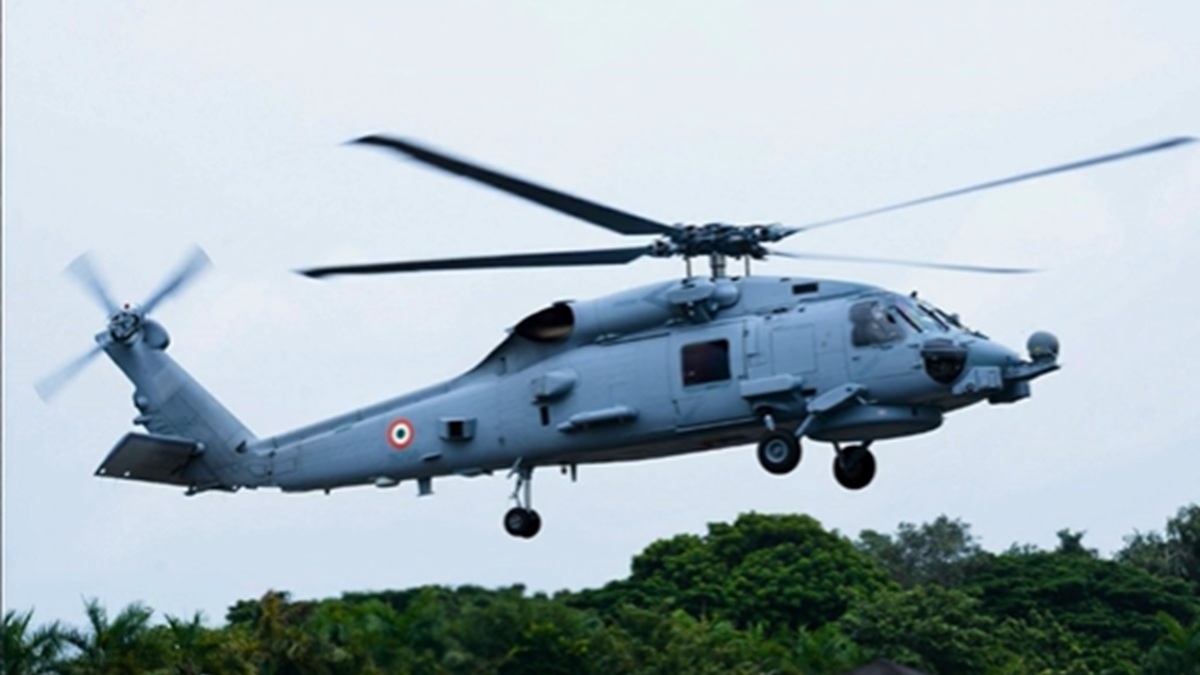
India’s maritime combat capability has received a major boost with the arrival of additional MH-60R “Romeo” Seahawk naval helicopters. Developed by Lockheed Martin, these advanced multi-mission helicopters are part of a broader, long-term defense collaboration between India and the United States.
The US Embassy in India confirmed that one helicopter was delivered to the Indian Navy in Kochi last week, with two more arriving shortly.
In a post, the embassy said, “Another MH-60R Seahawk naval helicopter touched down on Indian shores! Developed by Lockheed Martin, this highly equipped helicopter was delivered to the Indian Navy at Kochi last week, with two more arriving this week. Thrilled to see the U.S.-India defense partnership growing stronger.”
Another MH-60R Seahawk naval helicopter touched down on Indian shores! Developed by @LockheedMartin, this highly equipped helicopter was delivered to the @IndianNavy at Kochi last week, with two more arriving this week. Thrilled to see the U.S.-India defense partnership growing… pic.twitter.com/v3bHFcKj8m
— U.S. Embassy India (@USAndIndia) July 17, 2026
The fresh deliveries come as India and the US deepen cooperation around the operation and long-term maintenance of the Navy’s MH-60R fleet.
What is India’s Rs 7,995-crore MH-60R deal?
In December 2025, India signed a major sustainment agreement for its fleet of 24 MH-60R Seahawk helicopters. The Ministry of Defence had approved the contract, valued at approximately Rs 7,995 crore, or around $946 million, to support the helicopters manufactured by Lockheed Martin. The package is aimed at maintaining the fleet’s long-term operational readiness, improving interoperability with US forces and strengthening India’s maritime security capabilities in the Indian Ocean Region.
In 2020, India had acquired the 24 helicopters from the US under a Foreign Military Sales agreement. The MH-60R is the maritime variant of the Black Hawk family of helicopters. In March 2024, the Indian Navy commissioned the first squadron of the helicopters, INAS 334, at INS Garuda in Kochi.
MH-60R Seahawk: Why the helicopter matters to the Indian Navy
Often referred to as the “Romeo”, the MH-60R is designed to perform a range of missions from warships and other naval platforms. Its primary capabilities include:
Anti-submarine warfare
Anti-surface warfare
Maritime surveillance
Search and rescue
Ship-based operations
Medical evacuation and support missions
It is reported that the helicopter is equipped with advanced sensors, radar and electro-optical systems to detect and track threats at sea.
For anti-submarine warfare, the MH-60R uses systems including dipping sonar, sonobuoys, multi-mode radar and Mk-54 lightweight torpedoes. For surface warfare missions, it can be armed with AGM-114 Hellfire missiles, lightweight torpedoes and machine guns.
These capabilities allow the helicopter to detect submarines, monitor maritime activity, protect sea lanes and support Indian naval task forces operating in contested waters.
MH-60R helicopters were used during Operation Sindoor
The importance of the platform was highlighted by former Indian Navy Chief Admiral Dinesh K Tripathi in December 2025, when he said that the MH-60R helicopters had been used during Operation Sindoor. “They did what they were supposed to do,” Tripathi was quoted as saying by ANI, while describing the MH-60R as a “very potent” and well-proven platform.
He had also welcomed the agreement for the 24 helicopters and described the deal as an important step for the Navy’s operational capabilities. The Indian Navy began receiving the MH-60R helicopters in 2021, with the platform subsequently being integrated into India’s naval aviation fleet.
US-India defence partnership expands
The latest helicopter delivery is part of an expansion in India-US defence cooperation, particularly in the maritime domain. The MH-60R fleet is expected to increase interoperability between the Indian and US navies while improving India’s ability to conduct anti-submarine and anti-surface operations across the Indian Ocean.
With the sustainment package now supporting the fleet and additional helicopters arriving in India, New Delhi is seeking to ensure that the platform remains operationally available for decades.